Browse Articles

Investigating Lymphocytic Involvement in Minimal Change Nephrotic Syndrome

Muncan et al. | Jan 27, 2016

Investigating Lymphocytic Involvement in Minimal Change Nephrotic Syndrome

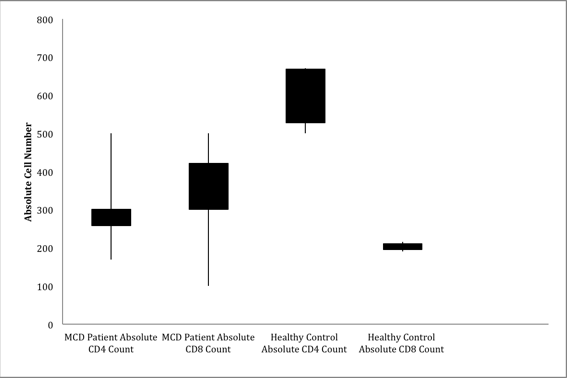
Minimal Change Disease (MCD) is a degenerative kidney disease. Researchers know very little about the cause of this disorder, however some research has suggested that T lymphocytes may be involved. In this study, the authors measure CD4 and CD8 T cell subpopulations in patients with MCD to investigate whether irregular T lymphocyte populations may be involved in MCD pathogenesis.

Read More...
The Effect of Anubias barteri Plant Species on Limiting Freshwater Acidification

Ramanathan et al. | Jul 06, 2021

The Effect of <i>Anubias barteri</i> Plant Species on Limiting Freshwater Acidification

Research relating to freshwater acidification is minimal, so the impact of aquatic plants, Anubias barteri var. congensis and Anubias barteri var. nana, on minimizing changes in pH was explored in an ecosystem in Northern California. Creek water samples, with and without the aquatic plants, were exposed to dry ice to simulate carbon emissions and the pH was monitored over an eight-hour period. There was a 25% difference in the observed pH based on molar hydrogen ion concentration between the water samples with plants and those without plants, suggesting that aquatic plants have the potential to limit acidification to some extent. These findings can guide future research to explore the viable partial solution of aquatic plants in combating freshwater acidification.

Read More...

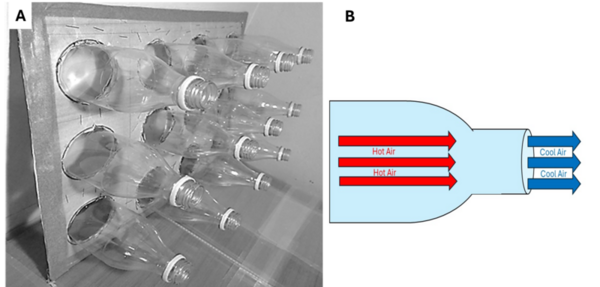
Investigating the functionality of an Eco-Cooler made of plastic bottles

Tong et al. | Jul 22, 2026

Investigating the functionality of an Eco-Cooler made of plastic bottles
Image credit: Tong, Tong, and Migenes

In the study, the authors looked at an environmentally friendly alternative to A/C systems/cooling. They wanted to test the effectiveness of this cooling system called the Eco-Cooler as well as see if they could improve it. They found that the Eco-Cooler had minimal cooling, while their altered Eco-Cooler system had some cooling. This results shows the use of water helps cool the environment a lot more.

Read More...

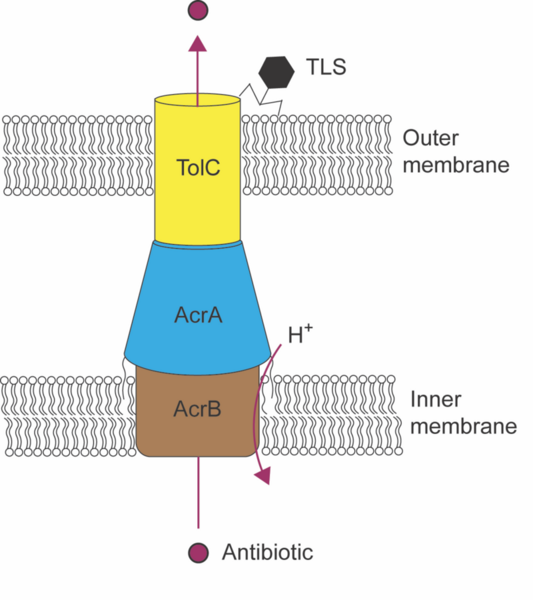
Bacteriophage TLS sensitizes Escherichia coli to antibiotics

Emann et al. | Mar 04, 2026

Bacteriophage TLS sensitizes <i>Escherichia coli</i> to antibiotics

Antibiotic resistance is a growing global health threat, and one strategy to combat it is using bacteriophages to enhance the effectiveness of existing antibiotics. This study tested whether targeting the TolC protein in E. coli with the TLS bacteriophage would increase bacterial sensitivity to antibiotics.

Read More...

Beeing sustainable: Honey as a bioindicator for pollution

Donnellan et al. | Oct 06, 2021

Beeing sustainable: Honey as a bioindicator for pollution

In this study, Donnellan and colleagues investigated how environmental pollution may be affecting honey samples from Chicago apiaries. They found no significant correlation between heavy metal concentration in honey to distance from local industries, suggesting a minimal effect of proximity to industrial pollution on honey contamination.

Read More...

Effect of sub-layer water saturation on two-layer sand fluidization

Doan et al. | Oct 27, 2026

Effect of sub-layer water saturation on two-layer sand fluidization
Image credit: Doan, Damm, and Doan

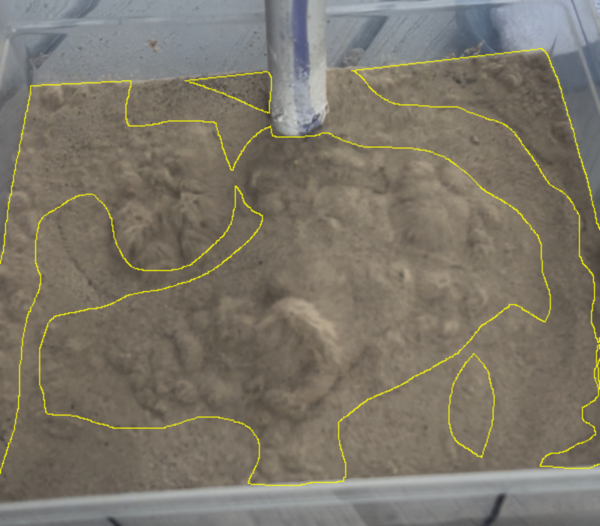
This study investigates the effect of water saturation in a two-layer fluidization behavior of an overlying dry sand bed. Building on prior work showing that moisture inhibits fluidization in granular media, the authors address an underexplored configuration involving layered dry and wet sand. The experiments demonstrate that even minimal water saturation in the sub-layer prevents uniform fluidization of the dry upper layer, leading to the conclusion that two-layer fluidized beds with moisture are not viable under the conditions tested.

Read More...

Deep learning for pulsar detection: Investigating hyperparameter effects on TensorFlow classification accuracy

Upadhyay et al. | Jan 31, 2026

Deep learning for pulsar detection: Investigating hyperparameter effects on TensorFlow classification accuracy

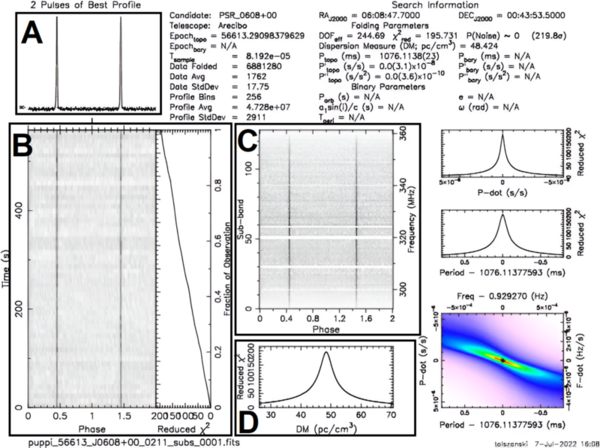
This study investigates how the hyperparameters epochs and batch size affect the classification accuracy of a convolutional neural network (CNN) trained on pulsar candidate data. Our results reveal that accuracy improves with increasing number of epochs and smaller batch sizes, suggesting that with optimized hyperparameters, high accuracy may be achievable with minimal training. These findings offer insights that could help create more efficient machine learning classification models for pulsar signal detection, with the potential of accelerating pulsar discovery and advancing astrophysical research.

Read More...