Browse Articles

Demographic trends of alcohol and marijuana co-use: examining age, gender, and race/ethnicity trends

Ryoo et al. | Jul 05, 2026

Demographic trends of alcohol and marijuana co-use: examining age, gender, and race/ethnicity trends

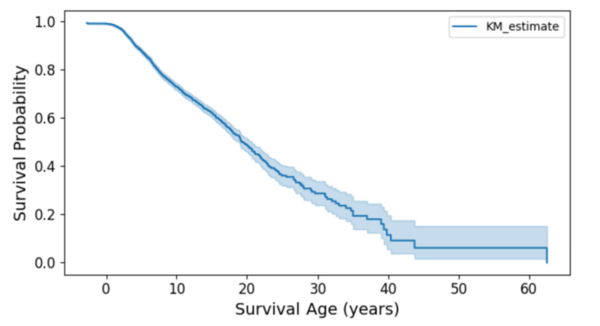
This study aims to examine the demographic factors that predict patterns of co-use of alcohol and marijuana in the United States. Significant findings were identified using data from the National Survey on Drug Use and Health (2012-2022), showing that there were significant differences in the prevalence of substance use among demographic groups, with young adults showing the highest co-use of alcohol and marijuana.

Read More...

The effect of common food preservatives on the growth of bacteria

Yulin et al. | Jul 06, 2025

The effect of common food preservatives on the growth of bacteria
Image credit: Michael Schiffer

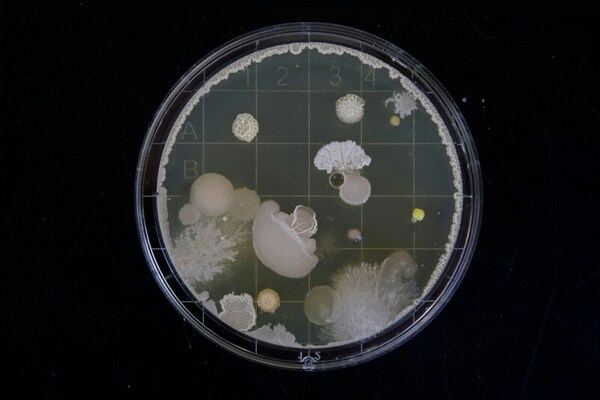
Here the authors aimed to find the best preservative combinations to stop bacterial growth in food, using data modeling and biochemical experiments. They discovered that single preservatives are often not enough, with varying effectiveness against different bacteria, and suggest future research into combining preservatives for better results.

Read More...

The effects of cochineal and Allura Red AC dyes on Escherichia coli and Bacillus coagulans growth

Palmatier et al. | Jun 29, 2025

The effects of cochineal and Allura Red AC dyes on <i>Escherichia coli</i> and <i>Bacillus coagulans</i> growth

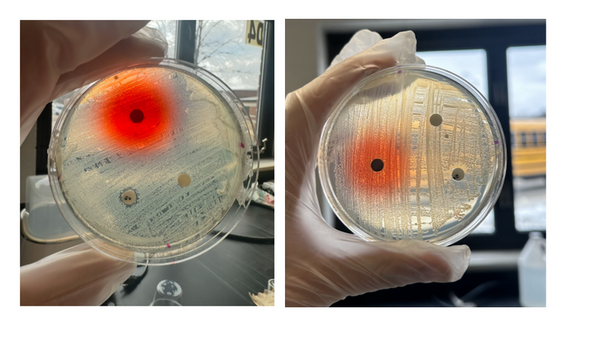
Here the authors aimed to compare the effects of artificial Allura Red AC dye and natural cochineal dye on the growth of Escherichia coli and Bacillus coagulans bacteria. Their research found that only Allura Red AC dye significantly affected bacterial growth, specifically amplifying E. coli growth. Based on their results, they suggest that Allura Red AC dye may increase the growth of E. coli bacteria within the human gut.

Read More...

Associations between fentanyl usage and social media use among U.S. teens

Sul et al. | Jun 10, 2025

Associations between fentanyl usage and social media use among U.S. teens
Image credit: freestocks

Here the authors aimed to understand factors influencing adolescent fentanyl exposure, hypothesizing a positive association between social media usage, socioeconomic factors, and fentanyl abuse among U.S. teens. Their analysis of the Monitoring the Future dataset revealed that a history of suspension and use of marijuana or alcohol were linked to higher fentanyl use, and while not statistically significant, a notable positive correlation between social media use and fentanyl frequency was observed.

Read More...

Ramifications of natural and artificial sweeteners on the gastrointestinal system

Cowen et al. | Jun 19, 2023

Ramifications of natural and artificial sweeteners on the gastrointestinal system

This study aimed to determine whether artificial sweeteners are harmful to the human microbiome by investigating two different bacteria found to be advantageous to the human gut, Escherichia coli and Bacillus coagulans. Results showed dramatic reduction in bacterial growth for agar plates containing two artificial sweeteners in comparison to two natural sweeteners. This led to the conclusion that both artificial sweeteners inhibit the growth of the two bacteria and warrants further study to determine if zero-sugar sweeteners may be worse for the human gut than natural sugar itself.

Read More...

Utilizing 25-Hydroxyvitamin D3 to prevent the appearance of diabetic-like phenotypes in Drosophila melanogaster

Zaverchand et al. | Sep 20, 2021

Utilizing 25-Hydroxyvitamin D3 to prevent the appearance of diabetic-like phenotypes in Drosophila melanogaster

This study aimed to assess the role of 25-hydroxyvitamin D3 solution, at varying concentrations, in protecting vertical transmission of diabetic-like phenotypes. We hypothesized that the highest concentration of vitamin D solution (55 ng/mL) would be most effective in having a protective role. The results indicated that the hypothesis was partially supported; overall, all three concentrations of the vitamin D solution administered to the flies reared on HSDs had a protective effect, to varying extents.

Read More...

Discovery of the Heart in Mathematics: Modeling the Chaotic Behaviors of Quantized Periods in the Mandelbrot Set

Golla et al. | Dec 14, 2020

Discovery of the Heart in Mathematics: Modeling the Chaotic Behaviors of Quantized Periods in the Mandelbrot Set

This study aimed to predict and explain chaotic behavior in the Mandelbrot Set, one of the world’s most popular models of fractals and exhibitors of Chaos Theory. The authors hypothesized that repeatedly iterating the Mandelbrot Set’s characteristic function would give rise to a more intricate layout of the fractal and elliptical models that predict and highlight “hotspots” of chaos through their overlaps. The positive and negative results from this study may provide a new perspective on fractals and their chaotic nature, helping to solve problems involving chaotic phenomena.

Read More...

Creating a Phenology Trail Around Central Park Pond

Flynn et al. | Jul 16, 2020

Creating a Phenology Trail Around Central Park Pond

This study aimed to determine whether the life cycle stages, or phenophases, of some plants in the urban environment of Central Park, New York, differ from the typical phenophases of the same plant species. The authors hypothesized that the phenophases of the thirteen plants we studied would differ from their typical phenophases due to the urban heat island effect. Although the phenophases of five plants matched up with typical trends, there were distinct changes in the phenophases of the other eight, possibly resulting from the urban heat island effect.

Read More...

Investigating the Role of the Novel ESCRT-III Recruitment Factor CCDC11 in HIV Budding: A Potential Target for Antiviral Therapy

Takemaru et al. | Feb 24, 2020

Investigating the Role of the Novel ESCRT-III Recruitment Factor CCDC11 in HIV Budding: A Potential Target for Antiviral Therapy

Acquired immunodeficiency syndrome (AIDS) is a life-threatening condition caused by the human immunodeficiency virus (HIV). In this work, Takemaru et al explored the role of Coiled-Coil Domain-Containing 11 (CCDC11) in HIV-1 budding. Their results suggest that CCDC11 is critical for efficient HIV-1 budding, potentially indicating CCDC11 a viable target for antiviral therapeutics without major side effects.

Read More...