Browse Articles

The Effect of Ethanol Concentration on Beta-Cell Development in Zebrafish

Payne et al. | Jan 15, 2014

The Effect of Ethanol Concentration on Beta-Cell Development in Zebrafish

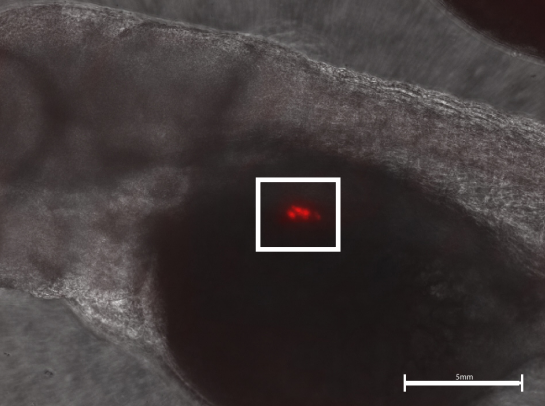
Alcohol is known to cause various developmental diseases including Fetal Alcohol Syndrome. Here the authors investigate the effect of ethanol on the development of zebrafish beta cells, the part of the pancreas associated with Type 1 Diabetes. They find that exposure to ethanol does adversely affect beta-cell development, suggesting that alcohol ingestion during pregnancy may be linked to diabetes in newborns.

Read More...

Effectiveness of Biodegradable Plastic in Preventing Food Spoilage

Zhang et al. | Mar 20, 2012

Effectiveness of Biodegradable Plastic in Preventing Food Spoilage

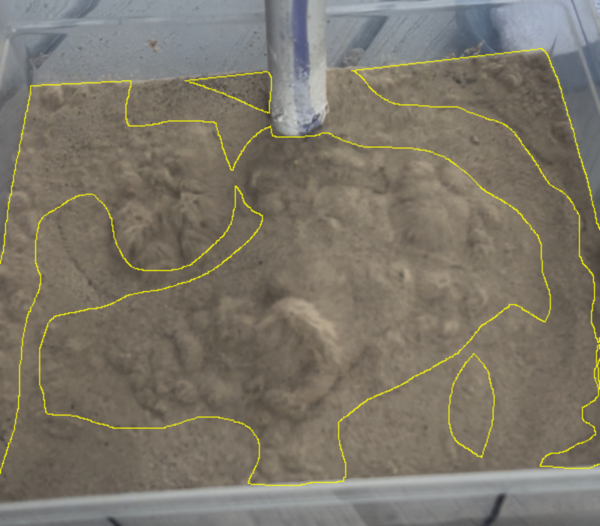
Most people put little thought into the type of plastic wrap they use to store their leftovers. This study investigates the differences between biodegradable plastic wrap and non-biodegradable plastic wrap in their ability to prevent food spoilage. Does one work better than the other? Read more to find out!

Read More...

Effect of sub-layer water saturation on two-layer sand fluidization

Doan et al. | Oct 27, 2026

Effect of sub-layer water saturation on two-layer sand fluidization
Image credit: Doan, Damm, and Doan

This study investigates the effect of water saturation in a two-layer fluidization behavior of an overlying dry sand bed. Building on prior work showing that moisture inhibits fluidization in granular media, the authors address an underexplored configuration involving layered dry and wet sand. The experiments demonstrate that even minimal water saturation in the sub-layer prevents uniform fluidization of the dry upper layer, leading to the conclusion that two-layer fluidized beds with moisture are not viable under the conditions tested.

Read More...

Stereolithography 3D-printed stents with silica and zirconia nanoparticle reinforcement for intracranial aneurysm treatment

Panda et al. | Oct 12, 2026

Stereolithography 3D-printed stents with silica and zirconia nanoparticle reinforcement for intracranial aneurysm treatment
Image credit: Panda, Jeong, and Srinivasan

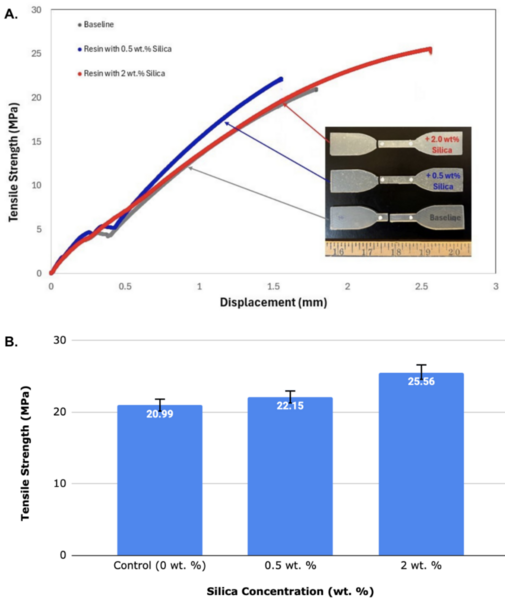
This manuscript focuses on improving the mechanical strength and radiopacity of SLA 3D-printed stent materials by incorporating nanoparticles for their application in flow-diverting stents (FDSs) used to treat aneurysms. The authors used biocompatible, bioresorbable resin formulations with varying concentrations of silica and zirconium to enhance tensile strength and radiopacity, respectively. The authors employed SEM to confirm the incorporation of nanoparticles, and CT imaging was used to assess the effect of zirconium-infused FDSs.

Read More...

An analysis of the mechanical properties of fencing swords, and implications for weapon selection

Redmond et al. | Aug 24, 2026

An analysis of the mechanical properties of fencing swords, and implications for weapon selection
Image credit: Jonathan Falcon

The sword is the most important piece of equipment a fencer uses. In this study, we compared the mechanical and physical properties of two of the most common types of swords used in foil fencing.We that found that maraging steel blades had a significantly greater stiffness and were damped more effectively than low carbon steel blades. These properties affect how the blade behaves during particular maneuvers and techniques, and our findings therefore provide useful insights for fencers who want to select the optimal sword configuration to suit their personal style.

Read More...

Simulating single versus cocktail antibiotic effects on the human gut microbiome

Patel et al. | Jul 19, 2026

Simulating single versus cocktail antibiotic effects on the human gut microbiome
Image credit: Volodymyr Hryshchenko

This study, uses SimulATe to model changes in microbial diversity and community structure upon administering a cocktail of antibiotics versus a single antibiotic. The authors hypothesized that antibiotic cocktails, particularly those combining broad-spectrum drugs like tetracyclines and trimethoprims, would cause a more significant reduction in gut microbial diversity compared to single-drug treatments. The findings confirmed a greater loss of microbial diversity with combinatorial treatments compared to single-drug treatments. While individual antibiotics dynamically reshaped the surviving species of the microbiome, antibiotic cocktails frequently cleared all species of the gut microbiome.

Read More...

Relationship between p62 and learning behavior in male and female mice deficient in hippocampal folliculin

Guvenir et al. | Jun 10, 2025

Relationship between p62 and learning behavior in male and female mice deficient in hippocampal folliculin
Image credit: Robina Weermeijer

Here the authors hypothesized that reducing folliculin (FLCN) might affect p62 protein levels in the dorsal hippocampus of mice, given their potential functional connection and p62's role in neurodegenerative diseases. Their study, using western blots and a two-way ANOVA on young wild-type mice, found that p62 levels correlated with FLCN expression, but ultimately concluded there's no evidence of a functional connection between FLCN and p62 in this specific model.

Read More...

Exploring Political Discourse Among High School Journalists with Web Scraping and AI Technology

Gong et al. | Jun 10, 2025

Exploring Political Discourse Among High School Journalists with Web Scraping and AI Technology

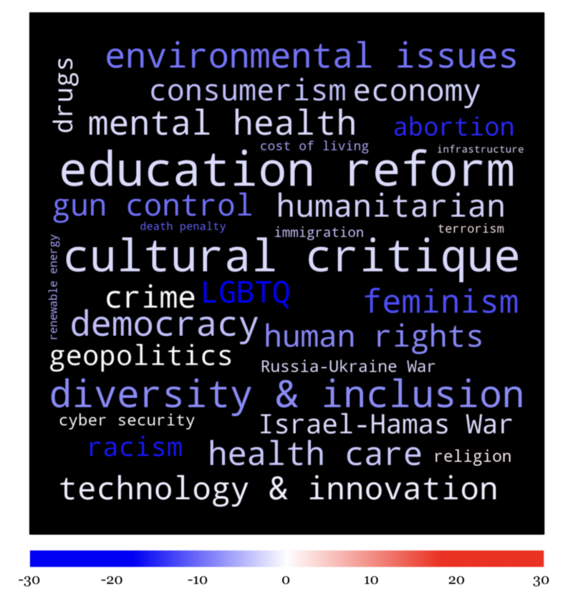
Here the authors provided greater coverage of adolescent stances by investigating the political perspectives and trends of high school journalists, utilizing web scraping methods and artificial intelligence (ChatGPT-4o) to analyze over 153,000 articles. They found that high school publications exhibit lower levels of political polarization compared to mainstream media and that journalists' views, while tending to lean moderately liberal, showed no significant correlation with local voting patterns.

Read More...