Browse Articles

Assessing grass water use efficiency through smartphone imaging and ImageJ analysis

Shen et al. | Jul 27, 2022

Assessing grass water use efficiency through smartphone imaging and ImageJ analysis

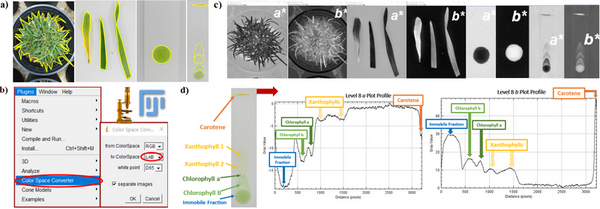
Overwatering and underwatering grass are widespread issues with environmental and financial consequences. This study developed an accessible method to assess grass water use efficiency (WUE) combining smartphone imaging with open access color unmixing analysis. The method can be applied in automated irrigation systems or apps, providing grass WUE assessment for regular consumer use.

Read More...
Correlation of socioeconomic status and lead concentration in tap water in Missouri

Rabbani et al. | Feb 03, 2022

Correlation of socioeconomic status and lead concentration in tap water in Missouri

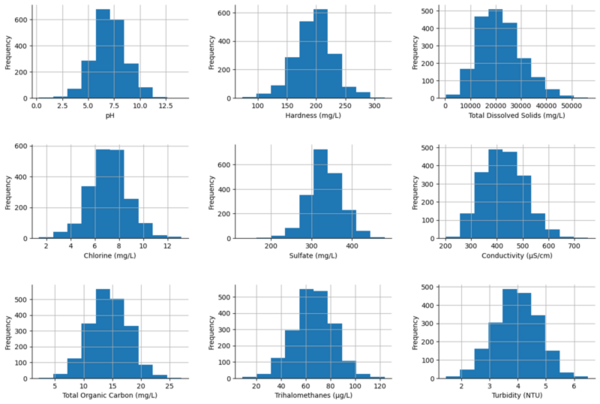
Organic and non-organic contaminants in tap water have been linked to adverse health effects. Tap water is a major source of lead, which is neurotoxic and poses a major health risk, particularly to children and pregnant women. Using publicly available annual water quality reports data for the state of Missouri, the authors show that communities with lower median household income and lower per capita incomes had significantly higher lead levels in their tap water.

Read More...

The effect of floating plant on water purification: Comparison of the water purification capability of Water Hyacinth, Duckweed, and Azolla

Park et al. | Nov 21, 2020

The effect of floating plant on water purification: Comparison of the water purification capability of Water Hyacinth, Duckweed, and Azolla

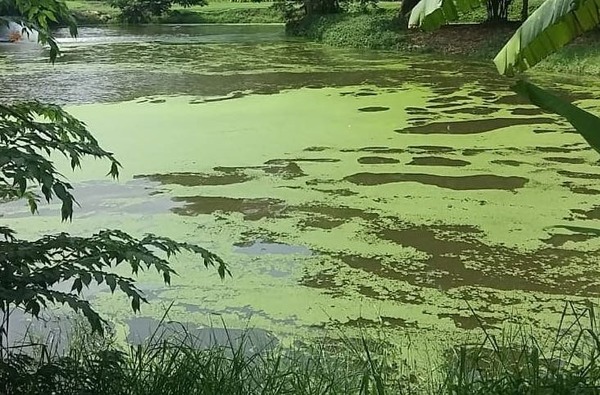
Clean water is a necessity for every household, yet water pollution is a serious problem in many parts of the world and plays a major role in compromising water security in the 21st century. In this paper, the authors address the utility of several plants as natural water purifiers. They estimate the effectiveness of duckweed, hyacinth, and azolla in improving the quality of water from the Mithi river in India by measuring several metrics. They conclude that all three plants are effective in improving water quality, suggesting that these plants as eco-friendly options for water treatment.

Read More...

A novel filtration model for microplastics using natural oils and its application to the environment

Park et al. | Jun 27, 2022

A novel filtration model for microplastics using natural oils and its application to the environment

Recognizing the need for a method to filter microplastics from polluted water the authors sought to use nonpolar solvents, palm oil and palm kernel oil, to filter microplastics out of model seawater. By relying on the separation of polar and nonpolar solvents followed by freezing the nonpolar solvent, they reported that microplastics could be extracted with percentages ranging from 96.2% to 94.2%. They also provided an estimation to use this method as part of container ships to clean the Pacific Ocean of microplastics.

Read More...

On the Relationship Between Viscosity and Surface Tension

Wei et al. | Sep 16, 2014

On the Relationship Between Viscosity and Surface Tension

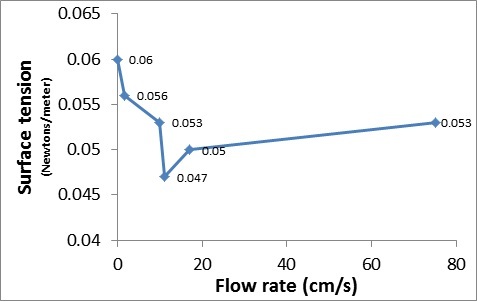
Surface tension and viscosity are both measures of how "sticky" a liquid is, but are they related? The authors here investigate the surface tension and viscosity of mixtures of water with different concentrations of agar agar, flour, or detergent. Surprisingly, they find that the least viscous mixtures had the strongest surface tensions, indicating that the two properties are not linked.

Read More...

Effect of sub-layer water saturation on two-layer sand fluidization

Doan et al. | Oct 27, 2026

Effect of sub-layer water saturation on two-layer sand fluidization
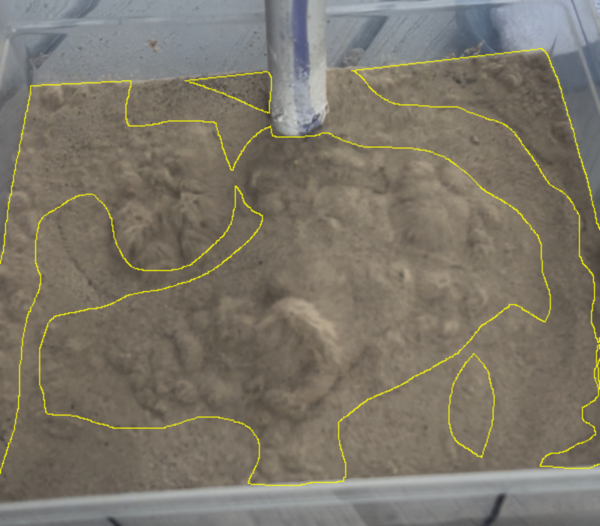
Image credit: Doan, Damm, and Doan

This study investigates the effect of water saturation in a two-layer fluidization behavior of an overlying dry sand bed. Building on prior work showing that moisture inhibits fluidization in granular media, the authors address an underexplored configuration involving layered dry and wet sand. The experiments demonstrate that even minimal water saturation in the sub-layer prevents uniform fluidization of the dry upper layer, leading to the conclusion that two-layer fluidized beds with moisture are not viable under the conditions tested.

Read More...