Browse Articles

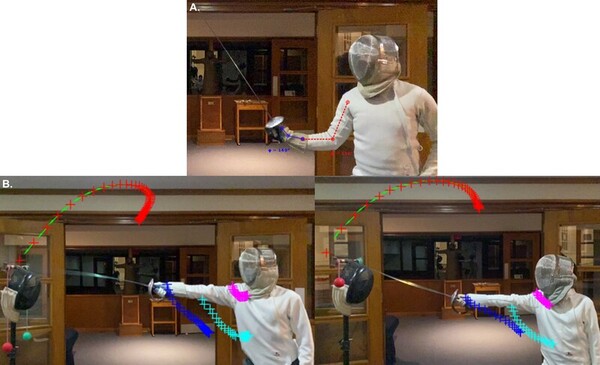
The effect of joint angle differences on blade velocity in elite and novice saber fencers: A kinematic study

Greene et al. | Mar 02, 2023

 The effect of joint angle differences on blade velocity in elite and novice saber fencers: A kinematic study

Here, recognizing that years of training in saber fencing could expectedly result in optimized movements that result in elite skill levels, the authors used motion tracking and statistical analysis to assess the difference in velocity and blade tip velocity of novice and elite fencers during a vertical blade thrust. They found statistically significant differences in blade tip velocity and elbow joint angle kinematics.

Read More...
Analyzing relationships and distribution between age, sex, and eye disease at IGMCH eye OPD

Sareen et al. | Feb 20, 2025

Analyzing relationships and distribution between age, sex, and eye disease at IGMCH eye OPD
Image credit: Amanda Dalbjörn

This study analyzed patient demographics in the ophthalmology department at Indira Gandhi Medical College and Hospital (IGMCH) to assess relationships between age, sex, and eye conditions. While the overall sex distribution was equal, individual conditions varied, with cataracts and retinal disorders more common in males and conjunctival conditions slightly more prevalent in females, though none were statistically significant (p > 0.05) except for cataract patients aged 50–89 (p < 0.001). Understanding these trends can help medical facilities allocate resources more effectively for improved patient care.

Read More...

A novel encoding technique to improve non-weather-based models for solar photovoltaic forecasting

Ahmed et al. | Jun 09, 2023

A novel encoding technique to improve non-weather-based models for solar photovoltaic forecasting

Several studies have applied different machine learning (ML) techniques to the area of forecasting solar photovoltaic power production. Most of these studies use weather data as inputs to predict power production; however, there are numerous practical issues with the procurement of this data. This study proposes models that do not use weather data as inputs, but rather use past power production data as a more practical substitute to weather-based models. Our proposed models demonstrate a better, cheaper, and more reliable alternatives to current weather models.

Read More...

High school students show some reluctance to COVID-19 guidelines

Basit Abid et al. | Jun 25, 2024

High school students show some reluctance to COVID-19 guidelines
Image credit: The authors

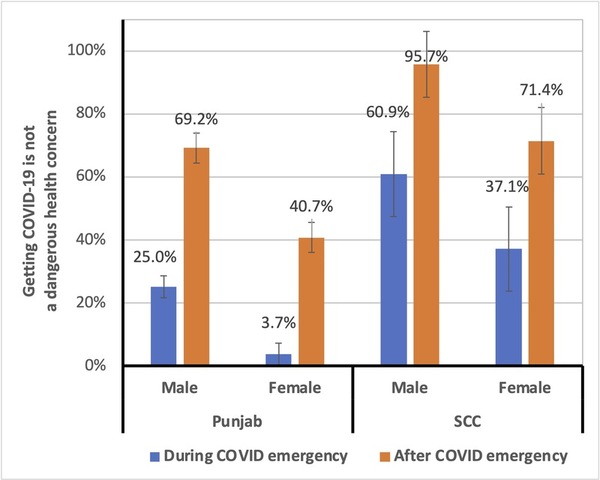
COVID-19 has officially been downgraded from the status of a global health emergency, but have COVID-19 safety practices become a new way of life for students? The authors collected survey data on COVID-19-related knowledge and behaviors of high-school students in Punjab, Pakistan and Santa Clara County, California, USA, so see where high-schoolers stand on pandemic safety today.

Read More...

Reddit v. Wall Street: Why Redditors beat Wall Street at its own game

Bhakar et al. | Sep 13, 2022

Reddit v. Wall Street: Why Redditors beat Wall Street at its own game

Here the authors investigated the motivation of a short squeeze of GameStop stock where users of the internet forum Reddit drove a sudden increase in GameStop stock price during the start of 2021. They relied on both qualitative and quantitative analyses where they tracked activity on the r/WallStreetBets subreddit in relation to mentions of GameStop. With these methods they found that while initially the short squeeze was driven by financial motivations, later on emotional motivations became more important. They suggest that social phenomena can be dynamic and evolve necessitating mixed method approaches to study them.

Read More...

Quantitatively evaluating changes in art critique journals’ use of moral language across time

Chang et al. | Oct 23, 2026

Quantitatively evaluating changes in art critique journals’ use of moral language across time
Image credit: Chang and Mahmoud

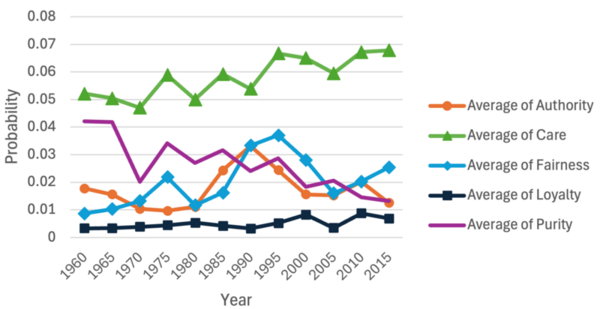
The authors use MoralBERT, a BERT-based machine learning model, to analyze the prevalence and evolution of moral language in art critique journals from 1960 to 2015. They draw on Moral Foundations Theory to examine changes in five virtue and five vice foundations over time. They discover slight increases in degradation and care and a decrease in purity among otherwise stable patterns. The study is a novel application of computational moral analysis in a domain not typically associated with such tools. Although the moral signals were relatively faint, the study offers insights into shifting art world discourses and models an exciting method for future inquiry.

Read More...