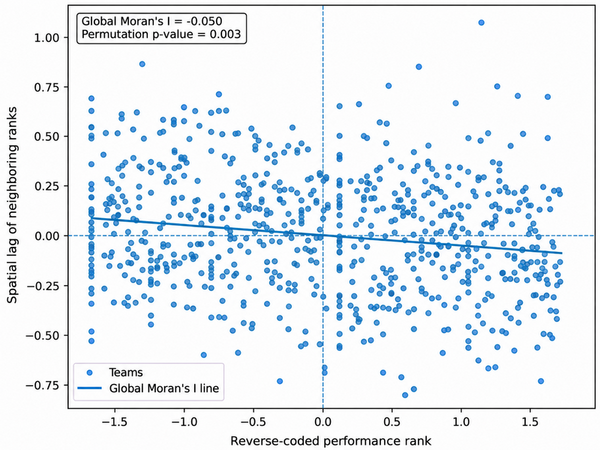
The study examined whether high school boys’ water polo teams located near strong programs had similar season performances during the 2024–2025 season.
Read More...Geographic proximity to strong competitors and team performance in high school water polo
The study examined whether high school boys’ water polo teams located near strong programs had similar season performances during the 2024–2025 season.
Read More...High school students’ attitudes towards diverse cultures and ethnicities
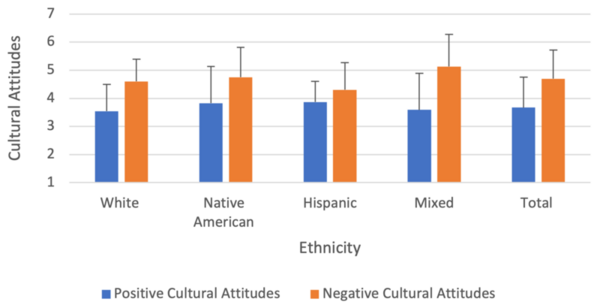
The authors looked at how a student's own background influence their attitude towards integration of diverse cultures and ethnicities. While overall students viewed other groups positively, the authors found that groups still indicated they felt judged by their peers.
Read More...Majority and Minority Influence in Teenagers for Different Social Dilemmas

Because humans live in societies, they may feel social pressure to conform to majority opinions. This follow-up study explores whether teenagers are likely to change their opinions to match others’, particularly in ambiguous situations.
Read More...Inhibitory effects of captan on growth of Escherichia coli and Bacillus coagulans

The authors test the effects of the pesticide captan on the growth of gut microbiome bacteria including Bacillus coagulan and Escherichia coli.
Read More...Who is at Risk for a Spinal Fracture? – A Comparative Study of National Health and Nutrition Examination Survey Data

One common age-related health problem is the loss of bone mineral density (BMD), which can lead to a variety of negative health outcomes, including increased risk of spinal fracture. In this study, the authors investigate risk factors that may be predictive of an individual's risk of spinal fracture. Their findings provide valuable information that clinicians can use in patient evaluations.
Read More...Quantitatively evaluating changes in art critique journals’ use of moral language across time
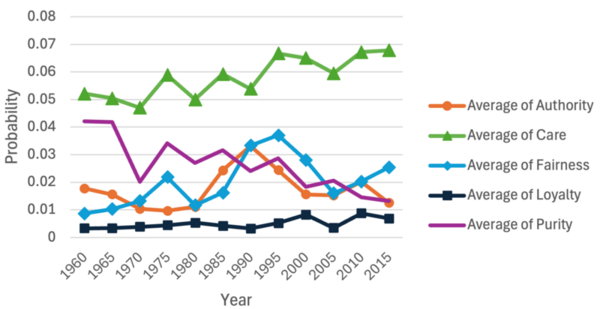
The authors use MoralBERT, a BERT-based machine learning model, to analyze the prevalence and evolution of moral language in art critique journals from 1960 to 2015. They draw on Moral Foundations Theory to examine changes in five virtue and five vice foundations over time. They discover slight increases in degradation and care and a decrease in purity among otherwise stable patterns. The study is a novel application of computational moral analysis in a domain not typically associated with such tools. Although the moral signals were relatively faint, the study offers insights into shifting art world discourses and models an exciting method for future inquiry.
Read More...Significance of Tumor Growth Modeling in the Behavior of Homogeneous Cancer Cell Populations: Are Tumor Growth Models Applicable to Both Heterogeneous and Homogeneous Populations?

This study follows the process of single-cloning and the growth of a homogeneous cell population in a superficial environment over the course of six weeks with the end goal of showing which of five tumor growth models commonly used to predict heterogeneous cancer cell population growth (Exponential, Logistic, Gompertz, Linear, and Bertalanffy) would also best exemplify that of homogeneous cell populations.
Read More...Weather-based power outage prediction in New York City: An ensemble machine learning approach

This study contributes to our understanding of how urban energy systems respond to climate variability and inform strategies for enhancing power grid resilience. The findings can help inform urban planners and infrastructure developers by identifying the factors that make regions within a power grid more vulnerable.
Read More...A new scale of mathematical problem complexity and its application to understanding fear of mathematics

Fear of mathematics is a widespread phenomenon. Pandey and Pandey investigate what this fear has to do with the place of mathematics in a school curriculum, by developing a method for comparing mathematical problem complexity to the complexity of English literature coursework.
Read More...Impact of contamination variability on convolutional neural network accuracy in recycling classification
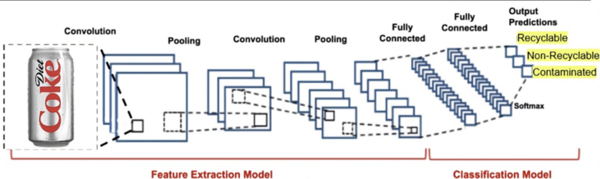
The authors looked at the ability of a convolutional neural network (CNN) to sort contaminated recycling, with varying levels of contamination. They found as contamination levels increased, the CNN faced more difficulty correctly classifying items.
Read More...