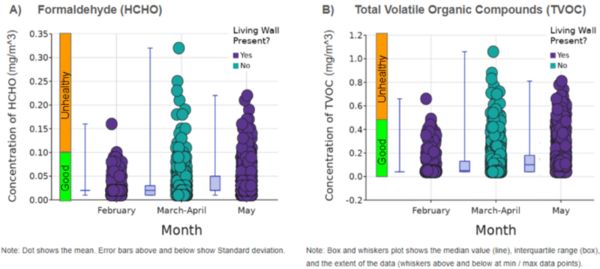
In this report, Bhardwaj and Sharma tested whether placing specific plants indoors can reduce levels of indoor air pollution that can lead to lung-related illnesses. Using machine learning, they show that plants improved overall indoor air quality and reduced levels of particulate matter. They suggest that plant-based interventions coupled with sensors may be a useful long-term solution to reducing and maintaining indoor air pollution.
This study examined the relationship between the slope of a terrain and vegetation, measured by the normalized difference vegetation index (NDVI). It was hypothesized that lower slope ranges would be more supportive of vegetation growth than higher slope ranges. Analysis showed that no slope (even as extreme as 85–90°) prohibits the growth of vegetation completely; even the steepest slopes examined contain plant life. Knowing that steep slopes can still support plant life, agriculturalists can begin to explore and start planting additional crops and plants at these extreme slopes.
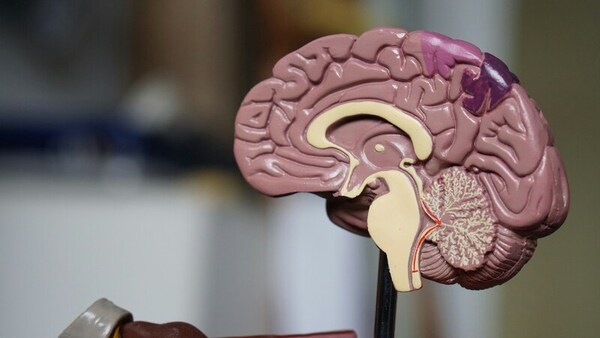
Here the authors sought to investigate whether and how cerebral stroke and other health-related variables are influenced together and amongst each other by using statistical analyses. Their analysis suggested relations between nearly all variables considered, with the strongest association between having heart disease and a cerebral stroke.
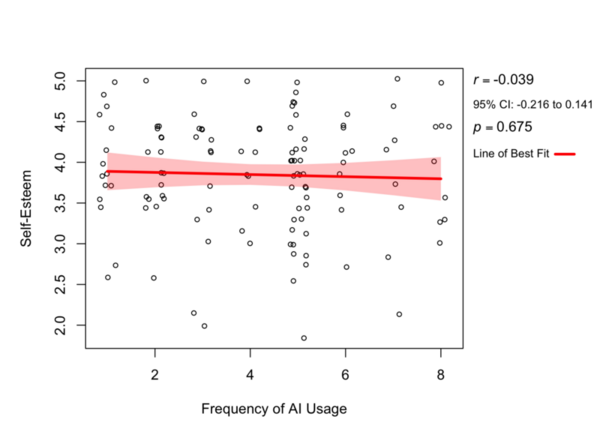
Here the authors investigated whether frequent use of generative AI tools triggers upward social comparison and negatively impacts users' performance self-esteem. Based on a survey of 121 adults, they found no significant relationship between AI usage and self-esteem, concluding that current chatbot interactions do not pose the same psychological threat as peer-based comparisons.
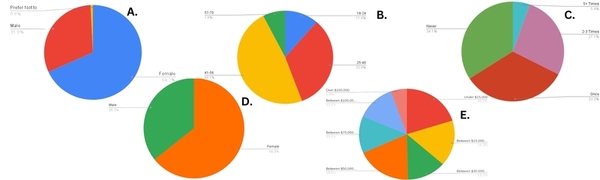
The luxury market has grown through digital marketing, with many brands benefiting from exclusivity, which limits product availability. While exclusivity boosts sales, it may negatively affect consumers' mental health. This study of 129 respondents explored the main motivation for purchasing luxury goods and connection to mental health.
How accurate are DNA parentage tests? In this study, the authors hypothesized that current parentage tests are reliable if the analysis involves only one or a few families of yellow perch fish Perca flavescens. Their results suggest that DNA parentage tests are reliable as long as the right methods are used, since these tests involve only one family in most cases, and that the results from parentage analyses of large populations can only be used as a reference.
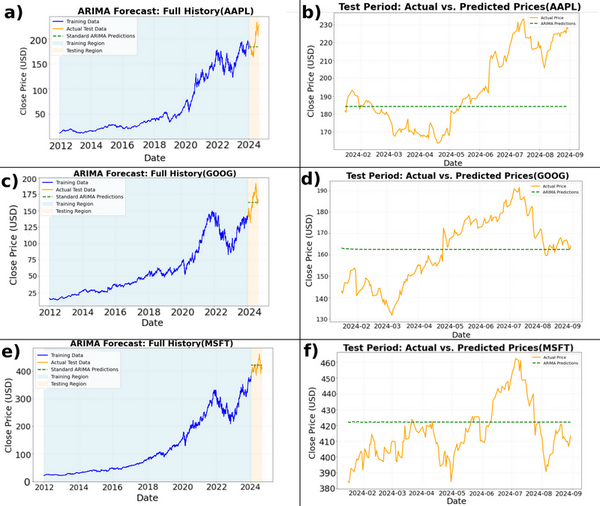
Classical financial forecasting models often fail to capture the complex, nonlinear dynamics of the stock market. This study demonstrates that incorporating a single variable to represent the 'geometric curvature' of a time series dramatically improves the accuracy of standard econometric forecasts. Our findings highlight that geometric properties are a significant predictive factor, opening new avenues for more powerful financial modeling.
The lexical decision task is designed to test aspects of vocabulary retrieval from short-term and long-term memory by prompting the subject to differentiate between words and non-words. From this task, researchers can determine the effects of certain stimuli on linguistic processing. Numerous studies have investigated the effects of music on various cognitive capacities, like memory and vocabulary. In the current study, we hypothesized that participants would show greater accuracy rates on the lexical decision task when exposed to a selected piece of classical music while completing the task, as compared to completing the task in silence. We tested this hypothesis on a group of 25 participants who completed the lexical decision task once in silence and once while listening to Beethoven's “Moonlight Sonata, 1st Movement”. The results suggest a positive association between the effects of classical background music and improved accuracy. Our results indicate that listening to certain types of music may enhance linguistic processes such as reading and writing. Further research with a larger group of participants is necessary to better understand the association between music and linguistic processing abilities.
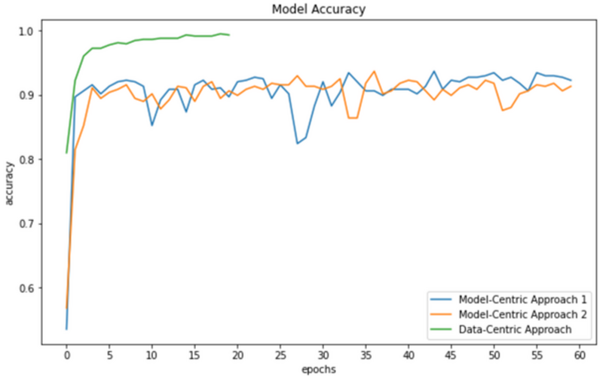
In this study, three models are used to test the hypothesis that data-centric artificial intelligence (AI) will improve the performance of machine learning.