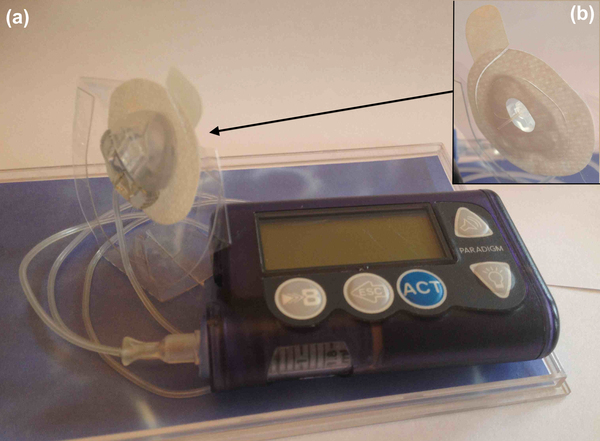
Insulin infusion patches are a common way for diabetics to receive medication. The durability of two different patch adhesives was compared on artificial skin with and without artificial sweat.
Read More...Durability of the Continuous Subcutaneous Insulin Infusion (CSII) Patch Adhesive
Insulin infusion patches are a common way for diabetics to receive medication. The durability of two different patch adhesives was compared on artificial skin with and without artificial sweat.
Read More...Development of Two New Efficient Means of Wastewater Treatment
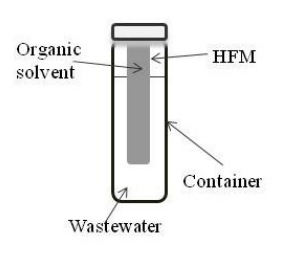
The water we use must be treated and cleaned before we release it back into the environment. Here, the authors investigate two new techniques for purifying dissolved impurities from waste water. Their findings may give rise to more cheaper and more efficient water treatment and help keep the planet greener.
Read More...Pancreatic Adenocarcinoma: An Analysis of Drug Therapy Options through Interaction Maps and Graph Theory
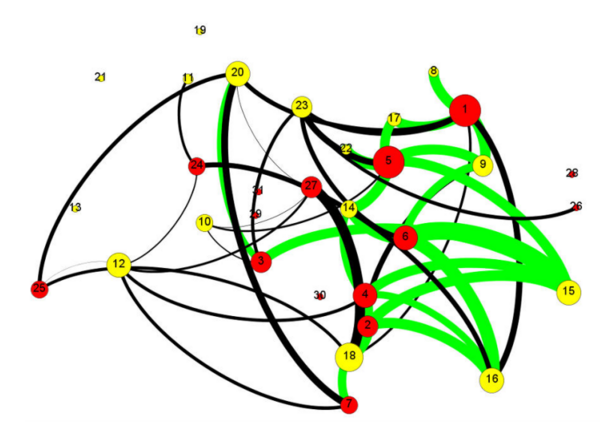
Cancer is often caused by improper function of a few proteins, and sometimes it takes only a few proteins to malfunction to cause drastic changes in cells. Here the authors look at the genes that were mutated in patients with a type of pancreatic cancer to identify proteins that are important in causing cancer. They also determined which proteins currently lack effective treatment, and suggest that certain proteins (named KRAS, CDKN2A, and RBBP8) are the most important candidates for developing drugs to treat pancreatic cancer.
Read More...Effect of Collagen Gel Structure on Fibroblast Phenotype
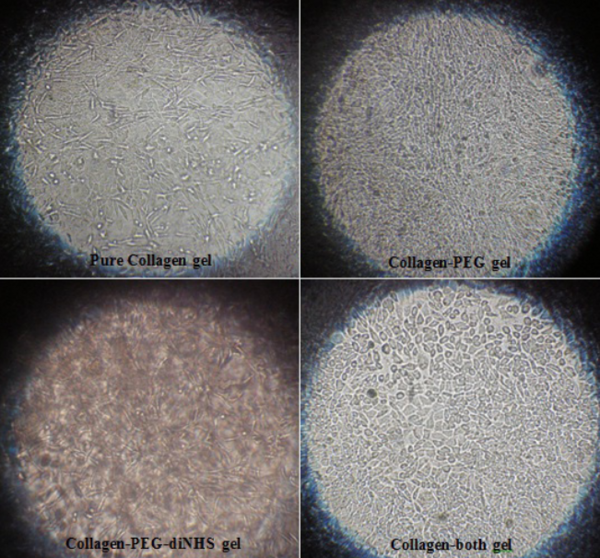
Environment affects the progression of life, especially at the cellular level. This study investigates multiple 3-dimensional growth environments, also known as scaffolds or hydrogels, and their effect on the growth of a type of cells called fibroblasts. These results suggest that a scaffold made of collagen and polyethylene glycol are favorable for cell growth. This research is useful for developing implantable devices to aid wound healing.
Read More...Study of PINN sensor layout in evaluating WSS with application to patient-specific carotid flow
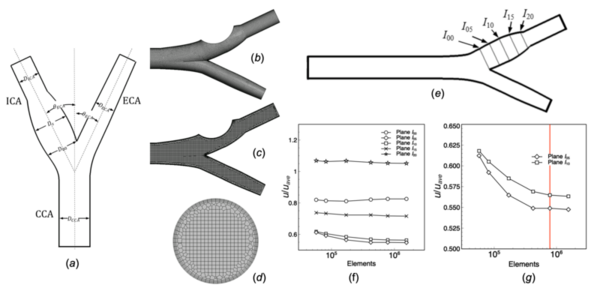
Physics‑Informed Neural Networks (PINNs) offer a promising way to estimate blood‑flow behavior in arteries, especially near the vessel wall where traditional methods struggle. In this study, students tested how sensor density and placement affect PINN accuracy in modeling carotid artery flow and found that accuracy improves up to a moderate sensor density and depends strongly on how close sensors are placed to the arterial wall. Applying the optimized configuration to a patient‑specific carotid model produced velocity predictions closely matching computational fluid dynamics results, highlighting PINNs’ potential for future personalized cardiovascular assessment.
Read More...Environmental, Social, and Governance (ESG) Standards and Financial Performance in Vietnam’s Media Sector
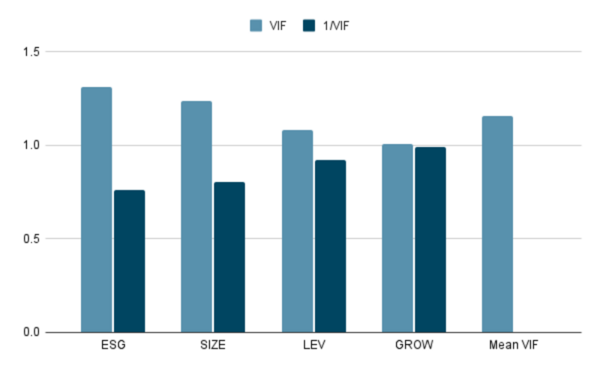
In this study, the authors examine the relationship between ESG (Environmental, Social, and Governance) factors on financial performance of Vietnamese media companies, as measured by ROA and ROE. They find that ESG is positively correlated with financial performance, as is sales growth. They also find that financial leverage is negatively correlated with ROA. Overall, this is a quality study, although the methods section requires more detail.
Read More...Innovative fake health news detection: Integrating emotional features into graph neural networks
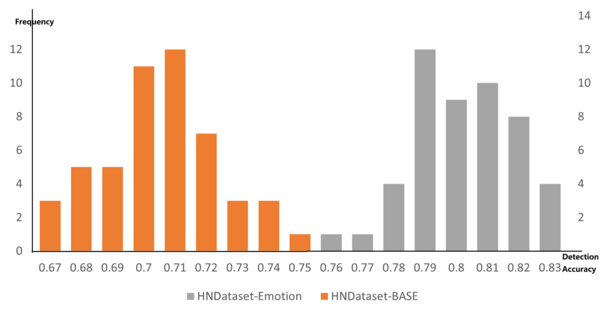
This manuscript tackles a major social issue in the health news sector, with social media being one of the primary sources of information and a prime spot to propagate fake news. The author proposes X-HND , which is a unique architecture that combines emotional and contextual analysis in a Graph Neural Network to accurately detect fake news. This was a multi-step process which involved the creation of a custom health news dataset (HNDataset), and an emotional variant that uses RoBERTa to extract emotion. These dataset were then used to prove the hypothesis that accuracy increases when the custom dataset is used to train the model and that with the integration of emotion capture, the detection accuracy increases further.
Read More...Evaluating the effectiveness of synthetic training data for day-ahead wind speed prediction in the Great Lakes
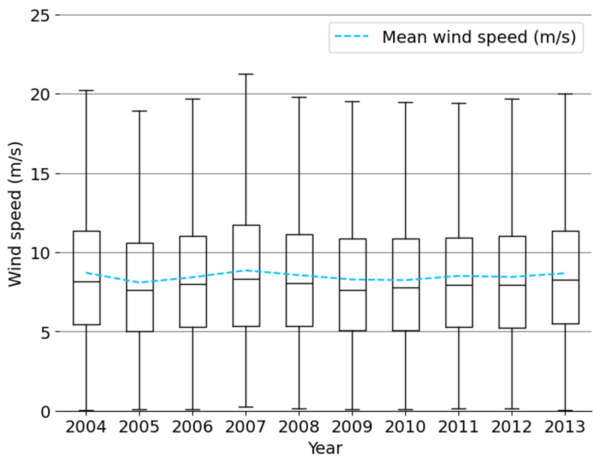
The authors looked at the feasibility to predict wind speeds that will have less reliance on using historical data.
Read More...High school students’ perceptions of third-party tracking and personalization

The authors looked at student perception on various situations involving third-party tracking to personalize recommendations.
Read More...The impact of genetic, drug, and procedural factors on cardiac xenograft survival days in non-human primates
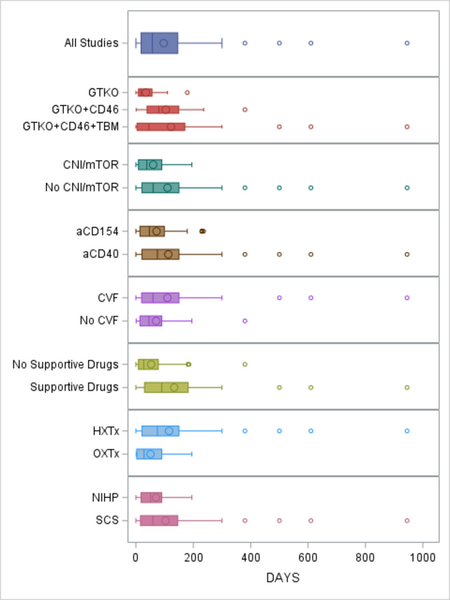
Due to a critical shortage of donor hearts, researchers are exploring cardiac xenotransplantation—transplanting animal hearts into humans—as a potential solution. This study synthesized nearly two decades of preclinical research to evaluate multiple factors affecting xenograft survival.
Read More...