Browse Articles

Are Teens Willing to Pay More for Their Preferred Goods?

Johnson et al. | Sep 28, 2019

Are Teens Willing to Pay More for Their Preferred Goods?
Image credit: Blake Wisz

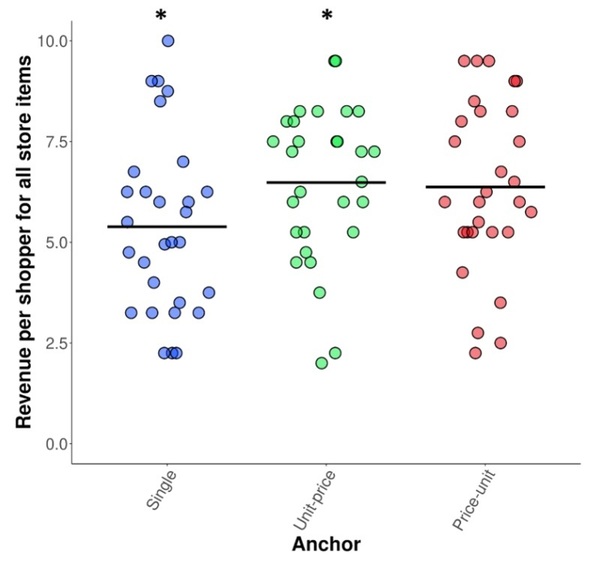
Each day we are flooded with new items that promise us a better experience at a better price. This forces buyers to continuously chose between sticking to what they know, or trying something new. In turn, companies need to be aware of the factors affecting consumer choices, that too within the different fractions of society. In this study the authors investigate the effect of survey-based price setting on profits made based on African American teen purchases, and how African-American teen loyalty to a particular brand affects their willingness to pay a higher price than the market average for their preferred brand items.

Read More...

Can Children Acquire Their Parents’ History of Fracture?

Boulis et al. | Sep 24, 2018

Can Children Acquire Their Parents’ History of Fracture?

While the genetic basis of hip fracture risk has been studied extensively in adults, it is not known whether parental history of bone fractures affects their children's fracture risk. In this article, the authors investigated whether a parental history of bone fractures influences the rate of fractures in their children. They found that adolescent children whose parents had a more extensive history of fractures were more likely to have a history of fractures themselves, suggesting that parents' medical histories may be an important consideration in future pediatric health research.

Read More...

Innovative fake health news detection: Integrating emotional features into graph neural networks

Wang et al. | Jul 03, 2026

Innovative fake health news detection: Integrating emotional features into graph neural networks
Image credit: Wang and Wang

This manuscript tackles a major social issue in the health news sector, with social media being one of the primary sources of information and a prime spot to propagate fake news. The author proposes X-HND , which is a unique architecture that combines emotional and contextual analysis in a Graph Neural Network to accurately detect fake news. This was a multi-step process which involved the creation of a custom health news dataset (HNDataset), and an emotional variant that uses RoBERTa to extract emotion. These dataset were then used to prove the hypothesis that accuracy increases when the custom dataset is used to train the model and that with the integration of emotion capture, the detection accuracy increases further.

Read More...

Shortage of Black physicians: Florida Black medical student enrollment from 2013 to 2021

Khan et al. | Sep 18, 2024

Shortage of Black physicians: Florida Black medical student enrollment from 2013 to 2021

Black patients tend to have better health outcomes when cared for by Black physicians, yet Black doctors make up only 5% of U.S. physicians, despite Black people comprising 14% of the population. This analysis of data from Florida medical schools showed a higher enrollment of Black first-year students (13.5%) compared to the national average (9%), and a national increase from 6% in 2013 to 9% in 2021, aligning with the rise of social justice movements. Increasing Black medical student enrollment could reduce health disparities and improve outcomes for Black communities.

Read More...

Increasing Average Yearly Temperature in Two U.S. Cities Shows Evidence for Climate Change

Savage et al. | Sep 20, 2018

Increasing Average Yearly Temperature in Two U.S. Cities Shows Evidence for Climate Change

The authors were interested in whether they could observe the effects of climate change by analyzing historical temperature data of two U.S. cities. They predicted that they should observe a warming trend in both cities. Their results showed that despite yearly variations, warming trends can be observed both in Rochester, NY and Seattle, WA which fit the predictions of climate change forecasts.

Read More...