Browse Articles

Impact of carbon number and atom number on cc-pVTZ Hartree-Fock Energy and program runtime of alkanes

Pan et al. | Mar 06, 2024

Impact of carbon number and atom number on cc-pVTZ Hartree-Fock Energy and program runtime of alkanes
Image credit: The authors

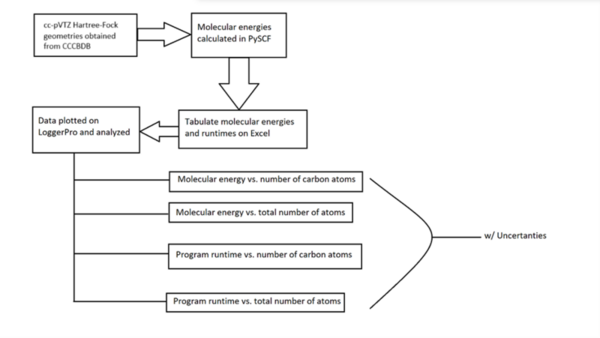
It's time-consuming to complete the calculations that are used to study nuclear reactions and energy. To uncover which computational chemistry tools are useful for this challenge, Pan, Vaiyakarnam, Li, and McMahan investigated whether the Python-based Simulations of Chemistry Framework’s Hartree-Fock (PySCF) method is an efficient and accurate way to assess alkane molecules.

Read More...
Using machine learning to detect outliers of red clump stars

Meng et al. | Oct 10, 2026

Using machine learning to detect outliers of red clump stars

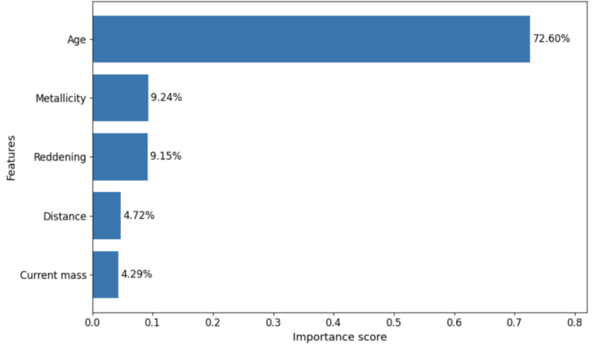
Machine learning offers a powerful way to analyze large astronomical datasets and identify stars with unusual properties. In this study, students used Extreme Gradient Boosting and Isolation Forest models to investigate why some red clump stars deviate from their expected luminosities. Their results show that stellar age plays a much stronger role than metallicity in driving luminosity variation, and the models successfully detected outlier stars that may affect distance measurements in galactic studies.

Read More...

Retinal biomarkers for the detection of neurological disease using deep learning

Kim et al. | Sep 04, 2026

Retinal biomarkers for the detection of neurological disease using deep learning

The authors looked at whether retinal features, specifically lens clarity, optic nerve cupping, and hyperreflective foci, can serve as biomarkers for neuro-ophthalmological diseases, which share pathological mechanisms with neurodegeneration and may indicate broader neurological risk. Using multimodal clinical data and machine learning, they investigated the potential of retinal imaging as a complementary diagnostic tool for more accurate and accessible detection of neurological disorders.

Read More...

Machine learning predictions of additively manufactured alloy crack susceptibilities

Gowda et al. | Nov 12, 2024

Machine learning predictions of additively manufactured alloy crack susceptibilities

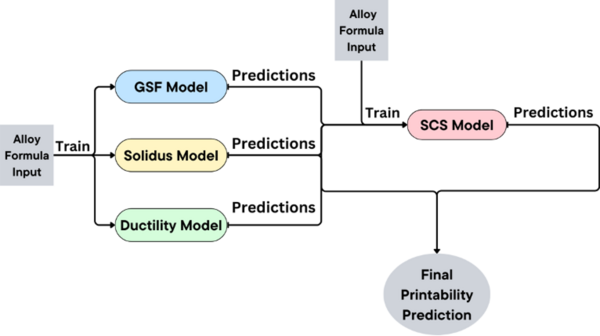
Additive manufacturing (AM) is transforming the production of complex metal parts, but challenges like internal cracking can arise, particularly in critical sectors such as aerospace and automotive. Traditional methods to assess cracking susceptibility are costly and time-consuming, prompting the use of machine learning (ML) for more efficient predictions. This study developed a multi-model ML pipeline that predicts solidification cracking susceptibility (SCS) more accurately by considering secondary alloy properties alongside composition, with Random Forest models showing the best performance, highlighting a promising direction for future research into SCS quantification.

Read More...