Browse Articles

Measuring effects of caffeine and melatonin on learning trends of Zebrafish juveniles

Wei et al. | Jun 28, 2026

Measuring effects of caffeine and melatonin on learning trends of Zebrafish juveniles

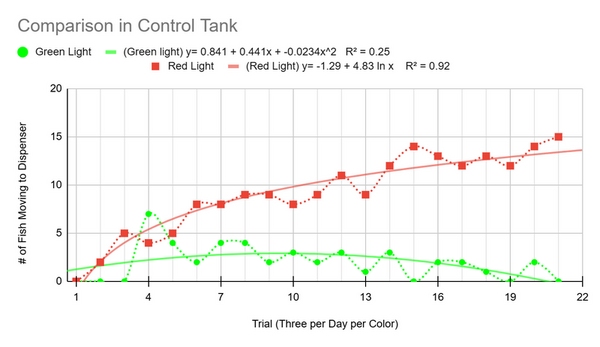
This study investigates how caffeine and melatonin affect learning in adolescent zebrafish, serving as a model for human teens. Using an automated system to track behavior, we found that melatonin slowed learning while caffeine caused erratic, inconsistent responses, suggesting both substances can negatively impact adolescent learning patterns. These findings highlight the need for further research into their physiological effects and potential implications for human adolescents.

Read More...
Deep learning for pulsar detection: Investigating hyperparameter effects on TensorFlow classification accuracy

Upadhyay et al. | Jan 31, 2026

Deep learning for pulsar detection: Investigating hyperparameter effects on TensorFlow classification accuracy

This study investigates how the hyperparameters epochs and batch size affect the classification accuracy of a convolutional neural network (CNN) trained on pulsar candidate data. Our results reveal that accuracy improves with increasing number of epochs and smaller batch sizes, suggesting that with optimized hyperparameters, high accuracy may be achievable with minimal training. These findings offer insights that could help create more efficient machine learning classification models for pulsar signal detection, with the potential of accelerating pulsar discovery and advancing astrophysical research.

Read More...

Testing filtration capabilities of household fabrics for protection against airborne contaminants

Shah et al. | May 31, 2025

Testing filtration capabilities of household fabrics for protection against airborne contaminants

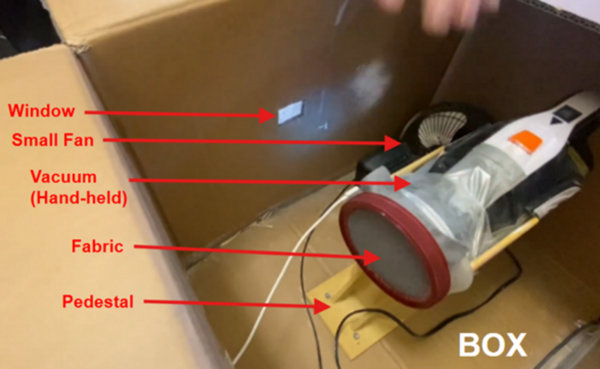
Toxic particulates in the atmosphere pose significant health risks, and while modern masks can help reduce inhalation of these pollutants, their availability may be limited during health crises. This study evaluated the effectiveness of household fabrics (cotton, fleece, wool, and rayon) as particulate filters, finding that cotton outperformed the others in filtration efficiency, while rayon was the least effective. The findings suggest that cotton is a preferable alternative for filtration purposes, while rayon should be avoided.

Read More...