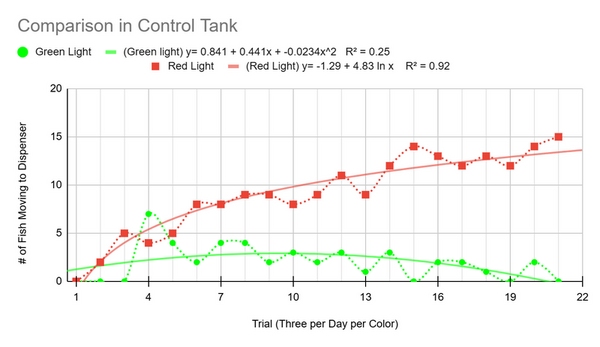
In this article, the authors explored the locomotory movement of Euglena sp. and Tetrahymena pyriformis in response to light. Such research bears relevance to the migration and distribution patterns of both T. pyriformis and Euglena as they differ in their method of finding sustenance in their native environments. With little previous research done on the exploration of a potential response to photostimulation enacted by T. pyriformis, the authors found that T. pyriformis do not bias in distribution towards areas of light - unlike Euglena, which displayed an increased prevalence in areas of light.
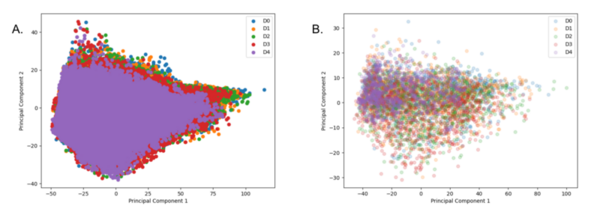
In this study, the authors developed a model named DNA Sequence Embedding Network (DNA-SEnet) to classify DNA-asthma associations using their genomic patterns.
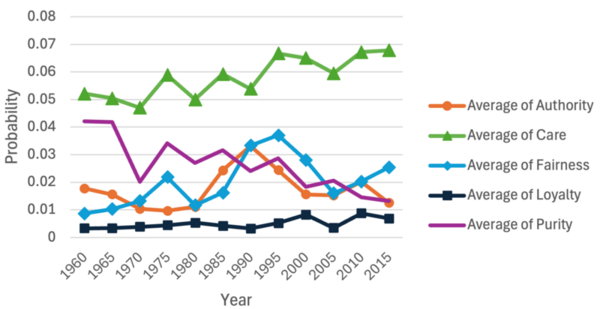
The authors use MoralBERT, a BERT-based machine learning model, to analyze the prevalence and evolution of moral language in art critique journals from 1960 to 2015. They draw on Moral Foundations Theory to examine changes in five virtue and five vice foundations over time. They discover slight increases in degradation and care and a decrease in purity among otherwise stable patterns. The study is a novel application of computational moral analysis in a domain not typically associated with such tools. Although the moral signals were relatively faint, the study offers insights into shifting art world discourses and models an exciting method for future inquiry.
This study investigates how caffeine and melatonin affect learning in adolescent zebrafish, serving as a model for human teens. Using an automated system to track behavior, we found that melatonin slowed learning while caffeine caused erratic, inconsistent responses, suggesting both substances can negatively impact adolescent learning patterns. These findings highlight the need for further research into their physiological effects and potential implications for human adolescents.
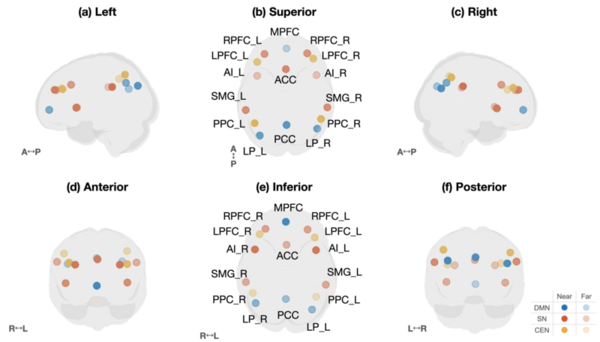
This study found that anxiety induced by a suspenseful story increased communication between the brain’s salience, default mode, and central executive networks, with the central executive network acting as a bridge during peak tension. These findings suggest that anxiety alters large-scale brain connectivity patterns and may help inform future diagnostic tools and personalized treatments for anxiety disorders.
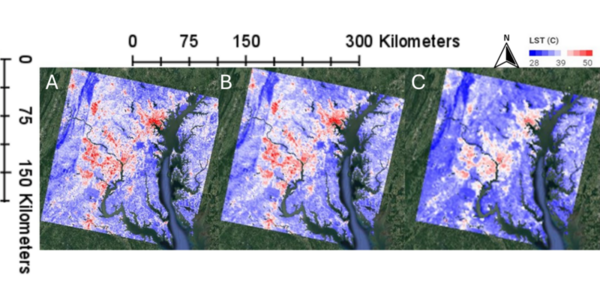
Image credit: Meister, Horvath, and Brown de Colstoun
This manuscript investigates the urban heat island (UHI) effect by utilizing two satellite datasets: Landsat (high spatial resolution, lower temporal resolution) and MODIS (lower spatial resolution, high temporal resolution). The authors hypothesized that Landsat would provide better spatial detail, while MODIS would better capture temporal variations. Their analysis in the Washington D.C.–Baltimore region supports these hypotheses, demonstrating that Landsat offers finer spatial details, whereas MODIS provides more consistent seasonal patterns and better detects heatwave frequencies.
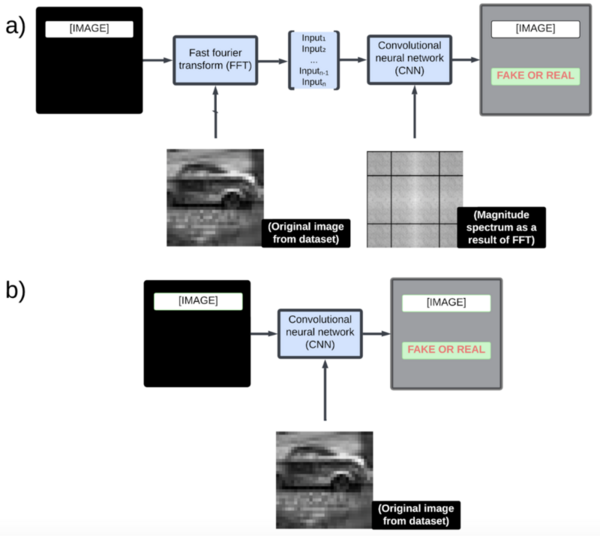
Recent advances in generative AI have made it increasingly hard to distinguish real images from AI-generated ones. Traditional detection models using CNNs or U-net architectures lack precision because they overlook key spatial and frequency domain details. This study introduced a hybrid model combining Convolutional Neural Networks (CNN) with Fast Fourier Transform (FFT) to better capture subtle edge and texture patterns.
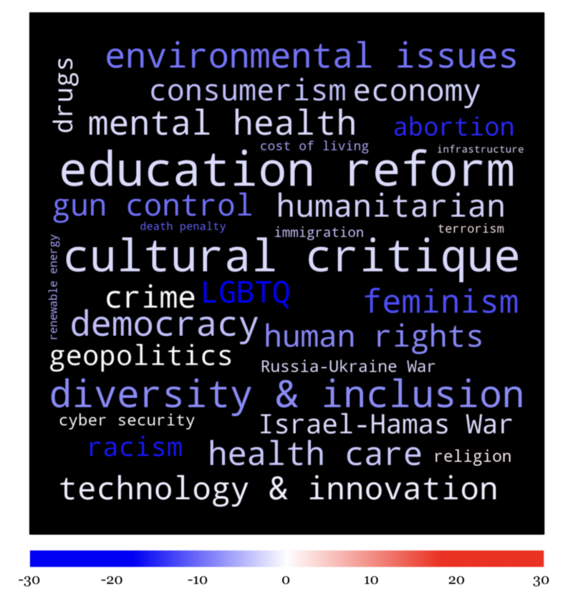
Here the authors provided greater coverage of adolescent stances by investigating the political perspectives and trends of high school journalists, utilizing web scraping methods and artificial intelligence (ChatGPT-4o) to analyze over 153,000 articles. They found that high school publications exhibit lower levels of political polarization compared to mainstream media and that journalists' views, while tending to lean moderately liberal, showed no significant correlation with local voting patterns.
Droughts have a wide range of effects, from ecosystems failing and crops dying, to increased illness and decreased water quality. Drought prediction is important because it can help communities, businesses, and governments plan and prepare for these detrimental effects. This study predicts drought conditions by using predictable weather patterns in machine learning models.
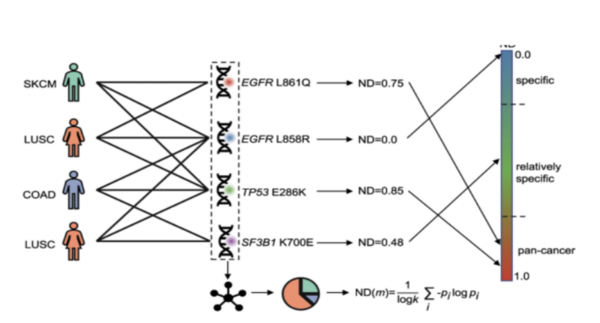
Breast cancer is the most common cancer in women, with approximately 300,000 diagnosed with breast cancer in 2023. It ranks second in cancer-related deaths for women, after lung cancer with nearly 50,000 deaths. Scientists have identified important genetic mutations in genes like BRCA1 and BRCA2 that lead to the development of breast cancer, but previous studies were limited as they focused on specific populations. To overcome limitations, diverse populations and powerful statistical methods like genome-wide association studies and whole-genome sequencing are needed. Explainable artificial intelligence (XAI) can be used in oncology and breast cancer research to overcome these limitations of specificity as it can analyze datasets of diagnosed patients by providing interpretable explanations for identified patterns and predictions. This project aims to achieve technological and medicinal goals by using advanced algorithms to identify breast cancer subtypes for faster diagnoses. Multiple methods were utilized to develop an efficient algorithm. We hypothesized that an XAI approach would be best as it can assign scores to genes, specifically with a 90% success rate. To test that, we ran multiple trials utilizing XAI methods through the identification of class-specific and patient-specific key genes. We found that the study demonstrated a pipeline that combines multiple XAI techniques to identify potential biomarker genes for breast cancer with a 95% success rate.