Browse Articles

The effect of the consumption of the probiotic B. infantis on ethanol withdrawal symptoms in planaria (Dugesia dorotocephala)

McCandless et al. | Mar 16, 2021

The effect of the consumption of the probiotic B. infantis on ethanol withdrawal symptoms in planaria (Dugesia dorotocephala)

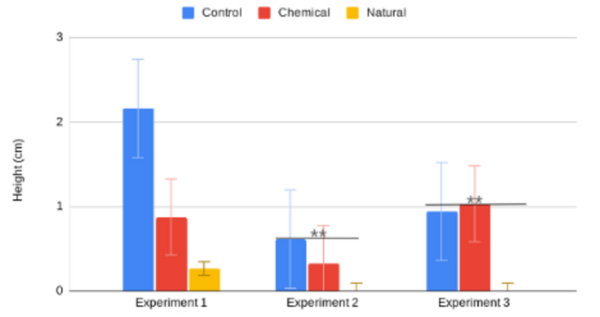
Alcohol use disorder is a chronic, relapsing disease that affects millions of Americans every day. There are limited treatment options for alcohol dependence and alcohol withdrawal symptoms, including depression and anxiety. Previous studies have shown that probiotics can decrease depression in rodents during maternal separation and anxiety in humans. Therefore, we hypothesized that the ethanol-withdrawn planaria who consumed probiotics would have decreased withdrawal symptoms as measured by increased motility compared to the ethanol-withdrawn planaria that were not fed probiotics. The ethanol-withdrawn planaria had a statistically significant decrease in motility compared to the control group, while the planaria that consumed probiotics had no statistically significant change in motility compared to the control group.

Read More...

Testing the Effects of Salep Derived From the Tubers of Orchis mascula, Aloe vera, and Alpha-chymotrypsin on Wound Healing in Drosophila melanogaster Larvae

Halder et al. | Sep 09, 2019

Testing the Effects of Salep Derived From the Tubers of <em>Orchis mascula</em>, <em>Aloe vera</em>, and Alpha-chymotrypsin on Wound Healing in <em>Drosophila melanogaster</em> Larvae

Aloe vera and alpha-chymotrypsin have been used in are known for their various wound healing properties. Halder et al hypothesized that these treatments would enhance wound healing in Drosophila melanogaster larvae over 2 weeks by decreasing wound size more effectively compared to controls. The results of two of the treatment groups, Salep and Aloe vera, yielded wound sizes small enough to present a significant percent decrease when compared with the wound sizes of the control group. Their results show support that both Salep and Aloe vera were effective for enhancing wound healing in epithelial cells in D. melanogaster larvae.

Read More...

What Can You See in the Dark? The Effects of Contrast, Light, and Age on Contrast Sensitivity in Low Light

Virostek et al. | Apr 25, 2014

What Can You See in the Dark? The Effects of Contrast, Light, and Age on Contrast Sensitivity in Low Light

Many of us take our vision for granted, but rarely do we measure how well we can see. In this study, the authors investigate the ability of people of different ages to read progressively fainter letters in dark light. They find that the ability to see in dim light drops drastically after age 30. The ability to read fainter letters worsens after age 30 as well. These findings should help inform lighting decisions everywhere from restaurants to road signs.

Read More...

Effects of Photoperiod Alterations on Stress Response in Daphnia magna

Kelly et al. | Mar 10, 2022

Effects of Photoperiod Alterations on Stress Response in <em>Daphnia magna</em>

Here, seeking to better understand the effects of altered day-night cycles, the authors considered the effects of an altered photoperiod on Daphnia magna. By tracking possible stress responses, including mean heart rate, brood size, and male-to-female ratio they found that a shorter photoperiod resulted in altered mean heart rates and brood size. The authors suggest that based on these observations, it is important to consider the effects of photoperiod alterations and the stress responses of other organisms.

Read More...

Effects on Learning and Memory of a Mutation in Dα7: A D. melanogaster Homolog of Alzheimer's Related Gene for nAChR α7

Sanyal et al. | Oct 01, 2019

Effects on Learning and Memory of a Mutation in Dα7: A <em>D. melanogaster</em> Homolog of Alzheimer's Related Gene for nAChR α7

Alzheimer's disease (AD) involves the reduction of cholinergic activity due to a decrease in neuronal levels of nAChR α7. In this work, Sanyal and Cuellar-Ortiz explore the role of the nAChR α7 in learning and memory retention, using Drosophila melanogaster as a model organism. The performance of mutant flies (PΔEY6) was analyzed in locomotive and olfactory-memory retention tests in comparison to wild type (WT) flies and an Alzheimer's disease model Arc-42 (Aβ-42). Their results suggest that the lack of the D. melanogaster-nAChR causes learning, memory, and locomotion impairments, similar to those observed in Alzheimer's models Arc-42.

Read More...

Electrocatalytic oxidation of furfural on Co3O4/nickel foam catalyst: performance and mechanistic study

Song et al. | Jul 19, 2026

Electrocatalytic oxidation of furfural on Co<sub>3</sub>O<sub>4</sub>/nickel foam catalyst: performance and mechanistic study
Image credit: Shraga kopstein

In this study, the authors hypothesized that the unique redox properties of cobalt oxide (Co3O4), combined with the conductive nature of the nickel foam (NF) substrate, synergistically enhances the catalytic performance for furfural oxidation. The study showed successful synthesis of Co3O4 nanoflowers directly grown on NF and tested their capacity to serve as a highly efficient electrocatalyst for furfural oxidation. Beyond furfural oxidation, this study also offers broader implications for sustainable chemistry by establishing design principles for efficient nucleophilic oxidation reaction catalysts, demonstrating an energy-saving alternative to conventional oxygen evolution reaction-coupled processes, and showcasing how biomass conversion can be integrated with renewable energy systems.

Read More...