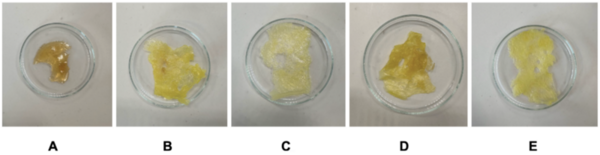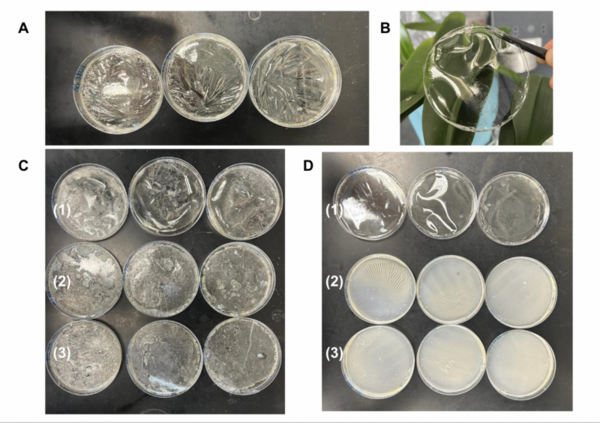
The authors tested the impact of various additives on biopolymer degradation.
Read More...A comparison of starches and plasticizers for biopolymer synthesis and degradation
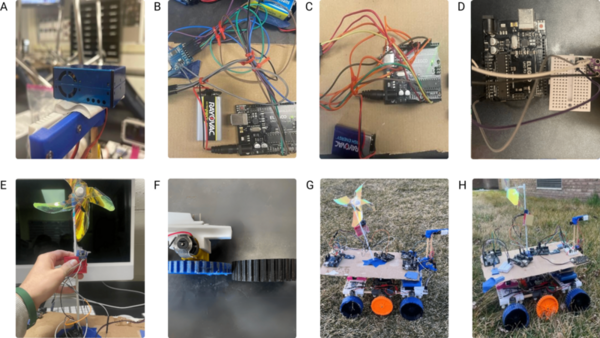
Rover engineered to evaluate impacts of microclimatic parameters on pediatric asthma in Dallas schools
Pediatric asthma remains a significant health issue for Dallas students. This study examined the relationship between microclimatic parameters, vegetation, and pediatric asthma vulnerability (PAV) in urban schools.
Read More...The effects of plasticizers on the mechanical properties and chemical composition of a gelatin biopolymer
Here, in an effort to identify alternatives to oil-based plastic, the authors sought to investigate the effects of plasticizers on the mechanical properties and chemical composition of gelatin bioplastic matrices. Through measurements of their tensile strength and elongation at break, along with FTIR spectroscopy, they identified 3% w/v polyethylene glycol film as having the best performance in their study..
Read More...Effect of Different Growth Media on Algae’s Ability for Carbon Dioxide Biofixation
In this study, the authors investigate the effects of different algal growth media on algae's ability to perform carbon dioxide biofixation, or utilize carbon dioxide by fixing it into fatty acids within the cells. More specifically, carbon dioxide biofixation of Chlorella vulgaris was cultured in one of four media options and carbon dioxide was measured and compared to controls. The study results demonstrated that the use of media can enhance algae's capacity for biofixation and this has important implications for developing methods to reduce carbon dioxide in the environment.
Read More...Kinetic Monitoring and Fourier-Transform Infrared (FTIR) Spectroscopy of the Green Oxidation of (-)-Menthol to (-)-Menthone
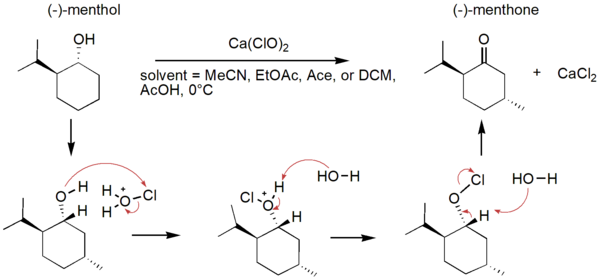
In an effort to reduce the production of hazardous substances, green chemistry aims to make chemical processes more sustainable. One way to do so is changing solvents in chemical reactions. Here, authors assessed different “green” solvents on the oxidation of (-)-menthol to (-)-menthone using Fourier-transform infrared (FTIR) spectroscopy, optimizing the solvent system for this reaction.
Read More...Yeast catalysis of hydrogen peroxide as an enhanced chemical treatment method for harvested rainwater
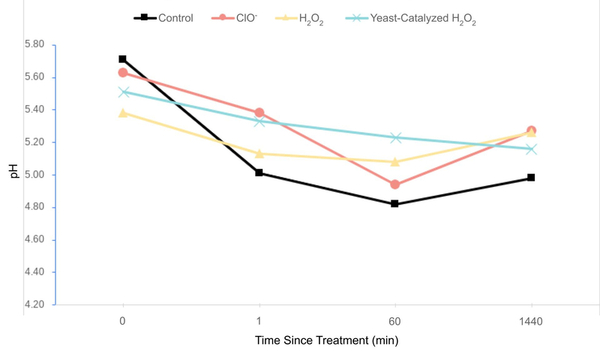
The authors looked at different treatments to clean up rainwater collected at home. They found that chlorine treatment and treatment with hydrogen peroxide catalyzed by yeast showed similar potential for cleaning up contaminated rainwater, but that further studies are needed to better assess impact on specific contaminant levels still present.
Read More...Impact of environmental stressors on ultrasonic acoustic emissions in different species of plants
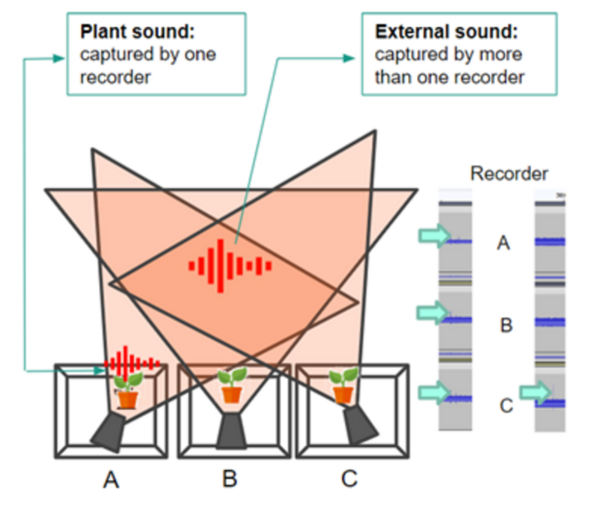
Current horticulture practices often rely on pesticides, causing environmental harm. To address this, authors explore the use of ultrasonic sound emissions to detect plant stress at an individual level.
Read More...Minimizing distortion with additive manufacturing parts using Machine Learning
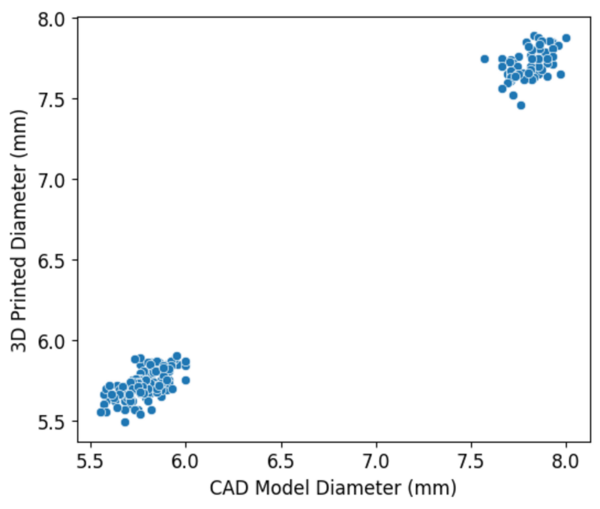
This study explores how to predict and minimize distortion in 3D printed parts, particularly when using affordable PLA filament. The researchers developed a model using a gradient boosting regressor trained on 3D printing data, aiming to predict the necessary CAD dimensions to counteract print distortion.
Read More...A cost-effective IoT-based intelligent indoor air quality monitoring
Poor air quality is associated with negative effects on human health but can be difficult to measure in an accurate and cost-effective manner. The authors design and test a monitor for measuring indoor air quality using low-cost components.
Read More...The Effects of Post-Consumer Waste Polystyrene on the Rate of Mealworm Consumption
In a world where plastic waste accumulation is threatening both land and sea life, Green et al. investigate the ability of mealworms to breakdown polystyrene, a non-recyclable form of petrochemical-based polymer we use in our daily lives. They confirm that these organisms, can degrade various forms of polystyrene, even after it has been put to use in our daily lives. Although the efficiency of the degradation process still requires improvement, the good news is, the worms are tiny and themselves are biodegradable, so we can use plenty of them without worrying about space and how to get rid of them. This is very promising and certainly good news for the planet.
Read More...