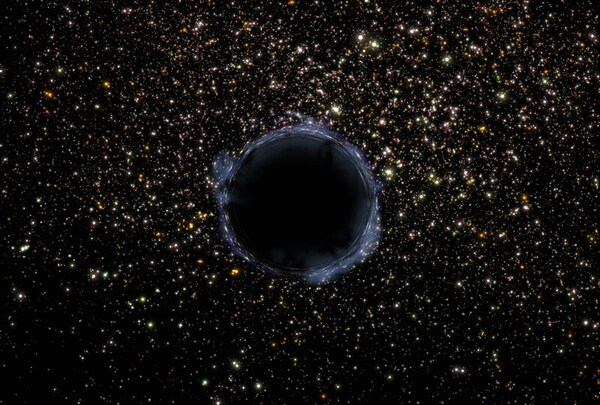
The authors visualized black holes and wormholes using code and ray-tracing programs.
Read More...Visualizing black holes and wormholes through raytracing
The authors visualized black holes and wormholes using code and ray-tracing programs.
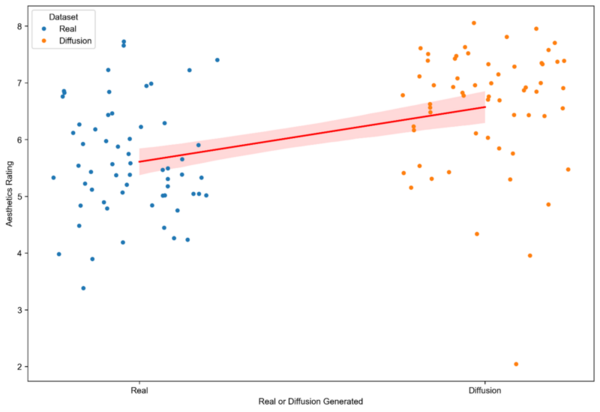
Read More...SpottingDiffusion: Using transfer learning to detect Latent Diffusion Model-synthesized images
Optical anisotropy of crystallized vanillin thin film: the science behind the art
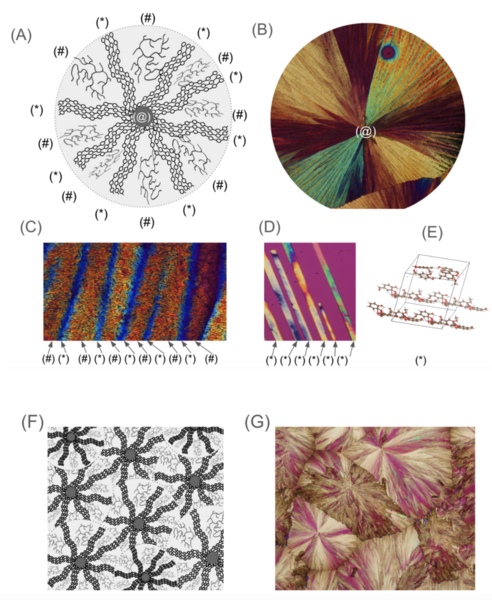
Microscopic beauty is hiding in common kitchen ingredients - even vanillin flavoring can be turned into mesmerizing artwork by crystallizing the vanillin and examining it under a polarizing microscope. Wang and Pang explore this hidden beauty by determining the optimal conditions to grow crystalline vanillin films and by creating computer simulations of chemical interactions between vanillin molecules.
Read More...The Effect of Varying Training on Neural Network Weights and Visualizations
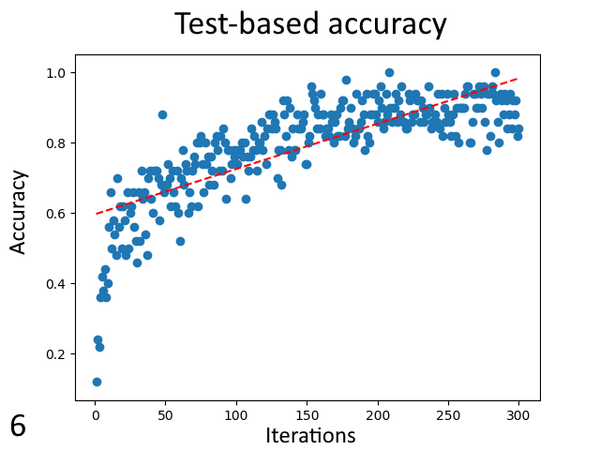
Neural networks are used throughout modern society to solve many problems commonly thought of as impossible for computers. Fountain and Rasmus designed a convolutional neural network and ran it with varying levels of training to see if consistent, accurate, and precise changes or patterns could be observed. They found that training introduced and strengthened patterns in the weights and visualizations, the patterns observed may not be consistent between all neural networks.
Read More...Canopy complexity and plant morphology determine detectability in multi-perspective drone imagery
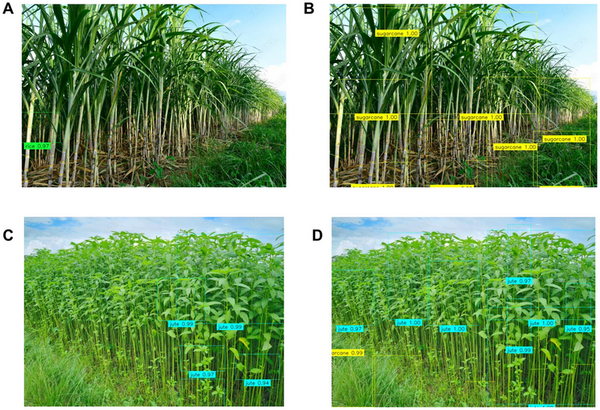
Multi-perspective drone imagery (adding oblique views to top-down shots) raised crop classification accuracy from 35.73% to 52.93% across five species. The improvement scaled with canopy complexity, from +4.2% for simple rice to +38.1% for structurally complex sugarcane.
Read More...Deep learning for pulsar detection: Investigating hyperparameter effects on TensorFlow classification accuracy
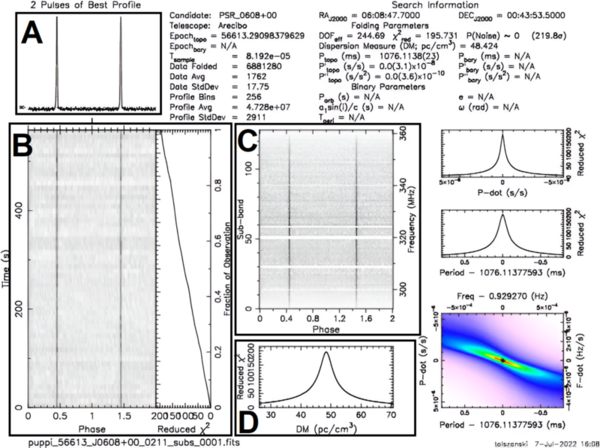
This study investigates how the hyperparameters epochs and batch size affect the classification accuracy of a convolutional neural network (CNN) trained on pulsar candidate data. Our results reveal that accuracy improves with increasing number of epochs and smaller batch sizes, suggesting that with optimized hyperparameters, high accuracy may be achievable with minimal training. These findings offer insights that could help create more efficient machine learning classification models for pulsar signal detection, with the potential of accelerating pulsar discovery and advancing astrophysical research.
Read More...A comparative analysis of machine learning approaches to predict brain tumors using MRI
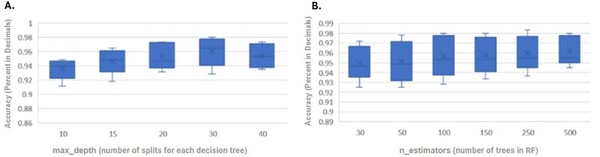
The authors use machine learning on MRI images of brain tissue to predict tumor onset as an avenue for early detection of brain cancer.
Read More...Transfer Learning with Convolutional Neural Network-Based Models for Skin Cancer Classification
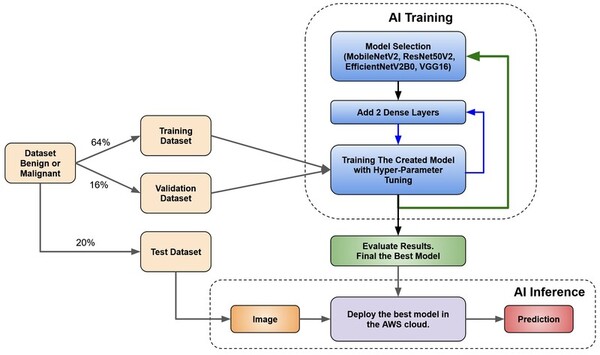
Skin cancer is a common and potentially deadly form of cancer. This study’s purpose was to develop an automated approach for early detection for skin cancer. We hypothesized that convolutional neural network-based models using transfer learning could accurately differentiate between benign and malignant moles using natural images of human skin.
Read More...Mitigating skin color bias in dermatology AI using CycleGAN-based data augmentation
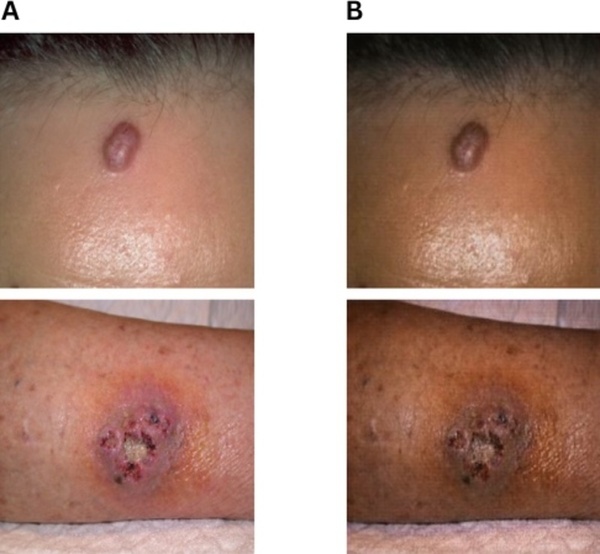
This study investigates skin tone bias in artificial intelligence models used for dermatological disease classification and evaluates a CycleGAN-based data augmentation approach to improve diagnostic performance on darker skin types. We generated synthetic dark-skinned images to enhance dataset diversity and compared model performance before and after augmentation. The results demonstrate that augmentation with synthetic dermatological images can help reduce disparities in diagnostic performance across skin tones, highlighting a practical strategy for improving fairness in dermatology AI systems.
Read More...Automated classification of nebulae using deep learning & machine learning for enhanced discovery
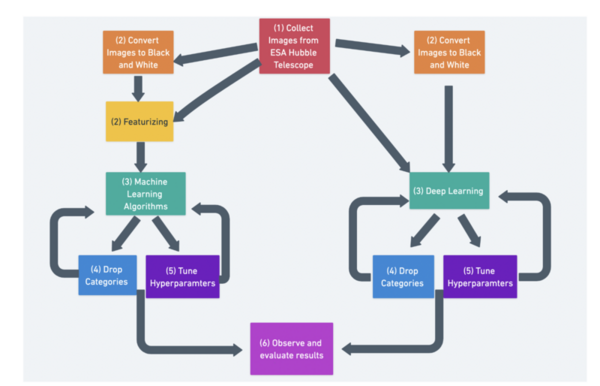
There are believed to be ~20,000 nebulae in the Milky Way Galaxy. However, humans have only cataloged ~1,800 of them even though we have gathered 1.3 million nebula images. Classification of nebulae is important as it helps scientists understand the chemical composition of a nebula which in turn helps them understand the material of the original star. Our research on nebulae classification aims to make the process of classifying new nebulae faster and more accurate using a hybrid of deep learning and machine learning techniques.
Read More...