Browse Articles

Impact of gadodiamide (Omniscan) on a beef liver catalase ex vivo model

Hirsch et al. | Mar 10, 2023

Impact of gadodiamide (Omniscan) on a beef liver catalase <em>ex vivo</em> model
Image credit: Marcelo Leal

Here, seeking to better understand the effects of gadolinium-based contrast agents, dyes typically used for MRI scans, the authors evaluated the activity of catalase found in beef liver both with and without gadodiamide when exposed to hydrogen peroxide. They found that gadioamide did not significantly inhibit catalase's activity, attributing this lack of effects to the chelating agent found in gadodiamide.

Read More...

How visualization influences strength endurance

Moore et al. | Jul 06, 2022

How visualization influences strength endurance

Recognizing a potential link between mental focus and physical endurance, here, the authors considered the effects of mental visualization on strength endurance. By comparing the number of repetitions completed in sets where the lifter was aware of the weight to be lifted against sets where the lifter was kept unaware, they found that the lifter was able to maintain strength endurance when unable to accurately visualize the weight they lifted in this exploratory study.

Read More...

Vineyard vigilance: Harnessing deep learning for grapevine disease detection

Mandal et al. | Aug 21, 2024

Vineyard vigilance: Harnessing deep learning for grapevine disease detection

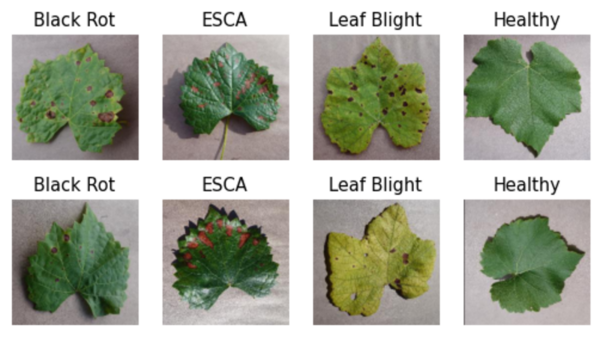
Globally, the cultivation of 77.8 million tons of grapes each year underscores their significance in both diets and agriculture. However, grapevines face mounting threats from diseases such as black rot, Esca, and leaf blight. Traditional detection methods often lag, leading to reduced yields and poor fruit quality. To address this, authors used machine learning, specifically deep learning with Convolutional Neural Networks (CNNs), to enhance disease detection.

Read More...

Characterizing Quorum Sensing-Induced Bioluminescence in Variable Volumes With Vibrio fischeri Using Computer Processing Methods

Abdel-Azim et al. | Jun 22, 2020

Characterizing Quorum Sensing-Induced Bioluminescence in Variable Volumes With <em>Vibrio fischeri</em> Using Computer Processing Methods

Understanding how bacteria respond to other bacteria could facilitate their ability to initiate and maintain their infectiousness. The phenomenon by which bacteria signal to each other via chemical signals is called quorum sensing, which could be targeted to deter bacterial infection in some cases if better understood. In this article, the authors study how a bacterium called V. fischeri uses quorum sensing to change bioluminescence, an easy readout that facilitates studying quorum sensing in this strain.

Read More...

Cytokine Treatment for Myocarditis May Directly Impact Cardiomyocytes Negatively

Kasner et al. | Apr 26, 2019

Cytokine Treatment for Myocarditis May Directly Impact Cardiomyocytes Negatively

The purpose of our study was to determine if direct administration of CXCL1/KC to cardiomyocytes causes negative changes to cell density or proliferation. This molecule has been shown to reduce inflammation in certain instances. Homocysteine models the direct effect of an inflammatory agent on cardiomyocytes. Our question was whether these molecules directly impact cell density through an interaction with the cell proliferation process. We hypothesized that cells treated with CXCL1/KC would maintain the same cell density as untreated cells. In contrast, cells treated with Homocysteine or both Homocysteine and CXCL1/KC, were expected to have a higher cell density that than that of untreated cells.

Read More...