Browse Articles

Exogenous foliar thiamine application as an alternative strategy to mitigate lead stress in Lepidium sativum

Chen et al. | Oct 28, 2026

Exogenous foliar thiamine application as an alternative strategy to mitigate lead stress in <i>Lepidium sativum</i>

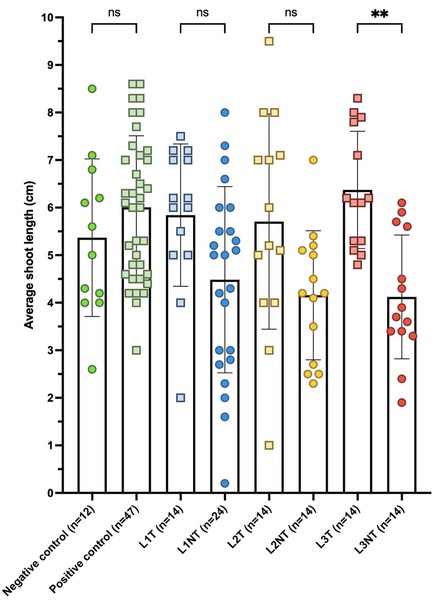
This study investigated whether thiamine (vitamin B1) could mitigate the harmful effects of lead contamination on plant growth. Using garden cress (Lepidium sativum), we found that lead exposure reduced plant growth and biomass, while thiamine treatment partially alleviated these effects, improving shoot length and overall plant length. These findings highlight the potential of thiamine as a simple strategy to improve plant resilience to heavy metal stress, with implications for agricultural productivity and food security.

Read More...

Antibacterial activity by Dombeya wallichii plant extracts obtained by ultrasound-assisted extraction

Herur et al. | Nov 13, 2023

Antibacterial activity by <em>Dombeya wallichii</em> plant extracts obtained by ultrasound-assisted extraction

Medicinal plants could be a good source of medication to combat antibiotic resistance. Dombeya wallichii, which is commonly called Pink Ball Tree in the family Sterculiaceae, has been documented to have medicinal potential. We observed the highest antibacterial activity in the stem extracts, followed by leaf and bark extracts. The extracts were more effective against tested Gram-positive bacteria when compared with Gram-negative strains.

Read More...

Model selection and optimization for poverty prediction on household data from Cambodia

Wong et al. | Sep 29, 2023

Model selection and optimization for poverty prediction on household data from Cambodia
Image credit: Paul Szewczyk

Here the authors sought to use three machine learning models to predict poverty levels in Cambodia based on available household data. They found teat multilayer perceptron outperformed the other models, with an accuracy of 87 %. They suggest that data-driven approaches such as these could be used more effectively target and alleviate poverty.

Read More...

Can essential oils be allelopathic to Lolium multiforum without harming Solanum lycopersicum?

Madan et al. | Nov 13, 2021

 Can essential oils be allelopathic to <em>Lolium multiforum</em> without harming <em>Solanum lycopersicum</em>?

Seeking to investigate eco-friendly biological methods to control weeds and enhance food crop yields, here the authors considered the effects of three essential oils on seed germination and radicle length of both a weed and a common crop. They found that treatment with turmeric oil had phytotoxic potential, leading to a reduction in both seed germination and radicle length of the weed. In contrast, ginger oil possessed allelopathic properties towards both. The authors suggest that essential oils could be used as eco-friendly bio-herbicides.

Read More...

Leveraging transfer learning with convolutional neural networks for cardiovascular disease detection

Chen et al. | May 25, 2026

Leveraging transfer learning with convolutional neural networks for cardiovascular disease detection
Image credit: Stephen Andrews

This study shows the efficacy of leveraging transfer learning, specifically from residual networks, to detect CVDs and possible signs of CVDs. The findings indicate that leveraging transfer learning from residual networks alongside medical professionals is a highly promising approach for CVD detection and diagnosis, warranting further investigation.

Read More...

Evaluating the antimicrobial activity of maitake mushroom extract against Staphylococcus epidermidis

Shamsudeen et al. | Oct 06, 2024

Evaluating the antimicrobial activity of maitake mushroom extract against <i>Staphylococcus epidermidis</i>
Image credit: Guido Blokker

Here, seeking to explore new antimicrobial therapies, the authors investigated the antimicrobial activity of Maitake mushroom extract against Staphylococcus epidermidis, a common cause of antibiotic resistant hospital-acquired infections. They found that Maitake extract showed potent antimicrobial activity, with higher concentrations showing inhibition comparable to tetracycline.

Read More...