Browse Articles

Genomic Signature Analysis for the Strategic Bioremediation of Polycyclic Aromatic Hydrocarbons in Mangrove Ecosystems in the Gulf of Tonkin

Dao et al. | Jun 27, 2021

Genomic Signature Analysis for the Strategic Bioremediation of Polycyclic Aromatic Hydrocarbons in Mangrove Ecosystems in the Gulf of Tonkin

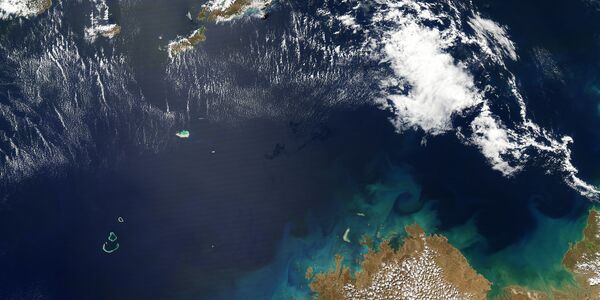
Engineered bacteria that degrade oil are currently being considered as a safe option for the treatment of oil spills. For this approach to be successful, the bacteria must effectively express oil-degrading genes they uptake as part of an external genoming vehicle called a "plasmid". Using a computational approach, the authors investigate plasmid-bacterium compatibility to find pairs that ensure high levels of gene expression.

Read More...

Antibacterial Effects of Copper Surfaces

Mulukutla et al. | May 19, 2020

Antibacterial Effects of Copper Surfaces

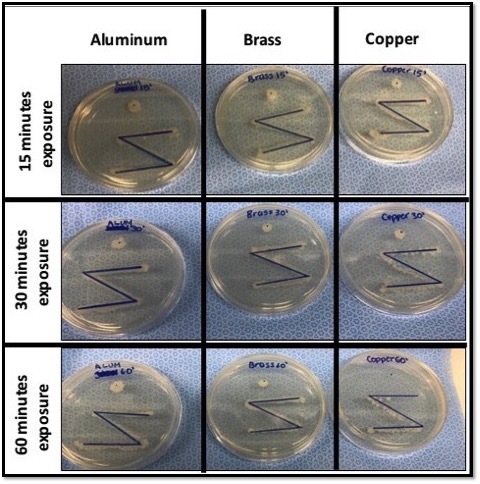
This study examined the ability of copper and copper alloy surfaces to inhibit bacterial growth, which may be help prevent healthcare-associated infections. The authors exposed two non-pathogenic strains of bacteria to different metal plates for varying degrees of time and measured bacterial growth.

Read More...

The Effects of Micro-Algae Characteristics on the Bioremediation Rate of Deepwater Horizon Crude Oil

Cao et al. | Jun 17, 2013

The Effects of Micro-Algae Characteristics on the Bioremediation Rate of Deepwater Horizon Crude Oil

Environmental disasters such as the Deepwater Horizon oil spill can be devastating to ecosystems for long periods of time. Safer, cheaper, and more effective methods of oil clean-up are needed to clean up oil spills in the future. Here, the authors investigate the ability of natural ocean algae to process crude oil into less toxic chemicals. They identify Coccochloris elabens as a particularly promising algae for future bioremediation efforts.

Read More...

Investigating the functionality of an Eco-Cooler made of plastic bottles

Tong et al. | Jul 22, 2026

Investigating the functionality of an Eco-Cooler made of plastic bottles
Image credit: Tong, Tong, and Migenes

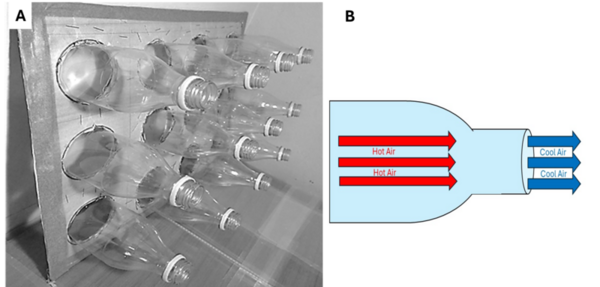
In the study, the authors looked at an environmentally friendly alternative to A/C systems/cooling. They wanted to test the effectiveness of this cooling system called the Eco-Cooler as well as see if they could improve it. They found that the Eco-Cooler had minimal cooling, while their altered Eco-Cooler system had some cooling. This results shows the use of water helps cool the environment a lot more.

Read More...

An exploration of western mosquitofish as the animal component in an aquaponic farming system

Medina et al. | Dec 03, 2024

An exploration of western mosquitofish as the animal component in an aquaponic farming system
Image credit: The authors

Aquaponics (the combination of aquatic plant farming with fish production) is an innovative farming practice, but the fish that are typically used, like tilapia, are expensive and space-consuming to cultivate. Medina and Alvarez explore other options test if mosquitofish are a viable option in the aquaponic cultivation of herbs and microgreens.

Read More...

Comparative analysis of CO2 emissions of electric ride-hailing vehicles over conventional gasoline personal vehicles

Raman et al. | Jan 12, 2024

Comparative analysis of CO<sub>2</sub> emissions of electric ride-hailing vehicles over conventional gasoline personal vehicles
Image credit: Paul Hanaoka

While some believe that ride-hailing services offer reduced CO2 emissions compared to individual driving, studies have found that driving without passengers on ride-hailing trips or "deadheading" prevents this. Here, with a mathematical model, the authors investigated if the use of electric vehicles as ride-hailing vehicles could offer reduced CO2 emissions. They found that the improved vehicle efficiency and cleaner generation could in fact lower emissions compared to the use of personal gas vehicles.

Read More...