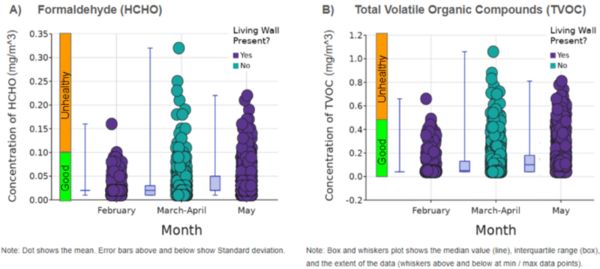
The authors compare air quality in the presence and absence of a living wall in a high school hallway in Brooklyn, NY.
Read More...School sustainability: The implications of implementing living walls at schools for air purification
The authors compare air quality in the presence and absence of a living wall in a high school hallway in Brooklyn, NY.
Read More...SOS-PVCase: A machine learning optimized lignin peroxidase with polyvinyl chloride (PVC) degrading properties
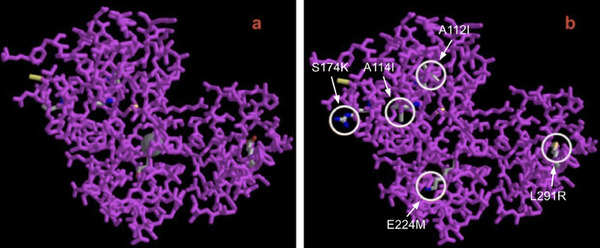
The authors looked at the primary structure of lignin peroxidase in an attempt to identify mutations that would improve both the stability and solubility of the peroxidase protein. The goal is to engineer peroxidase enzymes that are stable to help break down polymers, such as PVC, into monomers that can be reused instead of going to landfills.
Read More...Using Artificial Intelligence to Forecast Continuous Glucose Monitor(CGM) readings for Type One Diabetes
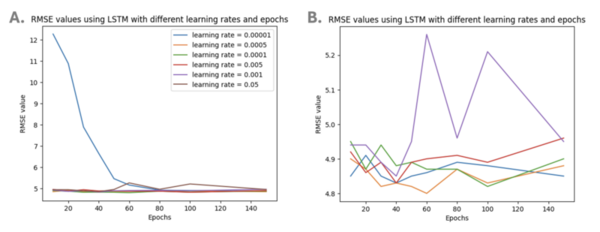
People with Type One diabetes often rely on Continuous Blood Glucose Monitors (CGMs) to track their blood glucose and manage their condition. Researchers are now working to help people with Type One diabetes more easily monitor their health by developing models that will future blood glucose levels based on CGM readings. Jalla and Ghanta tackle this issue by exploring the use of AI models to forecast blood glucose levels with CGM data.
Read More...Using two-stage deep learning to assist the visually impaired with currency differentiation

Here, recognizing the difficulty that visually impaired people may have differentiating United States currency, the authors sought to use artificial intelligence (AI) models to identify US currencies. With a one-stage AI they reported a test accuracy of 89%, finding that multi-level deep learning models did not provide any significant advantage over a single-level AI.
Read More...A novel calibration algorithm and its effects on heading measurement accuracy of a low-cost magnetometer
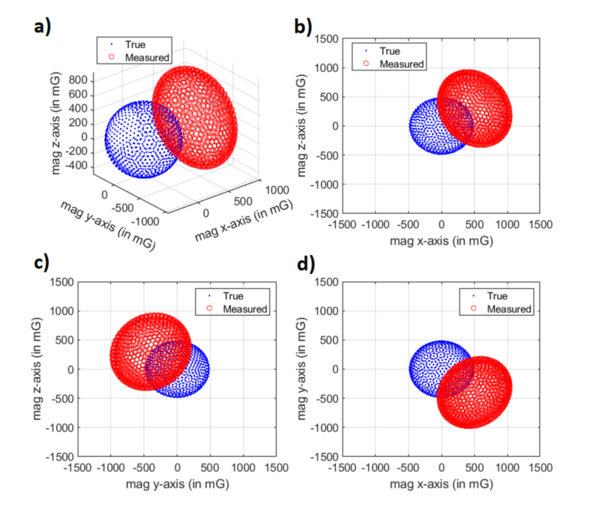
Digital compasses are essential in technology that we use in our everyday lives: phones, vehicles, and more. Li and Liu address the accuracy of these devices by presenting a new algorithm for accurately calibrating low-cost magnetometers.
Read More...Suppress that algae: Mitigating the effects of harmful algal blooms through preemptive detection & suppression
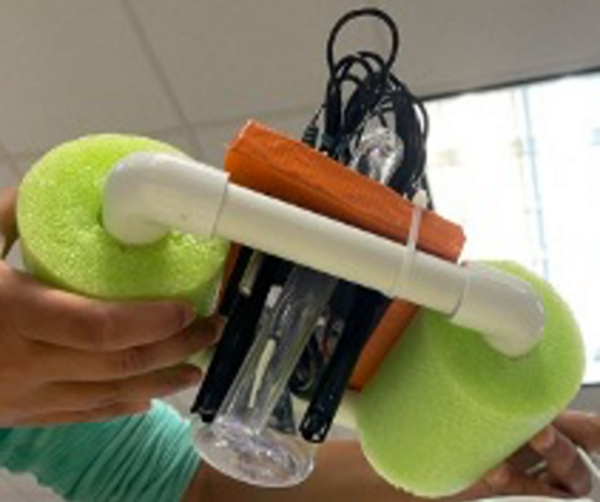
A bottleneck in deleting algal blooms is that current data section is manual and is reactionary to an existing algal bloom. These authors made a custom-designed Seek and Destroy Algal Mitigation System (SDAMS) that detects harmful algal blooms at earlier time points with astonishing accuracy, and can instantaneously suppress the pre-bloom algal population.
Read More...Differential MERS-CoV response in different cell types

The authors compare RNA expression profiles across three human cell types following infection with MERS-CoV
Read More...Hybrid Quantum-Classical Generative Adversarial Network for synthesizing chemically feasible molecules
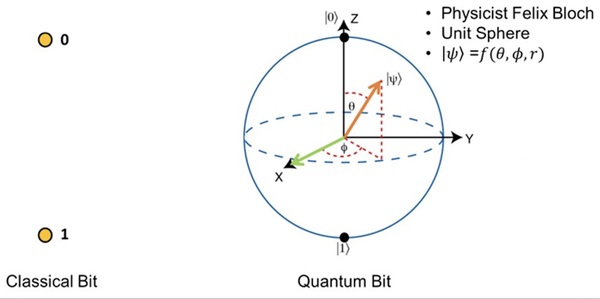
Current drug discovery processes can cost billions of dollars and usually take five to ten years. People have been researching and implementing various computational approaches to search for molecules and compounds from the chemical space, which can be on the order of 1060 molecules. One solution involves deep generative models, which are artificial intelligence models that learn from nonlinear data by modeling the probability distribution of chemical structures and creating similar data points from the trends it identifies. Aiming for faster runtime and greater robustness when analyzing high-dimensional data, we designed and implemented a Hybrid Quantum-Classical Generative Adversarial Network (QGAN) to synthesize molecules.
Read More...A machine learning approach for abstraction and reasoning problems without large amounts of data
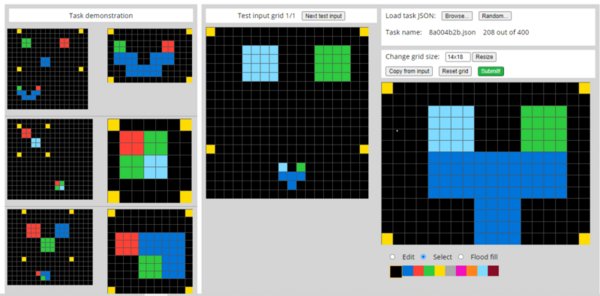
While remarkable in its ability to mirror human cognition, machine learning and its associated algorithms often require extensive data to prove effective in completing tasks. However, data is not always plentiful, with unpredictable events occurring throughout our daily lives that require flexibility by artificial intelligence utilized in technology such as personal assistants and self-driving vehicles. Driven by the need for AI to complete tasks without extensive training, the researchers in this article use fluid intelligence assessments to develop an algorithm capable of generalization and abstraction. By forgoing prioritization on skill-based training, this article demonstrates the potential of focusing on a more generalized cognitive ability for artificial intelligence, proving more flexible and thus human-like in solving unique tasks than skill-focused algorithms.
Read More...Heat conduction: Mathematical modeling and experimental data
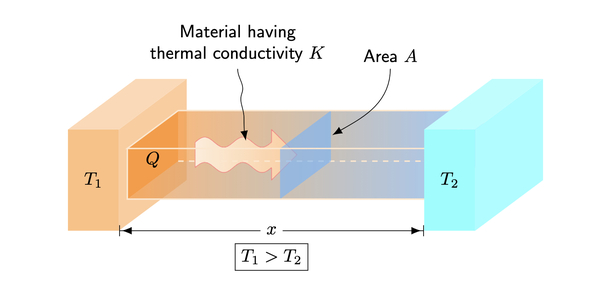
In this experiment, the authors modify the heat equation to account for imperfect insulation during heat transfer and compare it to experimental data to determine which is more accurate.
Read More...