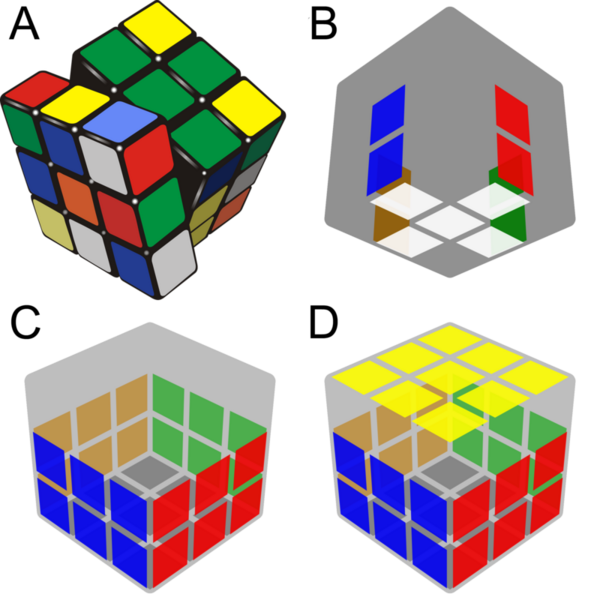
In this study, the authors assess the factors that allow some speedcubers to solve Rubik's Cubes faster than others.
Read More...Rubik’s cube: What separates the fastest solvers from the rest?
In this study, the authors assess the factors that allow some speedcubers to solve Rubik's Cubes faster than others.
Read More...Comparing Measurements of Sun-Earth Distance: Shadow Method and Two Pinhole Method Variations

This study compares three methods regarding their accuracy in calculating the distance between the Earth and the Sun. The hypothesis presented was that the shadow method would have the greatest mean accuracy, followed by the tube pinhole method, and finally the plate pinhole method. The results validate the hypothesis; however, further investigation would be helpful in determining effective mitigation of each method’s limitations and the effectiveness of each method in determining the distance of other light-emitting objects distant from the Earth.
Read More...Misconceptions Regarding Blindness Are Prevalent: Possible Implications for Best-Practices and Policy Making

The authors conduct a survey to investigate the perceptions both sighted and blind people have on blindness. The results reveal both groups perceive the most challenging adversities to be the lack of awareness and understanding of their circumstances.
Read More...Exogenous foliar thiamine application as an alternative strategy to mitigate lead stress in Lepidium sativum
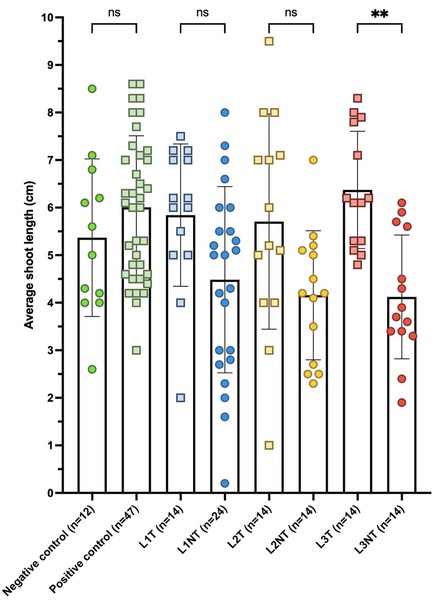
This study investigated whether thiamine (vitamin B1) could mitigate the harmful effects of lead contamination on plant growth. Using garden cress (Lepidium sativum), we found that lead exposure reduced plant growth and biomass, while thiamine treatment partially alleviated these effects, improving shoot length and overall plant length. These findings highlight the potential of thiamine as a simple strategy to improve plant resilience to heavy metal stress, with implications for agricultural productivity and food security.
Read More...Implications of various pure tones on Phaseolus vulgaris and Gaultheria shallon

This study investigated how different sound frequencies (0, 1,000, 5,000, and 15,000 Hz) affect the growth of Phaseolus vulgaris and the transpiration rates of Gaultheria shallon. Although some differences in plant growth were observed, the authors found no consistent evidence that sound frequency enhanced overall growth or transpiration, highlighting the need for further research.
Read More...High school students’ perceptions of third-party tracking and personalization

The authors looked at student perception on various situations involving third-party tracking to personalize recommendations.
Read More...Lettuce seed germination in the presence of microplastic contamination

Microplastic pollution is a pressing environmental issue, particularly in the context of its potential impacts on ecosystems and human health. In this study, we explored the ability of plants, specifically those cultivated for human consumption, to absorb microplastics from their growing medium. We found no evidence of microplastic absorption in both intact and mechanically damaged roots. This outcome suggests that microplastics larger than 10 μm may not be readily absorbed by the root systems of leafy crops such as lettuce (L. sativa).
Read More...Behaviors and attitudes concerning disposable masks and the environment: A D.C. high school case study
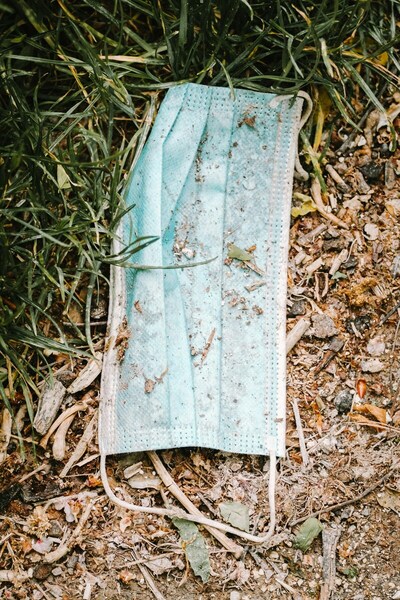
The authors looked at student behaviors around disposal of face masks. The goal of the study was to bring awareness to improper mask disposal and how the resulting litter contributes to overall environmental pollution.
Read More...Floor level estimation using MEMS pressure sensors
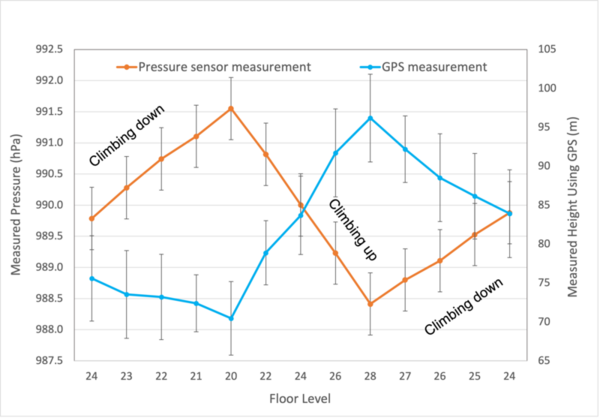
The authors propose a method to help first responders find the location of a person within a high-rise building in densely populated areas.
Read More...Antibacterial activity by Dombeya wallichii plant extracts obtained by ultrasound-assisted extraction
Medicinal plants could be a good source of medication to combat antibiotic resistance. Dombeya wallichii, which is commonly called Pink Ball Tree in the family Sterculiaceae, has been documented to have medicinal potential. We observed the highest antibacterial activity in the stem extracts, followed by leaf and bark extracts. The extracts were more effective against tested Gram-positive bacteria when compared with Gram-negative strains.
Read More...