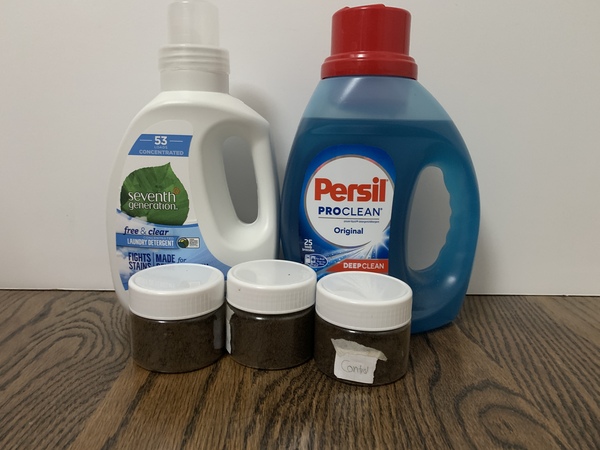
Household detergents have surfactants that can potentially harm the soil and broader ecosystems. In this study, the authors investigate whether eco-friendly and less-eco-friendly detergents affect soil pH, phosphorus, nitrogen, and potassium levels.
Read More...Browse Articles
Transfer Learning with Convolutional Neural Network-Based Models for Skin Cancer Classification
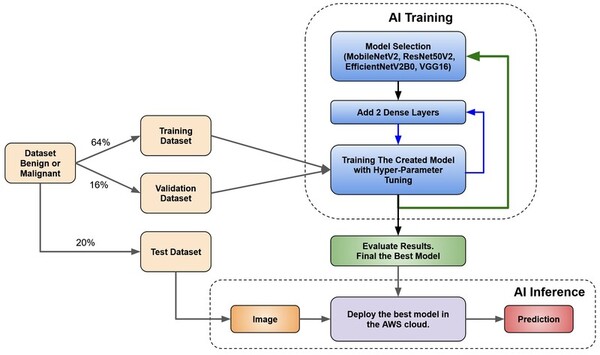
Skin cancer is a common and potentially deadly form of cancer. This study’s purpose was to develop an automated approach for early detection for skin cancer. We hypothesized that convolutional neural network-based models using transfer learning could accurately differentiate between benign and malignant moles using natural images of human skin.
Read More...How Ethanol Concentration Affects Catalase Catalysis of Hydrogen Peroxide
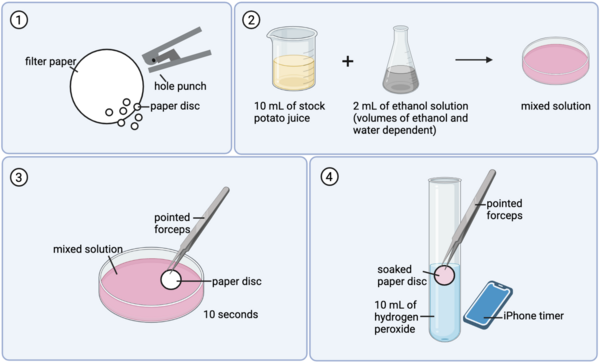
Catalase is a critical enzyme in the human body because it is capable of converting potentially dangerous hydrogen peroxide into water and oxygen. This work asks whether ethanol affects catalase activity, as alcohol consumption has been often linked to hepatitis occurring in the liver, where catalase level is especially high, and ethanol is known to be capable of denaturing proteins. Testing different concentrations of ethanol found that higher concentrations reduced the activity of catalase. This work has important implications on the negative effects of ethanol on metabolism, in which catalase plays an important role, and protein function more broadly.
Read More...The Non-Thermal Effect of UV-B Irradiation on Onion Growth
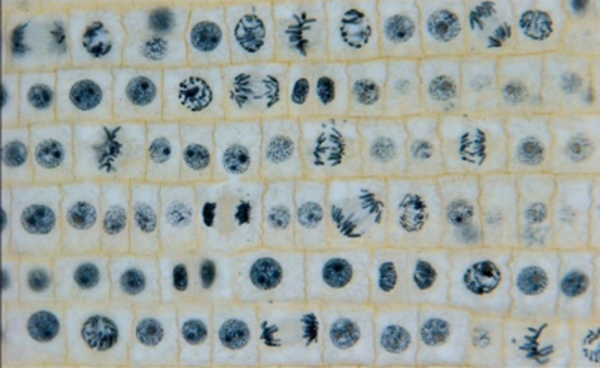
UV-B radiation due to the depletion of ozone threatens plant life, potentially damaging ecosystems and dismantling food webs. Here, the impact of UV-B radiation on the physiology and morphology of Allum cepa, the common onion, was assessed. Mitosis vitality decreased, suggesting UV-B damage can influence the plant’s physiology.
Read More...Effect of Fertilizer on Water Quality of Creeks over Time
Fertilizers are commonly used to improve agricultural yield. Unfortunately, chemical fertilizers can seep into drinking water, potentially harming humans and other forms of life. Here, the authors investigate the effect of fertilizer on the water quality of Saratoga Creek over time. They find that fertilizers can alter the acidity of the creek's water, which can be harmful to aquatic species, as well as increase the levels of nitrates temporarily.
Read More...Optimizing Interplanetary Travel Using a Genetic Algorithm
In this work, the authors develop an algorithm that solves the problem of efficient space travel between planets. This is a problem that could soon be of relevance as mankind continues to expand its exploration of outer space, and potentially attempt to inhabit it.
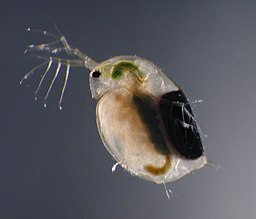
Read More...Monitoring Local Soil Toxicity by Daphnia magna Viability
In this study a student uses Daphnia magna, or water fleas, to assay the purity of local soil samples. Daphnia magna are a helpful organism to detect potentially harmful levels of toxins in water.
Read More...The Effect of Common Cations on DNA Degradation
Heating of DNA-containing solutions is a part of many experiment protocols, but it can also cause damage and degradation of the DNA molecules, potentially leading to error in the experimental results. The authors of this paper investigate whether the presence of certain cations during heating can stabilize the DNA polymer and aid the preservation of the molecule.
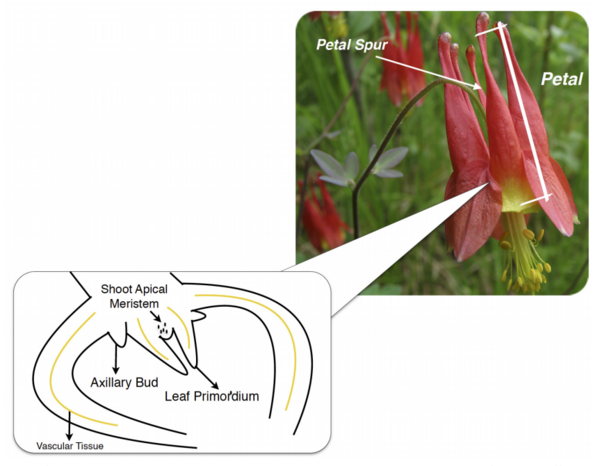
Read More...Investigating KNOX Gene Expression in Aquilegia Petal Spur Development
Plants, and all other multi-cellular organisms, develop through the coordinated action of many sets of genes. The authors here investigate the genes, in a class named KNOX, potentially responsible for organizing a certain part of Aquilegia (columbine) flowers called petal spurs. Through the technique Reverse Transcription-Polymerase Chain Reaction (RT-PCR), they find that certain KNOX genes are expressed non-uniformly in petal spurs, suggesting that they may be involved, perhaps in a cell-specific manner. This research will help guide future efforts toward understanding how many beautiful flowers develop their unique shapes.
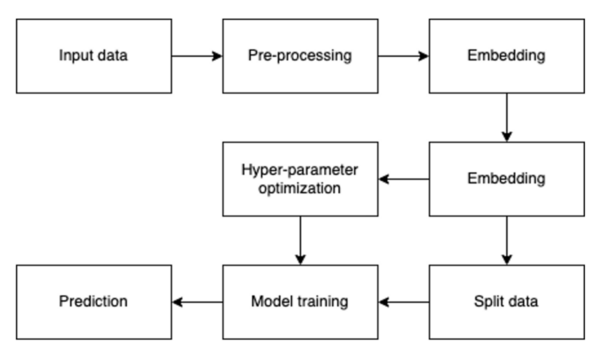
Read More...Depression detection in social media text: leveraging machine learning for effective screening
Depression affects millions globally, yet identifying symptoms remains challenging. This study explored detecting depression-related patterns in social media texts using natural language processing and machine learning algorithms, including decision trees and random forests. Our findings suggest that analyzing online text activity can serve as a viable method for screening mental disorders, potentially improving diagnosis accuracy by incorporating both physical and psychological indicators.
Read More...