Browse Articles

Polluted water tested from the Potomac River affects invasive species plant growth

Chao et al. | Sep 20, 2023

Polluted water tested from the Potomac River affects invasive species plant growth
Image credit: Alex Korolkoff

Here recognizing the potential for pollution to impact the ecosystems of local waterways, the authors investigated the growth of tiger lilies, which are invasive to the Potomac River, in relation to the level of pollution. The authors report that increasing levels of pollution led to increased growth of the invasive species based on their study.

Read More...

Efficacy of electrolytic treatment on degrading microplastics in tap water

Schroder et al. | Apr 23, 2023

Efficacy of electrolytic treatment on degrading microplastics in tap water
Image credit: Imani

Here seeking to identify a method to remove harmful microplastics from water, the authors investigated the viability of using electrolysis to degrade microplastics in tap water. Compared to control samples, they found electrolysis treatment to significantly the number of net microplastics, suggesting that this treatment could potentially implemented into homes or drinking water treatment facilities.

Read More...

Covalently Entrapping Catalase into Calcium Alginate Worm Pieces Using EDC Carbodiimide as a Crosslinker.

Suresh et al. | Mar 31, 2019

Covalently Entrapping Catalase into Calcium Alginate Worm Pieces Using EDC Carbodiimide as a Crosslinker.

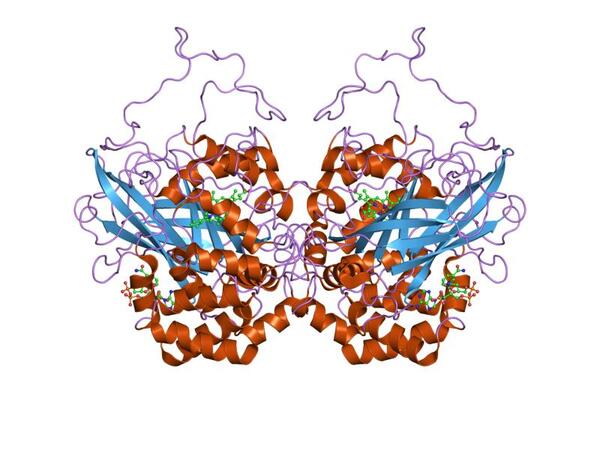
Catalase is a biocatalyst used to break down toxic hydrogen peroxide into water and oxygen in industries such as cheese and textiles. Improving the efficiency of catalase would help us to make some industrial products, such as cheese, less expensively. The best way to maintain catalase’s conformation, and thus enhance its activity, is to immobilize it. The primary goal of this study was to find a new way of immobilizing catalase.

Read More...

Synthesis of sodium alginate composite bioplastic films

Kim et al. | Sep 17, 2024

Synthesis of sodium alginate composite bioplastic films

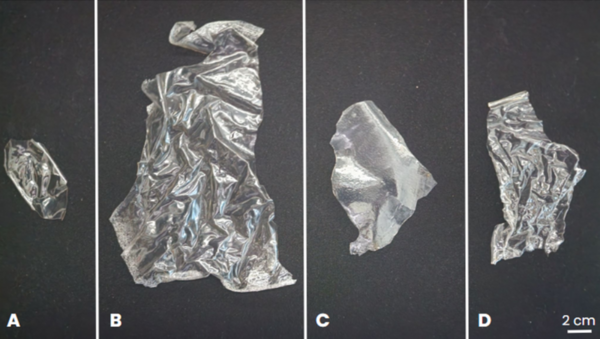
The authors looked at the development of biodegradable bioplastic and its features compared to PET packaging films. They were able to develop a biodegradable plastic with sodium alginate that dissolved in water and degrade in microbial conditions while also being transparent and flexible similar to current plastic films.

Read More...

How Ethanol Concentration Affects Catalase Catalysis of Hydrogen Peroxide

Liu et al. | Nov 15, 2021

How Ethanol Concentration Affects Catalase Catalysis of Hydrogen Peroxide

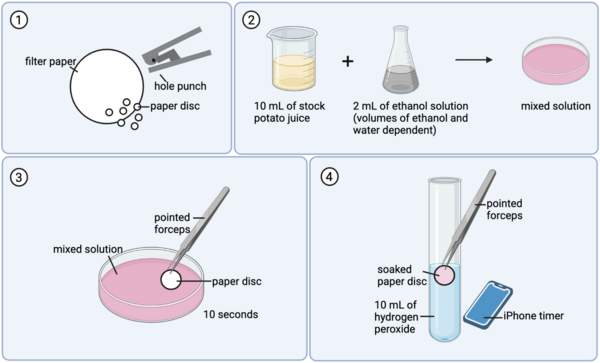
Catalase is a critical enzyme in the human body because it is capable of converting potentially dangerous hydrogen peroxide into water and oxygen. This work asks whether ethanol affects catalase activity, as alcohol consumption has been often linked to hepatitis occurring in the liver, where catalase level is especially high, and ethanol is known to be capable of denaturing proteins. Testing different concentrations of ethanol found that higher concentrations reduced the activity of catalase. This work has important implications on the negative effects of ethanol on metabolism, in which catalase plays an important role, and protein function more broadly.

Read More...

The Effectiveness of Different Palate Relievers Against a Hot Chili Pepper Sauce

Avendaño-Rodríguez et al. | Jun 11, 2016

The Effectiveness of Different Palate Relievers Against a Hot Chili Pepper Sauce

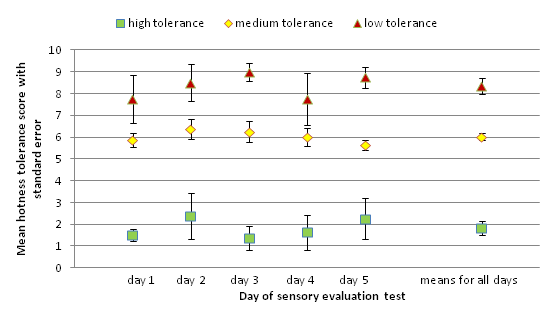
Cuisine with hot chili peppers can be tasty, but sometimes painful to consume because of the burning sensations caused by the capsaicin molecule. The authors wanted to find the palate reliever that decreases the burning sensation of capsaicin the most by testing water, soft drink, olive oil, milk, and ice-cream as possible candidates. The authors hypothesized that olive oil would be the best palate reliever as it is non-polar like the capsaicin molecule. The authors surveyed 12 panelists with low, medium, and high spice tolerances and found that across all levels of spice tolerance, milk and ice-cream were the best palate relievers and soft drink the worst.

Read More...
Developing a Method to Remove Inorganic Arsenic from Rice with Natural Substances

Mukai et al. | Oct 27, 2020

Developing a Method to Remove Inorganic Arsenic from Rice with Natural Substances

In this study, the authors tested different approaches for removing arsenic from rice. Due to higher arsenic levels in water, some areas grow rice with higher levels as well. This is a health hazard and so developing methods to remove arsenic from the rice will be helpful to many. Using a rapid arsenic kit, the authors found that activated charcoal was the most effective at removing arsenic from rice.

Read More...