Browse Articles

Male Feminization of the Common Pillbug Armadillidium vulgare by Wolbachia bacteria

Ramanan et al. | Jun 30, 2024

Male Feminization of the Common Pillbug <i>Armadillidium vulgare</i> by <i>Wolbachia</i> bacteria
Image credit: Ramanan et al. 2024

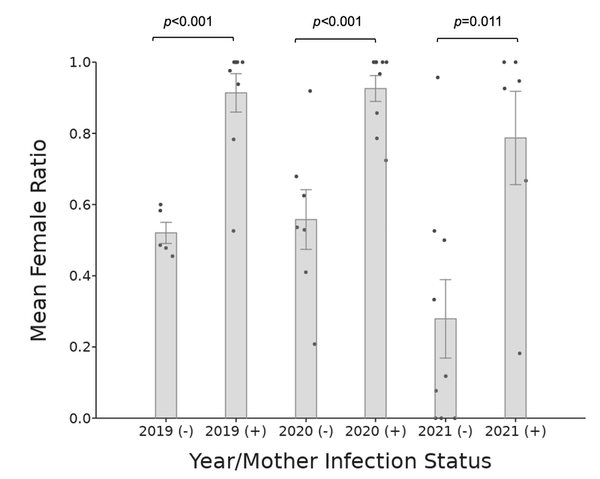
Wolbachia pipientis (Wolbachia) is a maternally inherited endosymbiotic bacterium that infects over 50% of arthropods, including pillbugs, and acts as a reproductive parasite in the host. In the common terrestrial pillbug Armadillidium vulgare (A. vulgare), Wolbachia alters the sex ratio of offspring through a phenomenon called feminization, where genetic males develop into reproductive females. Previous studies have focused on the presence or absence of Wolbachia as a sex ratio distorter in laboratory cultured and natural populations mainly from sites in Europe and Japan. Our three-year study is the first to evaluate the effects of the Wolbachia sex ratio distorter in cultured A. vulgare offspring in North America. We asked whether Wolbachia bacteria feminize A. vulgare isopod male offspring from infected mothers and if this effect can be detected in F1 offspring by comparing the male/female offspring ratios. If so, the F1 offspring ratio should show a higher number of females than males compared to the offspring of uninfected mothers. Over three years, pillbug offspring were cultured from pregnant A. vulgare females and developed into adults. We determined the Wolbachia status of mothers and counted the ratios of male and female F1 progeny to determine feminization effects. In each year sampled, significantly more female offspring were born to Wolbachia-infected mothers than those from uninfected mothers. These ratio differences suggest that the Wolbachia infection status of mothers directly impacts the A. vulgare population through the production of reproductive feminized males, which in turn provides an advantage for further Wolbachia transmission.

Read More...
An in silico molecular analysis of the antifungal properties of Ageratum conyzoides

Sathish et al. | Apr 28, 2026

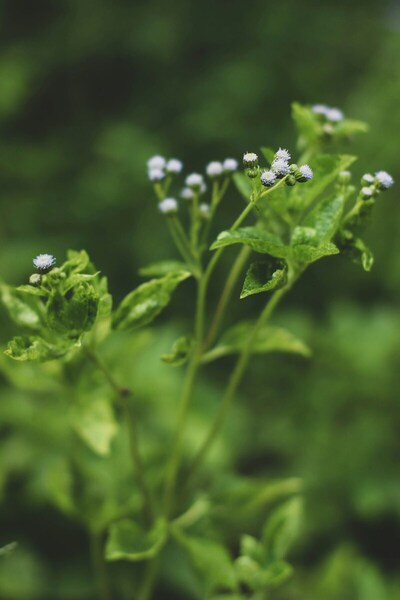
An <i>in silico</i> molecular analysis of the antifungal properties of <i>Ageratum conyzoides</i>
Image credit: Bánh Bao Chiên

This study explores the interaction between precocene II and trichocethecene 3-O-acetyltransferase using molecular docking simulations. Computational analysis identified several potential binding sites on the enzyme surface and predicted favorable ligand-protein interactions involving key residues. These findings provide insight into how precocene II may interact with this enzyme and demonstrate the use of computational approaches to explore potential antifungal mechanisms.

Read More...

Detection and Control of Spoilage Fungi in Refrigerated Vegetables and Fruits

Chari et al. | May 16, 2021

Detection and Control of Spoilage Fungi in Refrigerated Vegetables and Fruits

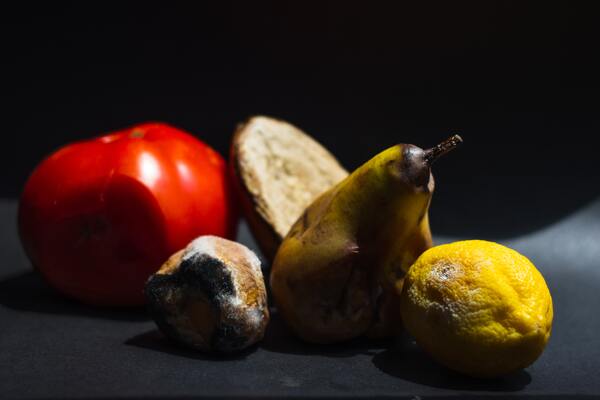
Food spoilage leads to a significant loss in agricultural produce each year. Here, the authors investigate whether certain essential oils can protect against fungus-mediated spoilage of fruits and vegetables. Their results suggest that the compounds they tested might indeed inhibit fungal growth, at various temperatures, a promising result that could reduce food wasting.

Read More...

Bacteria and Antibiotic Resistance in School Bathrooms

Ciarlet et al. | Aug 24, 2020

Bacteria and Antibiotic Resistance in School Bathrooms

Since school bathrooms are widely suspected to be unsanitary, we wanted to compare the total amount of bacteria with the amount of bacteria that had ampicillin or streptomycin resistance across different school bathrooms in the Boston area. We hypothesized that because people interact with the faucet, outdoor handle, and indoor handle of the bathroom, based on whether or not they have washed their hands, there would be differences in the quantity of the bacteria presented on these surfaces. Therefore, we predicted certain surfaces of the bathroom would be less sanitary than others.

Read More...

The Effects of Antibiotics on Nutrient Digestion

Murea et al. | Oct 06, 2017

The Effects of Antibiotics on Nutrient Digestion

One disadvantage of antibiotic therapy is the potential for unpleasant gastrointestinal side effects. Here, the authors test whether some common antibiotics directly interfere with the digestion of protein, fat, or sugars. This study provides motivation to more carefully investigate the interactions between antibiotics and gut enzymes in order to inform treatment decisions and improve patient outcomes.

Read More...

The analysis of the antimicrobial benefits of Populus balsamifera

Breen et al. | Sep 22, 2021

The analysis of the antimicrobial benefits of <em>Populus balsamifera</em>

In this study, the authors investigated the antimicrobial properties of the tree species, Populus balsamifera. It was observed that the extract of the buds of P. balsamifera was highly effective against gram-positive bacteria. This helps to indicate the potential use of P. balsamifera in the medical field to eliminate gram-positive bacteria.

Read More...

In vitro Comparison of Anticancer and Immunomodulatory Activities of Resveratrol and its Oligomers

Zhang et al. | Sep 02, 2020

<em>In vitro</em> Comparison of Anticancer and Immunomodulatory Activities of Resveratrol and its Oligomers

Resveratrol is a type of stillbenoid, a phenolic compound produced in plants, that is known for its anti-inflammatory and anticancer effects. Many oligomers of resveratrol have recently been isolated their bioactivities remain unknown. Here, authors compared the bioactivities of resveratrol with natural dimers (ε-viniferin and gnetin H) and trimers (suffruticosol B and C). Results provide preliminary evidence that resveratrol oligomers could be potential preventive or therapeutic agents for cancers and other immune-related diseases

Read More...