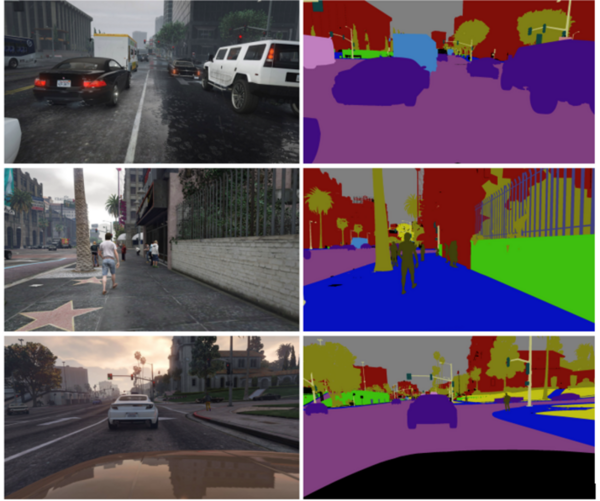
Semantic segmentation - labelling each pixel in an image to a specific class- models require large amounts of manually labeled and collected data to train.
Read More...Effects of different synthetic training data on real test data for semantic segmentation
Semantic segmentation - labelling each pixel in an image to a specific class- models require large amounts of manually labeled and collected data to train.
Read More...Evaluating need for adversarial training data given algorithmic defense methods against adversarial attacks
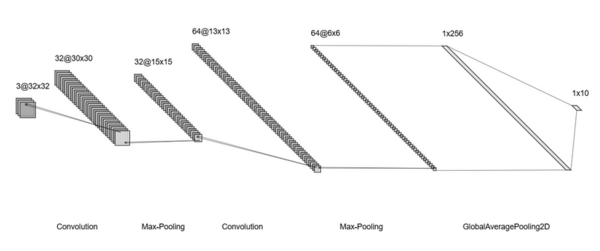
The purpose of this study was to determine the necessity of previous non-algorithmic attacks (Adversarial Training) in light of algorithmic defense methods (Gradient Masking and Defensive Distillation) against FGSM attacks. We found a significant increase in image classification accuracy from defense methods with the non-algorithmic defense method compared to ones without. By analyzing the significance with a McNemar test, we determined that the inclusion of non-algorithmic defense methods is still necessary in light of new algorithmic defense methods.
Read More...Transfer Learning with Convolutional Neural Network-Based Models for Skin Cancer Classification
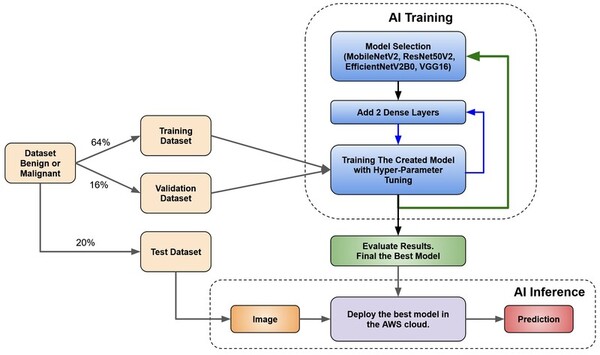
Skin cancer is a common and potentially deadly form of cancer. This study’s purpose was to develop an automated approach for early detection for skin cancer. We hypothesized that convolutional neural network-based models using transfer learning could accurately differentiate between benign and malignant moles using natural images of human skin.
Read More...A novel CNN-based machine learning approach to identify skin cancers
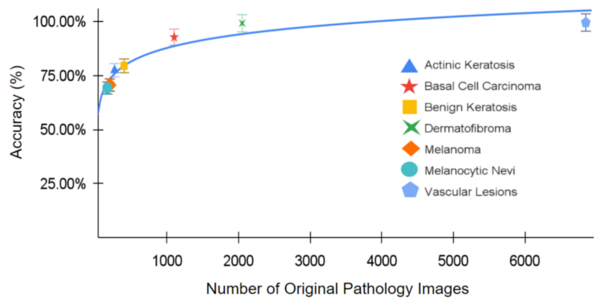
In this study, the authors developed and assessed the accuracy of a machine learning algorithm to identify skin cancers using images of biopsies.
Read More...Transfer Learning for Small and Different Datasets: Fine-Tuning A Pre-Trained Model Affects Performance

In this study, the authors seek to improve a machine learning algorithm used for image classification: identifying male and female images. In addition to fine-tuning the classification model, they investigate how accuracy is affected by their changes (an important task when developing and updating algorithms). To determine accuracy, a set of images is used to train the model and then a separate set of images is used for validation. They found that the validation accuracy was close to the training accuracy. This study contributes to the expanding areas of machine learning and its applications to image identification.
Read More...Mitigating skin color bias in dermatology AI using CycleGAN-based data augmentation
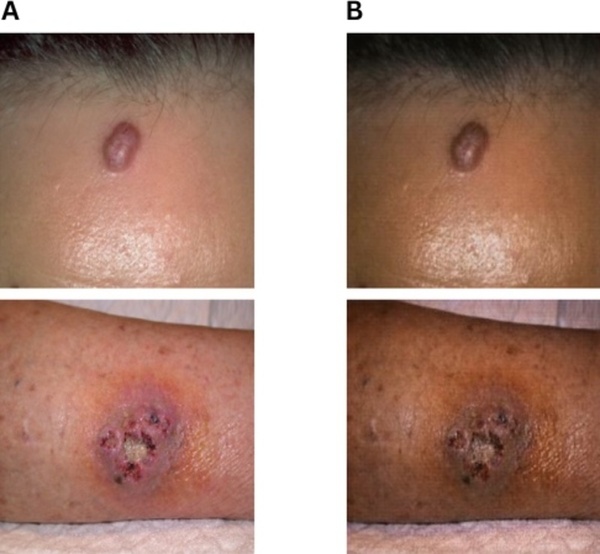
This study investigates skin tone bias in artificial intelligence models used for dermatological disease classification and evaluates a CycleGAN-based data augmentation approach to improve diagnostic performance on darker skin types. We generated synthetic dark-skinned images to enhance dataset diversity and compared model performance before and after augmentation. The results demonstrate that augmentation with synthetic dermatological images can help reduce disparities in diagnostic performance across skin tones, highlighting a practical strategy for improving fairness in dermatology AI systems.
Read More...Interaction of light with water under clear and algal bloom conditions
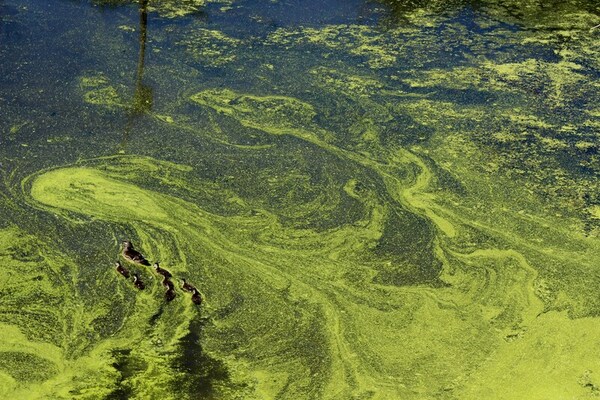
Here, recognizing the potential harmful effects of algal blooms, the authors used satellite images to detect algal blooms in water bodies in Wyoming based on their reflectance of near infrared light. They found that remote monitoring in this way may provide a useful tool in providing early warning and advisories to people who may live in close proximity.
Read More...Automated classification of nebulae using deep learning & machine learning for enhanced discovery
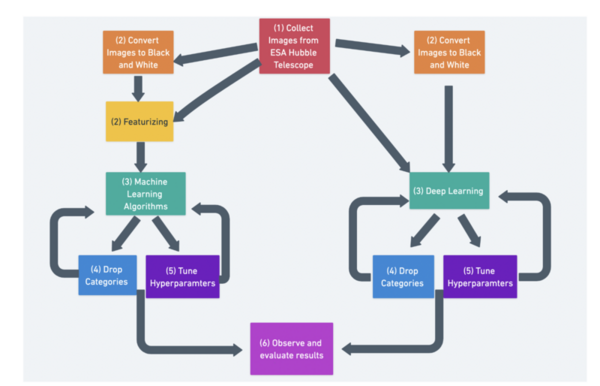
There are believed to be ~20,000 nebulae in the Milky Way Galaxy. However, humans have only cataloged ~1,800 of them even though we have gathered 1.3 million nebula images. Classification of nebulae is important as it helps scientists understand the chemical composition of a nebula which in turn helps them understand the material of the original star. Our research on nebulae classification aims to make the process of classifying new nebulae faster and more accurate using a hybrid of deep learning and machine learning techniques.
Read More...Machine learning for the diagnosis of malaria: a pilot study of transfer learning techniques
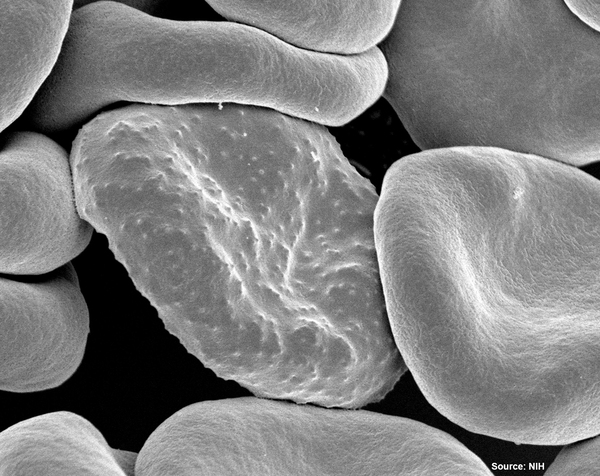
The diagnosis of malaria remains one of the major hurdles to eradicating the disease, especially among poorer populations. Here, the authors use machine learning to improve the accuracy of deep learning algorithms that automate the diagnosis of malaria using images of blood smears from patients, which could make diagnosis easier and faster for many.
Read More...OLED Screens Better Exhibit the Color Black than LCD Screens

There are two types of competing TV screens on the market, organic light emitting diode (OLED) and liquid crystal display (LCD). The better capability to exhibit black results in higher contrast images. Here, authors compared the ability of the two types of screens to show black in an environment eliminating external light.
Read More...