Browse Articles

Enhanced brain arteries and aneurysms analysis using a CAE-CFD approach

Saravanan et al. | Mar 02, 2025

Enhanced brain arteries and aneurysms analysis using a CAE-CFD approach
Image credit: Vineet Saravanan

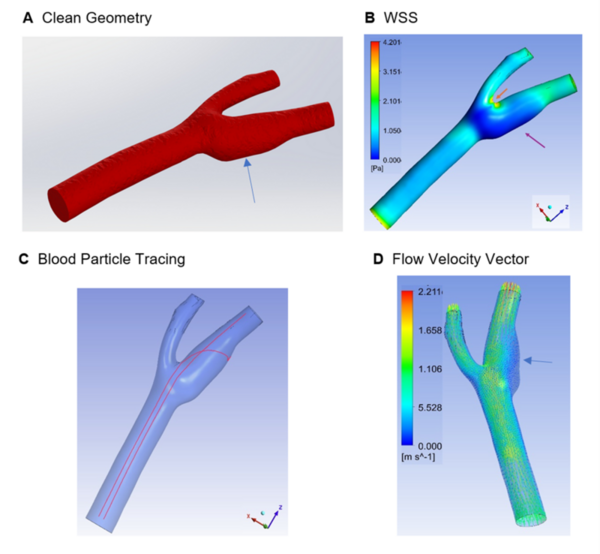
Here, recognizing that brain aneurysms pose a severe threat, often misdiagnosed and leading to high mortality, particularly in younger individuals, the authors explored a novel computer-aided engineering approach. They used magnetic resonance angiography images and computational fluid dynamics, to improve aneurysm detection and risk assessment, aiming for more personalized treatment.

Read More...

Correlates of Sugar Consumption Among High School Students and Faculty

McBurnett et al. | Mar 07, 2019

Correlates of Sugar Consumption Among High School Students and Faculty

The availability, portion sizes, and consumption of highly palatable food has been linked adverse health outcomes. McBurnett and O’Donnell sought to assess the relationship between reward-based eating drive, consumption, cravings, and knowledge of the effects of sugary foods. In this study population, reward-based eating drive was related to both consumption and cravings. Further, for females, the knowledge of sugar’s effects was significantly and inversely associated with its consumption.

Read More...

The Effect of Ethanol Concentration on Beta-Cell Development in Zebrafish

Payne et al. | Jan 15, 2014

The Effect of Ethanol Concentration on Beta-Cell Development in Zebrafish

Alcohol is known to cause various developmental diseases including Fetal Alcohol Syndrome. Here the authors investigate the effect of ethanol on the development of zebrafish beta cells, the part of the pancreas associated with Type 1 Diabetes. They find that exposure to ethanol does adversely affect beta-cell development, suggesting that alcohol ingestion during pregnancy may be linked to diabetes in newborns.

Read More...

Study of PINN sensor layout in evaluating WSS with application to patient-specific carotid flow

Nie et al. | Sep 04, 2026

Study of PINN sensor layout in evaluating WSS with application to patient-specific carotid flow

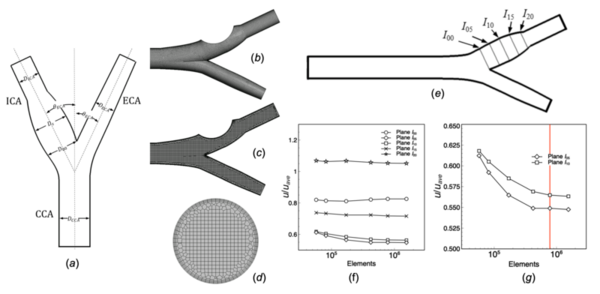
Physics‑Informed Neural Networks (PINNs) offer a promising way to estimate blood‑flow behavior in arteries, especially near the vessel wall where traditional methods struggle. In this study, students tested how sensor density and placement affect PINN accuracy in modeling carotid artery flow and found that accuracy improves up to a moderate sensor density and depends strongly on how close sensors are placed to the arterial wall. Applying the optimized configuration to a patient‑specific carotid model produced velocity predictions closely matching computational fluid dynamics results, highlighting PINNs’ potential for future personalized cardiovascular assessment.

Read More...

Integration of iron oxide nanoparticles into high-density polyethylene for sustainable cup coatings

Atmadja et al. | Jul 08, 2026

Integration of iron oxide nanoparticles into high-density polyethylene for sustainable cup coatings

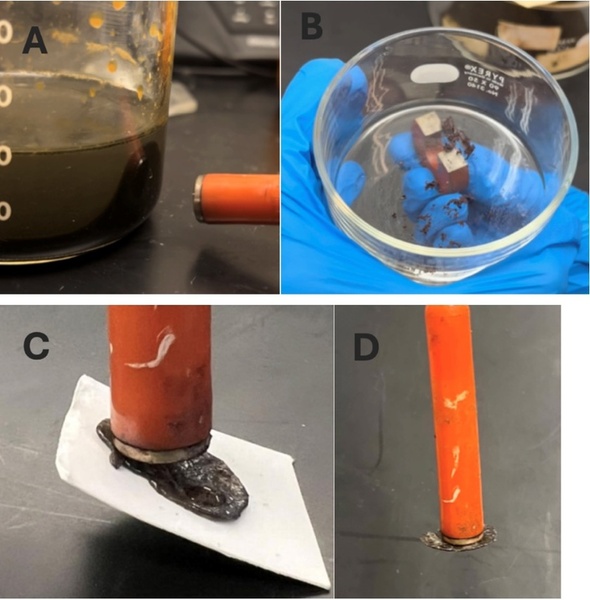
Here the authors propose integrating magnetic iron (II) oxide nanoparticles into the high-density polyethylene linings of disposable paper cups to create a waterproof, magnetically responsive composite liner. Their findings demonstrate that these nanoparticles successfully bond with the plastic layer without disrupting its structural integrity, offering a viable method to improve plastic recovery through magnetic recycling and mitigate global microplastic pollution.

Read More...

Interleukin family (IL-2 and IL-1β) as predictive biomarkers in Indian cancer patients: A proof of concept study

Parthasarathy et al. | Apr 03, 2023

Interleukin family (IL-2 and IL-1β) as predictive biomarkers in Indian cancer patients: A proof of concept study
Image credit: National Cancer Institute

Here, recognizing that the immune response to cancer results in biomarkers that can be used to assess the immune status of cancer patients, the authors investigated the concentrations of key cytokines (TH1 and TH2 cytokines) in healthy controls and cancer patients. They identified significant changes in resting and activated cytokine profiles, suggesting that data of biomarkers such as these could serve as a starting point for further treatment with regard to a patient's specific immune profile.

Read More...