Browse Articles

Nitric Oxide Synthesis/Pathway Inhibitors in Daphnia magna Reverse Alcohol-Induced Heart Rate Decrease

Gunturi et al. | Sep 17, 2019

Nitric Oxide Synthesis/Pathway Inhibitors in Daphnia magna Reverse Alcohol-Induced Heart Rate Decrease

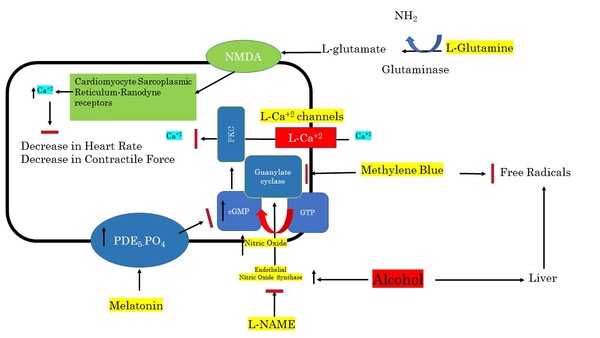
Chronic alcohol consumption can cause cardiac myopathy, which afflicts about 500,000 Americans annually. Gunturi et al. wanted to understand the effects of alcohol on heart rate and confirm the role of nitric oxide (NO) signaling in heart rate regulation. Using the model organism Daphnia magna, a water crustacean with a large, transparent heart, they found that the heart rate of Daphnia magna was reduced after treatment with alcohol. This depression could be reversed after treatment with inhibitors of NO synthesis and signaling. Their work has important implications for how we understand alcohol-induced effects on heart rate and potential treatments to reverse heart rate depression as a result of alcohol consumption.

Read More...

A Quantitative Analysis of the Proliferation of Microplastics in Williamston’s Waterways

Schafer et al. | Feb 17, 2019

A Quantitative Analysis of the Proliferation of Microplastics in Williamston’s Waterways

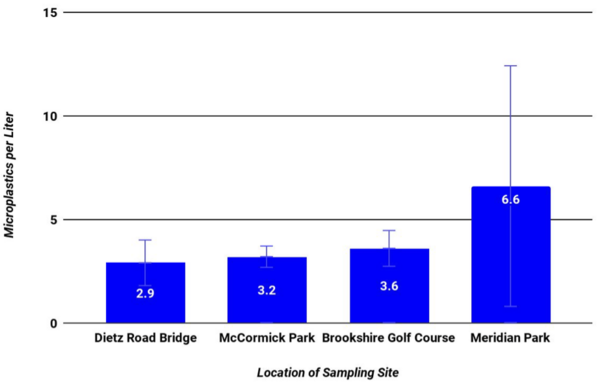
Plastic debris can disrupt marine ecosystems, spread contaminants, and take years to naturally degrade. In this study, Wu et al aim to establish an understanding of the scope of Williamston, Michigan’s microplastics problem, as well as to attempt to find the source of these plastics. Initially, the authors hypothesize that the Williamston Wastewater Treatment Plant was the primary contributor to Williamston’s microplastics pollution. Although they find a general trend of increasing concentrations of microplastics from upstream to downstream, they do not pinpoint the source of Williamston’s microplastics pollution in the present research.

Read More...

Development of novel biodegradable bioplastics for packaging film using mango peels

Wang et al. | Apr 06, 2025

Development of novel biodegradable bioplastics for packaging film using mango peels
Image credit: JACQUELINE BRANDWAYN

Here the authors explored the development of biodegradable bioplastic films derived from mango peels as a sustainable solution to plastic pollution and greenhouse gas emissions from fruit waste. They optimized the film's mechanical properties and water resistance through adjusting processing conditions and incorporating plasticizers and a hydrophobic coating, ultimately demonstrating its potential as a bacteriostatic and biodegradable alternative to conventional plastic food wrap.

Read More...

Developing a Method to Remove Inorganic Arsenic from Rice with Natural Substances

Mukai et al. | Oct 27, 2020

Developing a Method to Remove Inorganic Arsenic from Rice with Natural Substances

In this study, the authors tested different approaches for removing arsenic from rice. Due to higher arsenic levels in water, some areas grow rice with higher levels as well. This is a health hazard and so developing methods to remove arsenic from the rice will be helpful to many. Using a rapid arsenic kit, the authors found that activated charcoal was the most effective at removing arsenic from rice.

Read More...

Analysis of biofertilization impacts on Pisum sativum

Holden et al. | May 18, 2023

Analysis of biofertilization impacts on <i>Pisum sativum</i>
Image credit: David Boozer

This study explored the various effects of three different produce-based biofertilizers on pea plant growth, using red apple, pear, strawberry, and control treatments. It was hypothesized that the application of fruit biomatter would increase the growth of pea plants, with the application of strawberry biomatter having the most significant effect due to strawberries containing a higher nutrient content compared to pears and apples. Analysis confirmed the hypothesis. The application of strawberry biomatter could prove to be an effective way to increase plant growth in commercial agriculture.

Read More...

The Effect of Neem on Common Nosocomial Infection-Causing Organisms

Shah et al. | Jan 27, 2020

The Effect of Neem on Common Nosocomial Infection-Causing Organisms

Nosocomial infections acquired in hospitals pose a risk to patients, a risk compounded by resistant microorganisms. To combat this problem, researchers have turned to bioactive compounds from medicinal plants such as the widely used neem. In the present study, researchers sought to determine the effectiveness of different neem preparations against several hospital acquired human pathogens. Neem powder in water successfully inhibited microorganism growth making it a potential agent to combat these infections.

Read More...

The Effect of Various Preparation Methods on the Spoilage Rate of Roma Tomatoes (Solanum lycopersicum)

Cataltepe et al. | Feb 22, 2018

The Effect of Various Preparation Methods on the Spoilage Rate of Roma Tomatoes (Solanum lycopersicum)

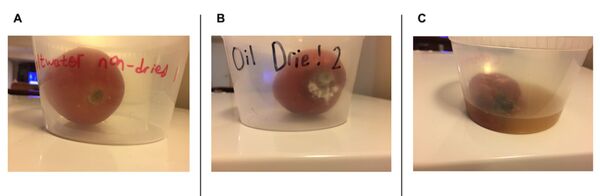
As levels of food waste continue to rise, it is essential to find improved techniques of prolonging the shelf life of produce. The authors aimed to find a simple, yet effective, method of slowing down spoilage in tomatoes. Linear regression analysis revealed that the tomatoes soaked salt water and not dried displayed the lowest correlation between time and spoilage, confirming that this preparation was the most effective.

Read More...