Browse Articles

Sri Lankan Americans’ views on U.S. racial issues are influenced by pre-migrant ethnic prejudice and identity

Gunawardena et al. | Apr 18, 2022

Sri Lankan Americans’ views on U.S. racial issues are influenced by pre-migrant ethnic prejudice and identity

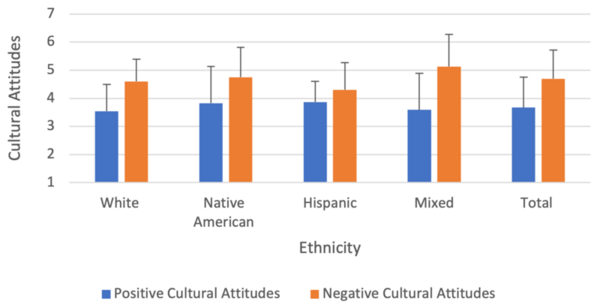
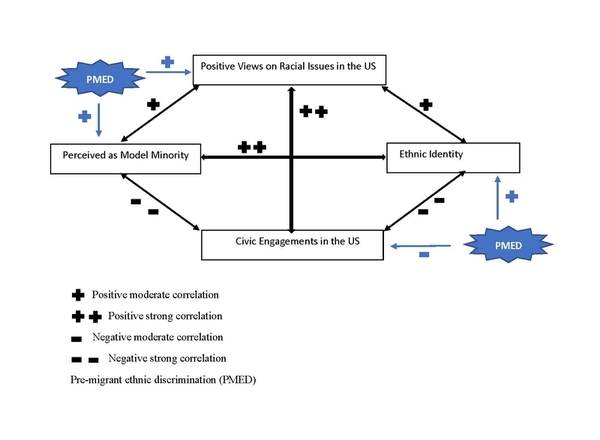
In this study, the authors examined how Sri Lankan Americans (SLAs) view racial issues in the U.S. The main hypothesis is that SLAs, as a minority in the U.S., are supportive of the Black Lives Matter movement and its political goal, challenging the common notion that SLAs are anti-Black. The study found that a majority of SLAs believe the U.S. has systemic racism, favor BLM, and favor affirmative action. IT also found that Tamil SLAs have more favorable views of BLM and affirmative action than Sinhalese SLAs.

Read More...

The ecological mysteries of Opheodesoma spectabilis : Seasonal trends, habitat preferences, and climate responses

Watson et al. | Jul 26, 2026

The ecological mysteries of <i>Opheodesoma spectabilis</i>	: Seasonal trends, habitat preferences, and climate responses

This study examines how environmental conditions influence the abundance and ecological role of the sea cucumber Opheodesoma spectabilis in Kāneʻohe Bay. Field observations and laboratory experiments showed that the species is more common in algae-dominated sandy habitats, where it improves water clarity and increases dissolved oxygen through bioturbation. However, exposure to very high temperatures caused rapid mortality, suggesting that marine heat waves could threaten this species and the ecological functions it provides.

Read More...

Exploring the Factors that Drive Coffee Ratings

Agarwal et al. | May 19, 2025

Exploring the Factors that Drive Coffee Ratings

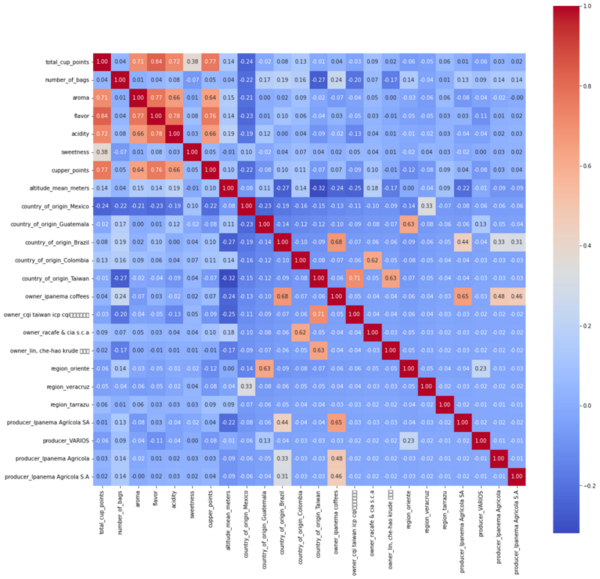
This study explores the factors that influence coffee quality ratings using data from the Coffee Quality Institute. Through a regression model based on gradient descent, the authors aimed to predict coffee ratings (total cup points) and hypothesized that sweetness and the coffee producer would be the most influential factors.

Read More...

Using data science along with machine learning to determine the ARIMA model’s ability to adjust to irregularities in the dataset

Choudhary et al. | Jul 26, 2021

Using data science along with machine learning to determine the ARIMA model’s ability to adjust to irregularities in the dataset

Auto-Regressive Integrated Moving Average (ARIMA) models are known for their influence and application on time series data. This statistical analysis model uses time series data to depict future trends or values: a key contributor to crime mapping algorithms. However, the models may not function to their true potential when analyzing data with many different patterns. In order to determine the potential of ARIMA models, our research will test the model on irregularities in the data. Our team hypothesizes that the ARIMA model will be able to adapt to the different irregularities in the data that do not correspond to a certain trend or pattern. Using crime theft data and an ARIMA model, we determined the results of the ARIMA model’s forecast and how the accuracy differed on different days with irregularities in crime.

Read More...