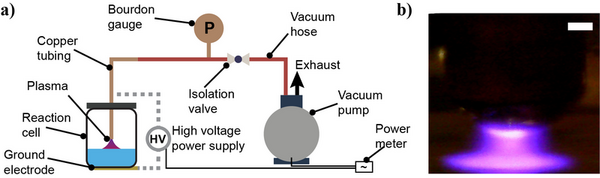
The authors looked at energy efficient ways to generate small nitrogenous compounds.
Read More...Nonthermal nitrogen fixation with air and water by using a low-pressure plasma
Locating sources of a high energy cosmic ray extensive air shower using HiSPARC data
Using the data provided by the University of Twente High School Project on Astrophysics Research with Cosmics (HiSPARC), an analysis of locations for possible high-energy cosmic ray air showers was conducted. An example includes an analysis conducted of the high-energy rain shower recorded in January 2014 and the use of Stellarium™ to discern its location.
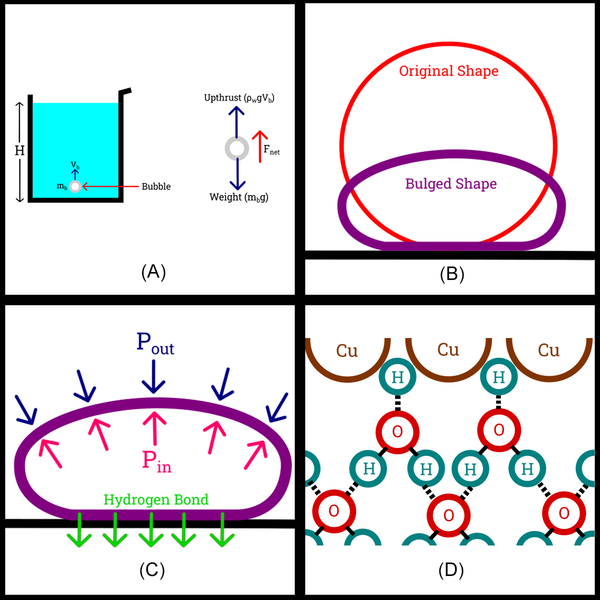
Read More...Formation and sticking of air bubbles in water in d-block containers
Bubbles! In this study, the authors investigate the effects that different materials, temperature, and distance have on the formation of water bubbles on the surface of copper and steel. They calculated mathematical relations based on the outcomes to better understand whether interstitial hydrogen present in the d-block metals form hydrogen bonds with the water bubbles to account for the structural and mechanical stability.
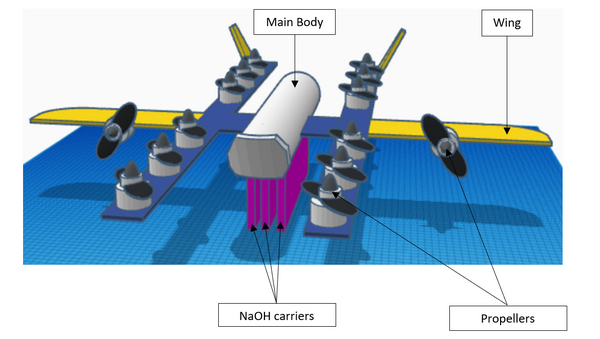
Read More...Use of drone with sodium hydroxide carriers to absorb carbon dioxide from ambient air
In this study, the authors address the current climate concern of high CO2 levels by testing solid forms of hydroxide for CO2 reduction and designing a drone to fly it in ambient air!
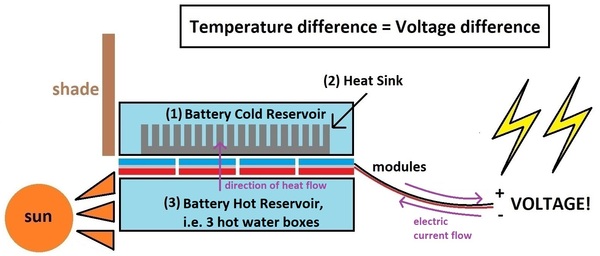
Read More...Thermoelectric Power Generation: Harnessing Solar Thermal Energy to Power an Air Conditioner
The authors test the feasibility of using thermoelectric modules as a power source and as an air conditioner to decrease reliance on fossil fuels. The results showed that, at its peak, their battery generated 27% more power – in watts per square inch – than a solar panel, and the thermoelectric air conditioner operated despite an unsteady input voltage. The battery has incredible potential, especially if its peak power output can be maintained.
Read More...Developing a Portable, Reusable, and Inexpensive Magnesium-Air Fuel Cell
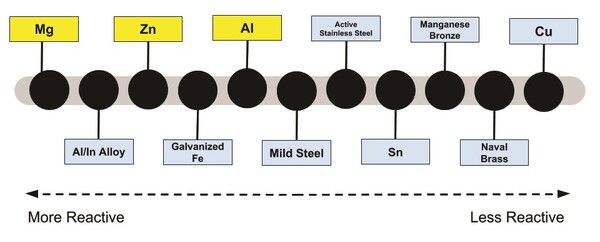
One of the greatest challenges we face today is the sustainable production, storage, and distribution of electrical power. One emerging technology with great promise in this area is that of metal-air fuel cells—a long-term and reusable electricity storage system made from a reactive metal anode and a saline solution. In this study the authors tested several different types of metal to determine which was the most suitable for this application. They found that a fuel cell with a magnesium anode was superior to fuel cells made from aluminum or zinc, producing a voltage and current sufficient for real-world applications such as charging a mobile phone.
Read More...Correlation between particulate matter concentrations and COPD hospitalization rates in Massachusetts
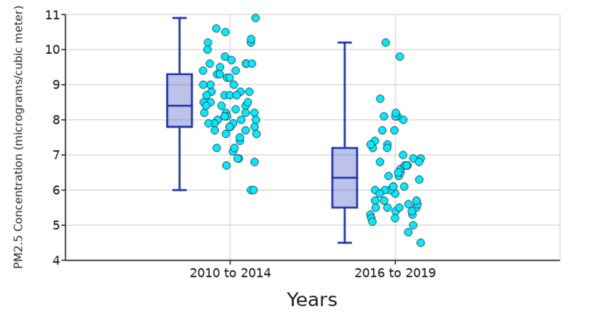
Air pollution is thought to increase the prevalence of health conditions like chronic obstructive pulmonary disease (COPD). Ganeshwaran and Ropiak investigate this relationship by determining whether there is a correlation between between one type of air pollution (fine particulate matter concentrations) and COPD hospitalization rates in Massachusetts.
Read More...Using Graphene Oxide to Efficiently Filter Particulate Matter at High Concentrations
Air pollution has detrimental effects on both the environment and humans. Here, researchers use graphene oxide to filter particulate matter from the air. Graphene oxide filters performed better than commercially available filters, effectively removing particulate matter from the air.
Read More...Analyzing the effects of multiple adhesives on elastic collisions and energy loss in a Newton’s Cradle
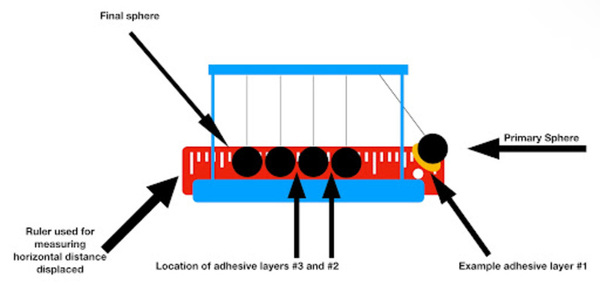
The energy conservation in a system of objects in collision depends on the elasticity of the objects and environmental factors such as air resistance. One system that relies heavily on elasticity is the Newton’s Cradle. We aimed to determine the extent to which these adhesives serve to mitigate or worsen the chaotic movements and elastic collisions.
Read More...Utilizing the Magnus effect to produce more downforce than a standard wing
Here, seeking a better solution to produce downforce that keeps a vehicle grounded at high speeds than wings which tend to result in degraded car performance due to increased air resistance, the authors considered using the Magnus effect as a replacement. The authors found that a spinning cylinder generated significantly more downforce through the Magnus effect than a standard wing at all wind speeds as simulated through the use of a leaf blower. They suggest that a cylinder could be a potential replacement for a wing when downforce is a priority.
Read More...