Browse Articles

Analysis of the catalytic efficiency of spent coffee grounds and titanium dioxide using UV-Vis spectroscopy

Jahng et al. | Dec 09, 2025

Analysis of the catalytic efficiency of spent coffee grounds and titanium dioxide using UV-Vis spectroscopy
Image credit: Jahng and Kim

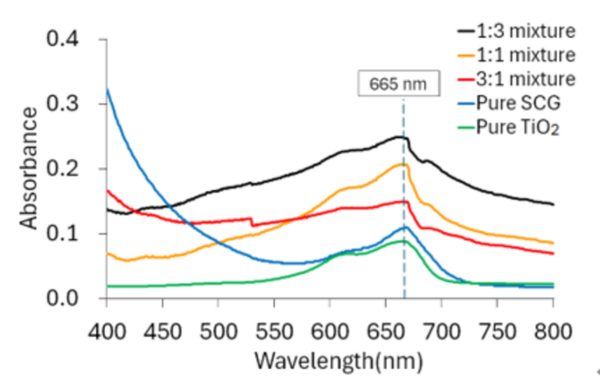
This paper looks at using spent coffee grounds as a partial substitute for titanium dioxide (TiO2) as a catalyst for chemical reactions. Using UV-Vis spectrophotometry, they found that adding the coffee grounds to TiO2 in a 3:1 ratio, there is still meaningful catalytic activity. This offers a cheaper solution than just using pure TiO2.

Read More...

Efficacy of electrolytic treatment on degrading microplastics in tap water

Schroder et al. | Apr 23, 2023

Efficacy of electrolytic treatment on degrading microplastics in tap water
Image credit: Imani

Here seeking to identify a method to remove harmful microplastics from water, the authors investigated the viability of using electrolysis to degrade microplastics in tap water. Compared to control samples, they found electrolysis treatment to significantly the number of net microplastics, suggesting that this treatment could potentially implemented into homes or drinking water treatment facilities.

Read More...

Do Attractants Bias the Results of Malaise Trap Research?

Martinez et al. | Jan 22, 2020

Do Attractants Bias the Results of Malaise Trap Research?

Malaise traps are commonly used to collect flying insects for a variety of research. In this study, researchers hypothesized the attractants used in these traps may create bias in insect studies that could lead to misinterpreted data. To test this hypothesis two different kinds of attractant were used in malaise traps, and insect diversity was assessed. Attractants were found to alter the dispersion of insects caught in traps. These findings can inform future malaise traps studies on insect diversity.

Read More...

The influence of purpose-of-use on information overload in online social networking

Agarkar et al. | Nov 01, 2022

The influence of purpose-of-use on information overload in online social networking

Here, seeking to understand the effects of social media in relation to social media fatigue and/or overload in recent years, the authors used various linear models to assess the results of a survey of 27 respondents. Their results showed that increased duration of use of social media did not necessarily lead to fatigue, suggesting that quality may be more important than quantity. They also considered the purpose of an individual's social media usage as well as their engagement behavior during the COVID-19 pandemic.

Read More...