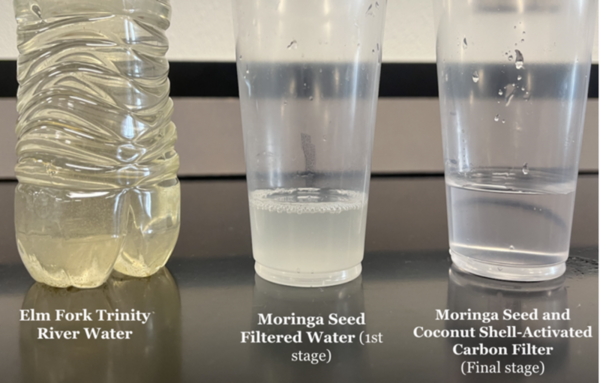
One-third of the world's people do not have access to clean drinking water. Nadella and Nadella tackle this issue by testing a low-cost filtration system for removing heavy metal and bacteria from water.
Read More...Heavy metal and bacterial water filtration using Moringa oleifera and coconut shell-activated carbon
One-third of the world's people do not have access to clean drinking water. Nadella and Nadella tackle this issue by testing a low-cost filtration system for removing heavy metal and bacteria from water.
Read More...Seed priming with melatonin improves drought tolerance in maize
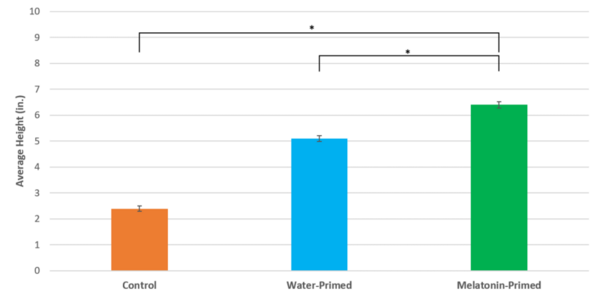
The authors test whether soaking maize seeds in a solution of melatonin improves seed germination and drought tolerance.
Read More...The effects of algaecides on Spirulina major and non-target organism Daphnia magna
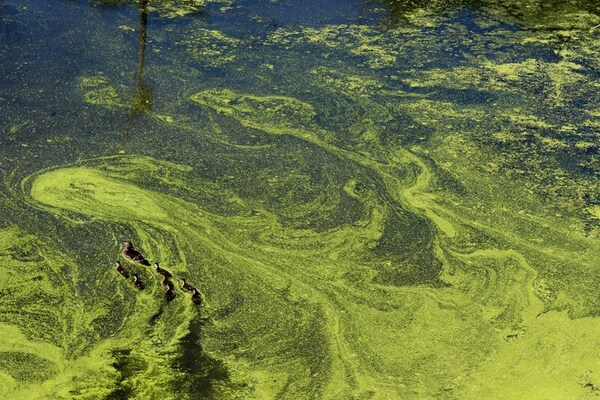
Algal blooms pose a threat to ecosystems, but the methods used to combat these blooms might harm more than just the algae. Halepete, Graham, and Lowe-Schmahl demonstrate negative effects of anti-algae treatments on a cyanobacterium (Spirulina major), and the water fleas (Daphnia magna) that live alongside these cyanobacteria.
Read More...Impact of hog farming on water quality of aquatic environments in North Carolina
This study collected samples from water bodies near hog farms and an aquatic environment not near a hog farm. It was hypothesized that water bodies near the hog farms would have lower water quality with higher turbidity, total dissolved solids (TDS), and pH than the water body not in proximity to a hog farm because of water contamination with hog waste. Results showed that the turbidity was 4–6 times higher, TDS was 1.5–2 times higher, and pH was 3 units higher in the 2 experimental locations compared to the control location. This study and its findings are important for understanding the impact of hog farming on the proximal water bodies.
Read More...Collaboration beats heterogeneity: Improving federated learning-based waste classification
Based on the success of deep learning, recent works have attempted to develop a waste classification model using deep neural networks. This work presents federated learning (FL) for a solution, as it allows participants to aid in training the model using their own data. Results showed that with less clients, having a higher participation ratio resulted in less accuracy degradation by the data heterogeneity.
Read More...Osmotic characteristics of water retention structures of Bursera microphylla in relation to soil salinity
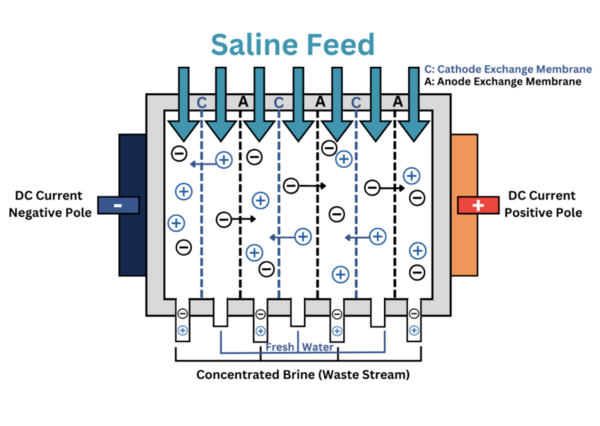
This study hypothesized that sodium chloride was taken up through plant root structures to facilitate water transportation, and that sodium chloride accumulation was directly proportional to the soil salinity. Results showed that most cells within the “bulb” structures were isotonic at a concentration approximately twice as high as that of root tissue and ambient soil salinity, therefore supporting the presented hypothesis.
Read More...Building an affordable model wave energy converter using a magnet and a coil
Here, seeking to identify a method to locally produce and capture renewable energy in Hawai'i and other island communities, the authors built and tested a small-scale model wave energy converter. They tested various configurations of a floated magnet surrounded by a wire coal, where the motion of the magnet due to a wave results in induction current in the coil. While they identified methods to increase the voltage and current generated, they also found that corrosion results in significant deterioration.
Read More...Measuring the efficiency of greenhouse gases to absorb heat
In the age of global warming, these authors studied which of the four major greenhouse gases (water vapor, carbon dioxide, and nitrous oxide) change the most with increased temperature.
Read More...Integrating microbial fuel cell with sedum green roof for stormwater retention and renewable energy generation
The authors looked at renewable energy generators and the ability to utilize green roofs as a solution to climate change.
Read More...A comparative analysis of synthetic and natural fabrics
The authors test the durability of synthetic versus non-synthetic fabrics though loose thread counts, color fade over time, and shrinkage tests.
Read More...