Browse Articles

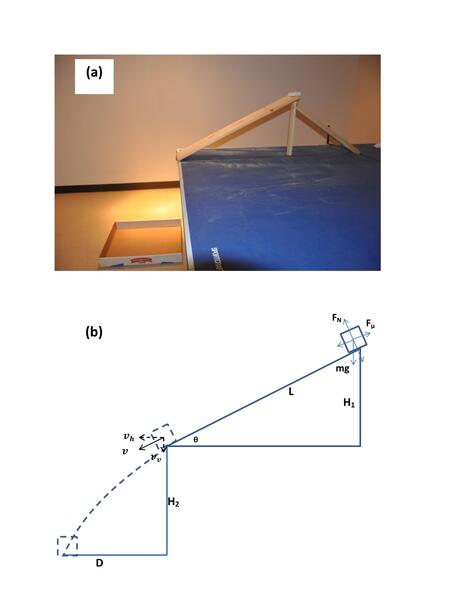
Redesigning an Experiment to Determine the Coefficient of Friction

Hu et al. | Jun 27, 2016

Redesigning an Experiment to Determine the Coefficient of Friction

In a common high school experiment to measure friction coefficients, a weighted mass attached to a spring scale is dragged across a surface at a constant velocity. While the constant velocity is necessary for an accurate measurement, it can be difficult to maintain and this can lead to large errors. Here, the authors designed a new experiment to measure friction coefficients in the classroom using only static force and show that their method has a lower standard deviation than the traditional experiment.

Read More...
Creating a drought prediction model using convolutional neural networks

Bora et al. | Oct 08, 2024

Creating a drought prediction model using convolutional neural networks
Image credit: The authors

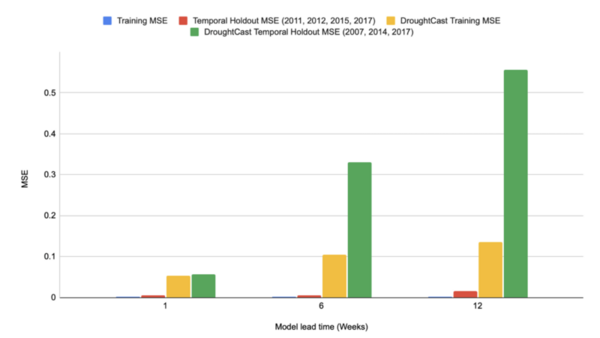
Droughts kill over 45,000 people yearly and affect the livelihoods of 55 million others worldwide, with climate change likely to worsen these effects. However, unlike other natural disasters (hurricanes, etc.), there is no early detection system that can predict droughts far enough in advance to be useful. Bora, Caulkins, and Joycutty tackle this issue by creating a drought prediction model.

Read More...

Can the attributes of an app predict its rating?

Feng et al. | Jul 03, 2024

Can the attributes of an app predict its rating?
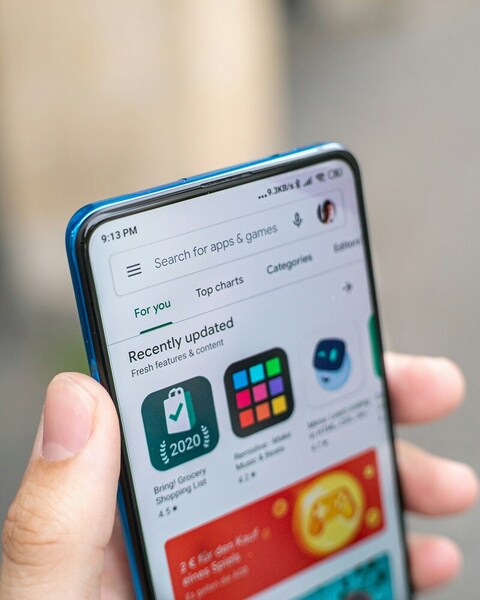
Image credit: Mika Baumeister

In this article the authors looked at different attributes of apps within the Google Play store to determine how those may impact the overall app rating out of five stars. They found that review count, amount of storage needed and when the app was last updated to be the most influential factors on an app's rating.

Read More...

Changing electronic use behavior in adolescents while studying: An interventional psychology experiment

Kumar et al. | Mar 02, 2024

Changing electronic use behavior in adolescents while studying: An interventional psychology experiment
Image credit: RAMSHA ASAD

Here, the authors investigated the effects of an interventional psychology on the study habits of high school students specifically related to the use of electronic distractions such as social media or texting, listening to music, or watching TV. They reported varying degrees of success between the control and intervention groups, suggesting that the methods of habit-breaking for students merits further study.

Read More...