Browse Articles

The Feasibility of Mixed Reality Gaming as a Tool for Physical Therapy Following a Spinal Cord Injury

DeBre et al. | Apr 04, 2018

The Feasibility of Mixed Reality Gaming as a Tool for Physical Therapy Following a Spinal Cord Injury

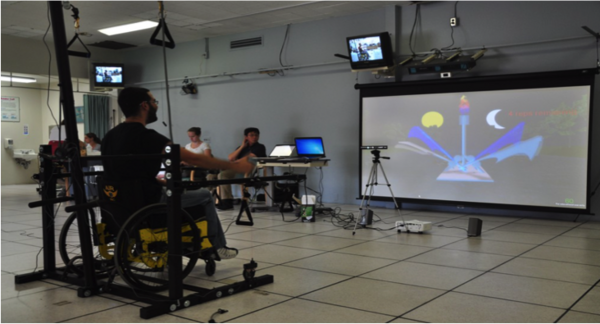
Physical therapy, especially for patients with spinal cord injuries, can be a difficult and tedious experience. This can result in negative health outcomes, such as patients dropping out of physical therapy or developing additional health problems. In this study, the authors develop and test a potential solution to these challenges: a mixed reality game called Skyfarer that replaces a standard physical therapy regimen with an immersive experience that can be shared with their friends and family. The findings of this study suggest that mixed reality games such as Skyfarer could be effective alternatives to conventional physical therapy.

Read More...

Bacterial Richness of Soil Samples from Southern New Hampshire

Chalasani et al. | Sep 21, 2016

Bacterial Richness of Soil Samples from Southern New Hampshire

Advancement in DNA sequencing technology has greatly increased our understanding about the role of bacteria in soil. The authors of this study examine the microbial content of soil samples taken from three locations in southern New Hampshire with varying pH and plant composition.

Read More...

Retinal biomarkers for the detection of neurological disease using deep learning

Kim et al. | Sep 04, 2026

Retinal biomarkers for the detection of neurological disease using deep learning

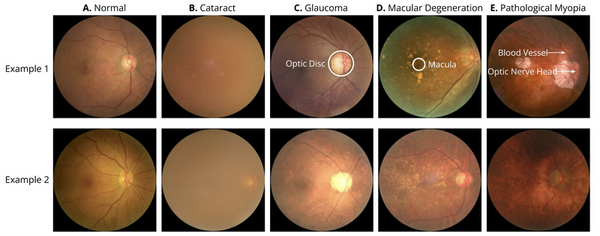
The authors looked at whether retinal features, specifically lens clarity, optic nerve cupping, and hyperreflective foci, can serve as biomarkers for neuro-ophthalmological diseases, which share pathological mechanisms with neurodegeneration and may indicate broader neurological risk. Using multimodal clinical data and machine learning, they investigated the potential of retinal imaging as a complementary diagnostic tool for more accurate and accessible detection of neurological disorders.

Read More...

Optimizing surface contact area and electrolyte type to develop a more effective rechargeable battery

Rajapakse et al. | Oct 27, 2024

Optimizing surface contact area and electrolyte type to develop a more effective rechargeable battery
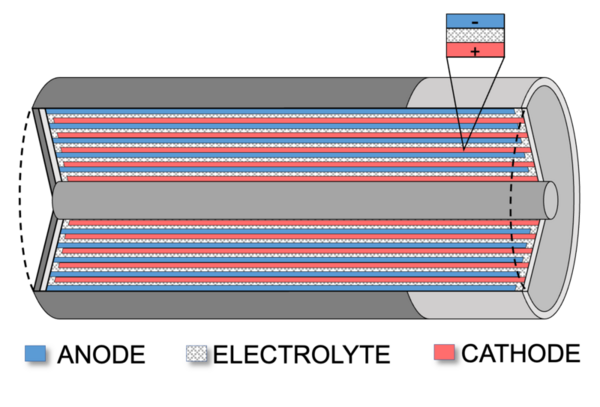
Image credit: Rajapakse and Rajapakse 2024.

Rechargeable batteries are playing an increasingly prominent role in our lives due to the ongoing transition from fossil energy sources to green energy. The purpose of this study was to investigate variables that impact the effectiveness of rechargeable batteries. Alkaline (non-rechargeable) and rechargeable batteries share common features that are critical for the operation of a battery. The positive and negative electrodes, also known as the cathode and anode, are where the energy of the battery is stored. The electrolyte is what facilitates the transfer of cations and anions in a battery to generate electricity. Due to the importance of these components, we felt that a systematic investigation examining the surface area of the cathode and anode as well the impact of electrolytes with different properties on battery performance was justified. Utilizing a copper cathode and aluminum anode coupled with a water in salt electrolyte, a model rechargeable battery system was developed to test two hypotheses: a) increasing the contact area between the electrodes and electrolyte would improve battery capacity, and b) more soluble salt-based electrolytes would improve battery capacity. After soaking in an electrolyte solution, the battery was charged and the capacity, starting voltage, and ending voltage of each battery were measured. The results of this study supported our hypothesis that larger anode/cathodes surface areas and more ionic electrolytes such as sodium chloride, potassium chloride and potassium sulfate resulted in superior battery capacity. Incorporating these findings can help maximize the efficiency of commercial rechargeable batteries.

Read More...

Jet optimization using a hybrid multivariate regression model and statistical methods in dimuon collisions

Chunduri et al. | Jun 09, 2024

Jet optimization using a hybrid multivariate regression model and statistical methods in dimuon collisions
Image credit: Chunduri, Srinivas and McMahan, 2024.

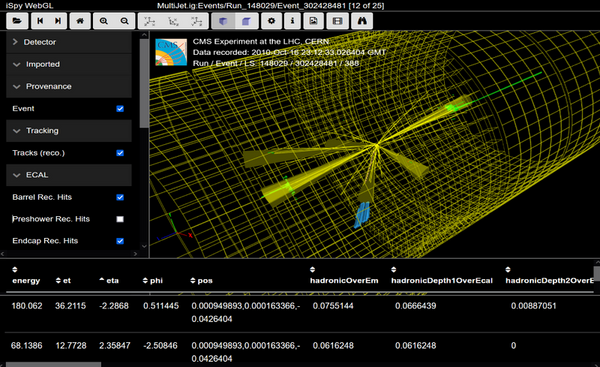
Collisions of heavy ions, such as muons result in jets and noise. In high-energy particle physics, researchers use jets as crucial event-shaped observable objects to determine the properties of a collision. However, many ionic collisions result in large amounts of energy lost as noise, thus reducing the efficiency of collisions with heavy ions. The purpose of our study is to analyze the relationships between properties of muons in a dimuon collision to optimize conditions of dimuon collisions and minimize the noise lost. We used principles of Newtonian mechanics at the particle level, allowing us to further analyze different models. We used simple Python algorithms as well as linear regression models with tools such as sci-kit Learn, NumPy, and Pandas to help analyze our results. We hypothesized that since the invariant mass, the energy, and the resultant momentum vector are correlated with noise, if we constrain these inputs optimally, there will be scenarios in which the noise of the heavy-ion collision is minimized.

Read More...