Browse Articles

Effects of vascular normalizing agents on immune marker expression in T cells, dendritic cells, and melanoma cells

Yaskolko et al. | Nov 03, 2021

Effects of vascular normalizing agents on immune marker expression in T cells, dendritic cells, and melanoma cells

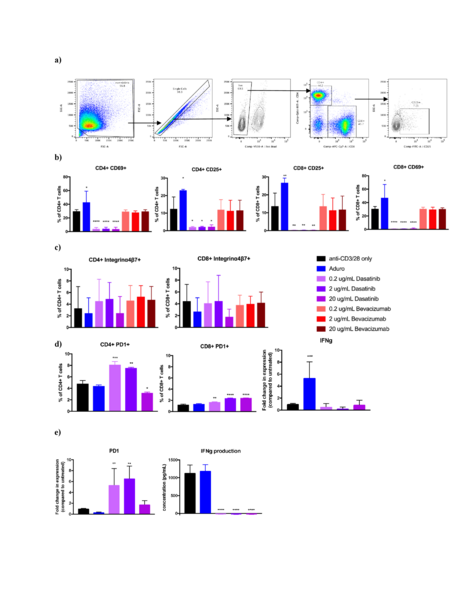
Tertiary lymphoid structures (TLS) are lymph node-like structures that form at sites of inflammation, and their presence in cancer patients is predictive of a better clinical outcome. One significant obstacle to TLS formation is reduced immune cell infiltration into the tumor microenvironment (TME). Recent studies have shown that vasculature normalizing (VN) agents may override this defect to improve tissue perfusion and increased immune cell entry into the TME. However, their effects on immune cell and tumor cell phenotype remain understudied. Here the authors investigate whether treating tumor cells with VN would reduce their immunosuppressive phenotype and promote production of chemokine that recruit immune cells and foster TLS formation.

Read More...

The role of CYP46A1 and its metabolic product, 24S-hydroxycholesterol, in Neuro 2A cell death

Ni et al. | May 11, 2021

The role of CYP46A1 and its metabolic product, 24S-hydroxycholesterol, in Neuro 2A cell death

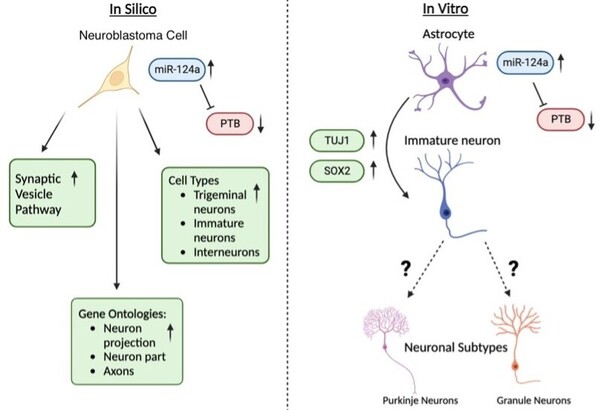
Cholesterol is a major component of neuronal cell membrane and myelin sheath. In this study, the authors either transfected Neuro 2A cells with CYP46A1 cDNA or treated the cells with 24SHC. Cells expressing CYP46A1 had significantly less viability compared to the negative control. Up to 55% reduction in cell viability was also observed in 24S-HC-treated cells. This work supports that CYP46A1 and 24S-HC could directly trigger cell death. The direct involvement of 24S-HC in cell death provides further evidence that 24S-HC can be a promising biomarker for diagnosing brain damage severity.

Read More...

Prediction of preclinical Aβ deposit in Alzheimer’s disease mice using EEG and machine learning

Igarashi et al. | Nov 29, 2022

Prediction of preclinical Aβ deposit in Alzheimer’s disease mice using EEG and machine learning

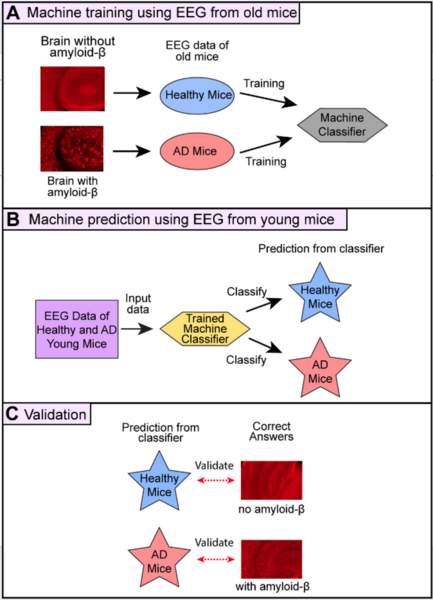
Alzheimer’s disease (AD) is a common disease affecting 6 million people in the U.S., but no cure exists. To create therapy for AD, it is critical to detect amyloid-β protein in the brain at the early stage of AD because the accumulation of amyloid-β over 20 years is believed to cause memory impairment. However, it is difficult to examine amyloid-β in patients’ brains. In this study, we hypothesized that we could accurately predict the presence of amyloid-β using EEG data and machine learning.

Read More...