Browse Articles

Optimizing data augmentation to improve machine learning accuracy on endemic frog calls

Anand et al. | Mar 09, 2025

Optimizing data augmentation to improve machine learning accuracy on endemic frog calls
Image credit: Anand and Sampath 2025

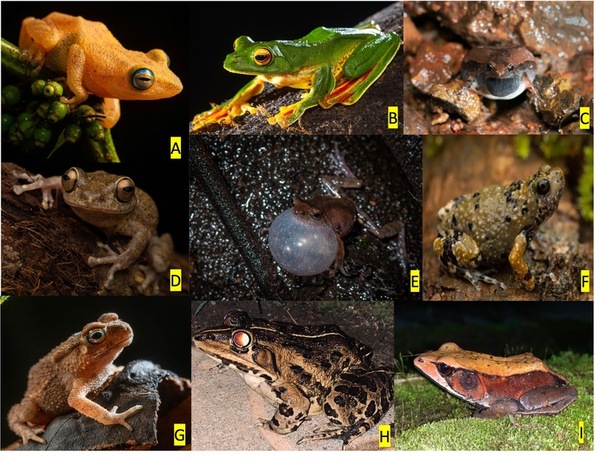
The mountain chain of the Western Ghats on the Indian peninsula, a UNESCO World Heritage site, is home to about 200 frog species, 89 of which are endemic. Distinctive to each frog species, their vocalizations can be used for species recognition. Manually surveying frogs at night during the rain in elephant and big cat forests is difficult, so being able to autonomously record ambient soundscapes and identify species is essential. An effective machine learning (ML) species classifier requires substantial training data from this area. The goal of this study was to assess data augmentation techniques on a dataset of frog vocalizations from this region, which has a minimal number of audio recordings per species. Consequently, enhancing an ML model’s performance with limited data is necessary. We analyzed the effects of four data augmentation techniques (Time Shifting, Noise Injection, Spectral Augmentation, and Test-Time Augmentation) individually and their combined effect on the frog vocalization data and the public environmental sounds dataset (ESC-50). The effect of combined data augmentation techniques improved the model's relative accuracy as the size of the dataset decreased. The combination of all four techniques improved the ML model’s classification accuracy on the frog calls dataset by 94%. This study established a data augmentation approach to maximize the classification accuracy with sparse data of frog call recordings, thereby creating a possibility to build a real-world automated field frog species identifier system. Such a system can significantly help in the conservation of frog species in this vital biodiversity hotspot.

Read More...

Comparative analysis of player ability, game size, and ideal starting positions in Nim games

Sinha et al. | Aug 02, 2026

Comparative analysis of player ability, game size, and ideal starting positions in Nim games
Image credit: Immo Wegmann

Here the authors investigated the impact of player ability versus starting positions in the game of Nim under imperfect play, hypothesizing that player skill becomes the primary determinant of outcomes as pile sizes grow. Through computational simulations and a mathematical model, they demonstrated that favorable starting positions lose their advantage over time and provide key insights to help improve reinforcement learning algorithms in abstract, complex decision-making environments.

Read More...

The journey to Proxima Centauri b

Ramaswamy et al. | Apr 01, 2024

The journey to Proxima Centauri b
Image credit: The authors

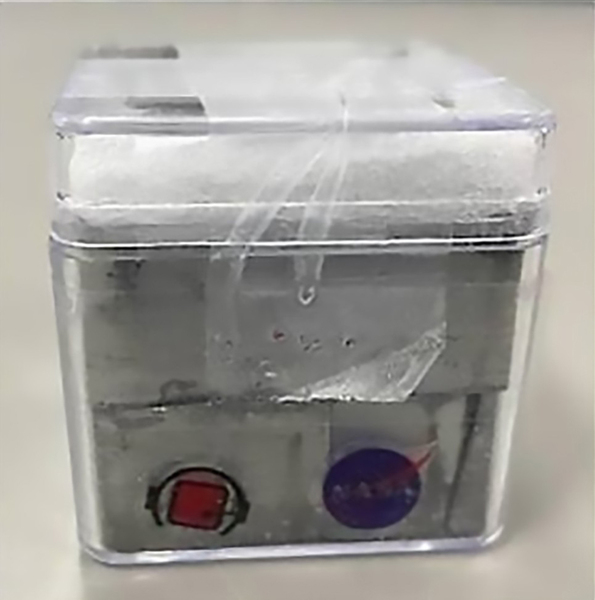
Someday, rockets from Earth may be launched towards worlds beyond our solar system. But will these rockets be able to reach their destination within a human lifetime? Ramaswamy and Giovinazzi simulate rocket launches to an Earth-like exoplanet to uncover whether it's physically possible to complete the journey within a lifetime.

Read More...

More efficient sources of water distribution for agricultural and general usage

Jung et al. | Nov 11, 2022

More efficient sources of water distribution for agricultural and general usage

Here, the authors investigated alternative methods to irrigate plants based on the their identification that current irrigation systems waste a large amount of fresh water. They compared three different delivery methods for water: conventional sprinkler, underground cloth, and a perforated pipe embedded in the soil. They found the cloth method to save the most water, although plant growth was slightly less in comparison to plants watered with the sprinkler method or pipe method.

Read More...

A Juxtaposition of Airborne Microplastics and Fiber Contamination in Various Environments

Truong-Phan et al. | Dec 04, 2020

A Juxtaposition of Airborne Microplastics and Fiber Contamination in Various Environments

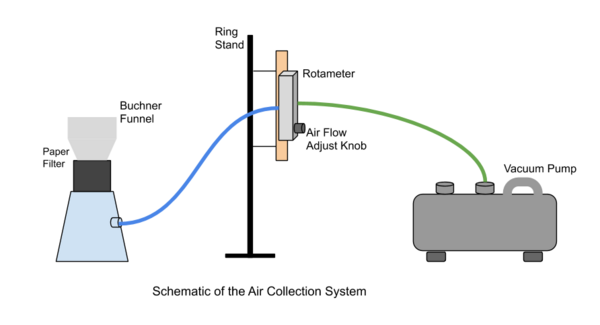
Microplastics can have detrimental effects on various wildlife, as well as pollute aquatic and atmospheric environments. This study focused on air samples collected from five locations to investigate microplastic concentrations in atmospheric fallout from indoor and outdoor settings, through a process utilizing a hand-held vacuum pump and a rotameter. The authors found that the difference between the average number of microplastic fragments and fibers collected from all locations was not large enough to be statistically significant. The results collected in this study will contribute to knowledge of the prevalence of airborne microplastics.

Read More...