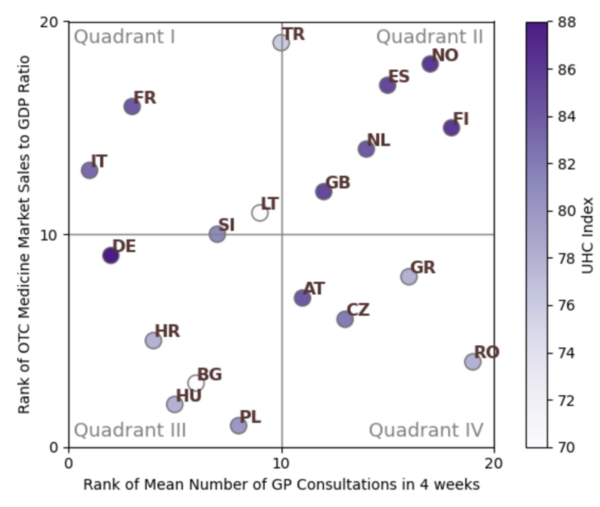
The discussion surrounding self-medication with non-prescription medicines has gained significance in healthcare and public health, particularly given the global increase in consumption of non-prescription drugs. This study aimed to examine the association between the frequency of general practitioner (GP) consultations and the proportion of economic resources spent on OTC medicine.
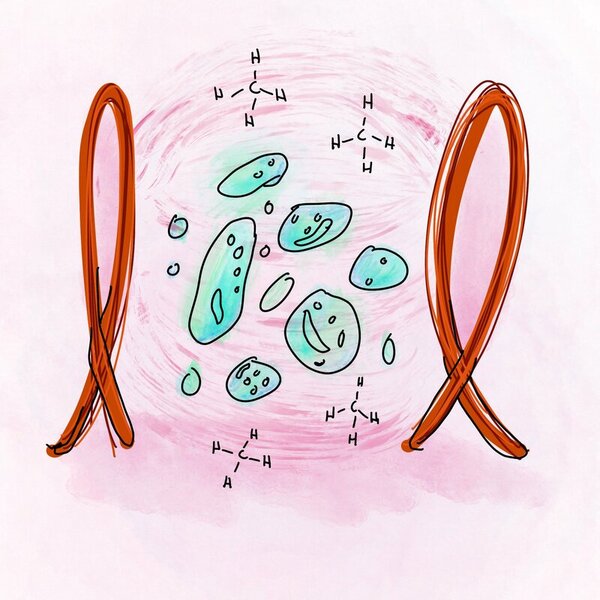
Scientist are investigating the use of methane-consuming bacteria to aid the growing problem of rising greenhouse gas emissions. While previous studies claim that low-frequency electromagnetic fields can accelerate the growth rate of these bacteria, Chu et al. demonstrate that this fundamental ideology is not on the same wavelength with their data.
This study investigated how different sound frequencies (0, 1,000, 5,000, and 15,000 Hz) affect the growth of Phaseolus vulgaris and the transpiration rates of Gaultheria shallon. Although some differences in plant growth were observed, the authors found no consistent evidence that sound frequency enhanced overall growth or transpiration, highlighting the need for further research.
Solar and radio frequency harvesters serve as a viable alternative energy source to batteries in many cases where the battery cannot be easily replaced. Using specifically designed circuit models, the authors quantify the reliability of different harvested energy sources to identify the most practical and efficient forms of renewable energy.
Content warning: This article discusses the frequency and impact of mass violence incidents, particularly school shootings. Gun violence, threats of gun violence, firearm supply, fatalities among minors, and bullying are discussed but not graphically described.
Climate change is predicted to increase the frequency of severe thunderstorm events in coming years. In this study, the authors hypothesized that (i) the majority of severe thunderstorm events will occur in the summer months in all states examined for all years analyzed, (ii) climate change will cause an unusual number of severe thunderstorm events in winter months in all states, (iii) thundersnow would be observed in Colorado, and (iv.) there would be no difference in the number of severe thunderstorm events between states in any given year examined. They classified lightning seasons in all states observed, with the most severe thunderstorm events occurring in May, June, July, and August. Colorado, New Jersey, Washington, and West Virginia were found to have severe thunderstorm events in the winter, which could be explained by increased winter storms due to climate change (1). Overall, they highlight the importance of quantifying when lightning seasons occur to avoid lightning-related injuries or death.
The authors explore hearing students' misconceptions about the Deaf and Hard of Hearing (HoH) community. Results indicate that some misconceptions are more common than others, and that personal experience with individuals in the Deaf and HoH community reduces the frequency of such misconceptions.
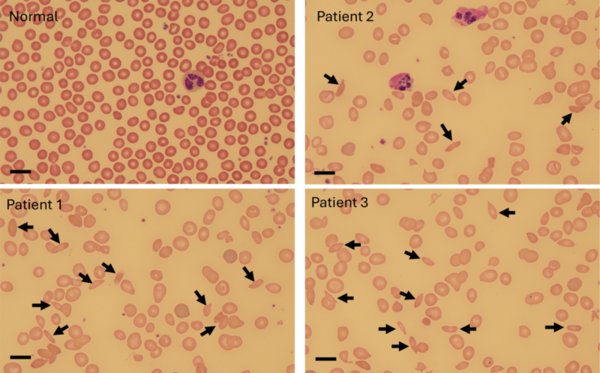
The authors use blood smears from individuals with sickle cell disease to correlate sickle cell frequency with the occurrence of vaso-occlusive crises.
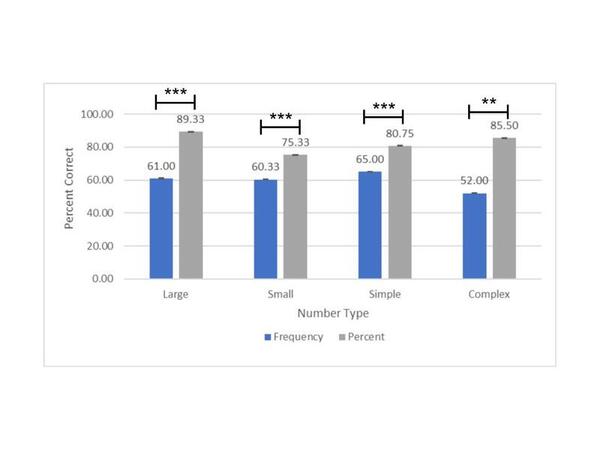
It can be challenging for the general public to understand data on medical risk. Weseley-Jones and Mordechai tackle this issue by conducting a survey to assess people's skill and comfort with understanding medical risk information in percentage and frequency formats.
Here, the authors sought to develop a new metric to evaluate the efficacy of baseball pitchers using machine learning models. They found that the frequency of balls, was the most predictive feature for their walks/hits allowed per inning (WHIP) metric. While their machine learning models did not identify a defining trait, such as high velocity, spin rate, or types of pitches, they found that consistently pitching within the strike zone resulted in significantly lower WHIPs.