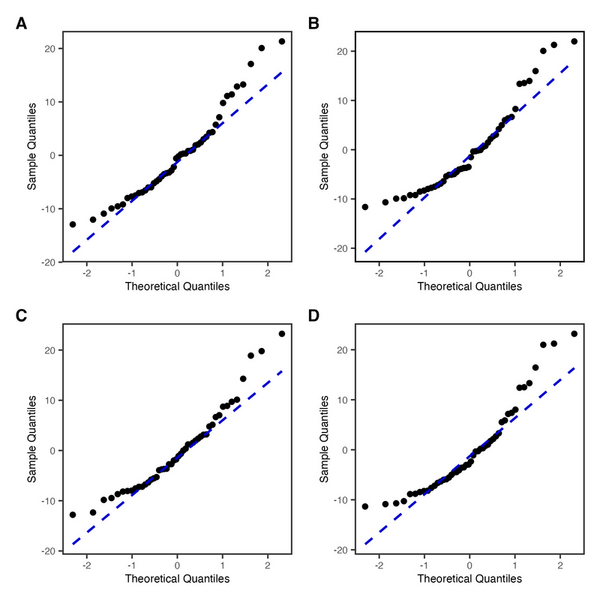
This study examined whether Rubik’s Cube solving ability is related to spatial visualization skills and stress levels.
Read More...Puzzle to progress: relationship between Rubik’s Cube solving proficiency, spatial visualization, and anxiety
This study examined whether Rubik’s Cube solving ability is related to spatial visualization skills and stress levels.
Read More...Examining cognitive differences between experienced and novice entrepreneurs
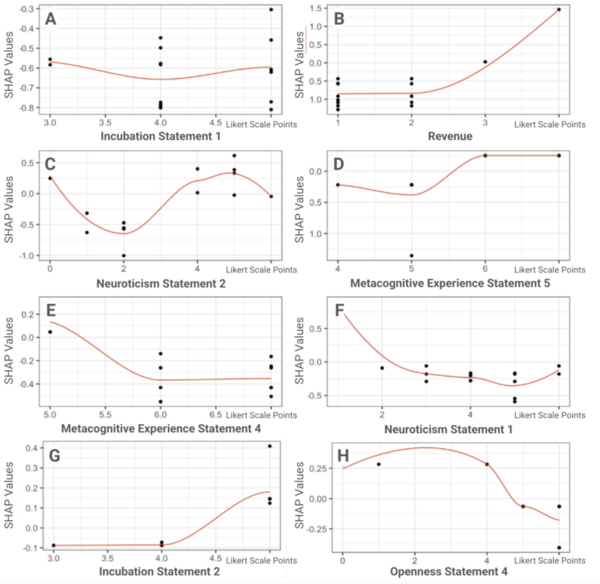
This study used surveys, interviews, and XGBoost analysis to examine how experienced and novice entrepreneurs differ in their thinking and decision-making.
Read More...Importance of pay on job satisfaction

Pay is a widely debated factor in workplace motivation, influencing both incentives and job satisfaction. This work analyzed employee reviews across various industries to examine the relationship between pay importance and job satisfaction. Findings suggest that job satisfaction decreases as the importance of pay increases, particularly in construction, food, and finance industries, as well as among entry-level and experienced workers, though the results were not statistically significant.
Read More...The impact of visual attention on visual working memory
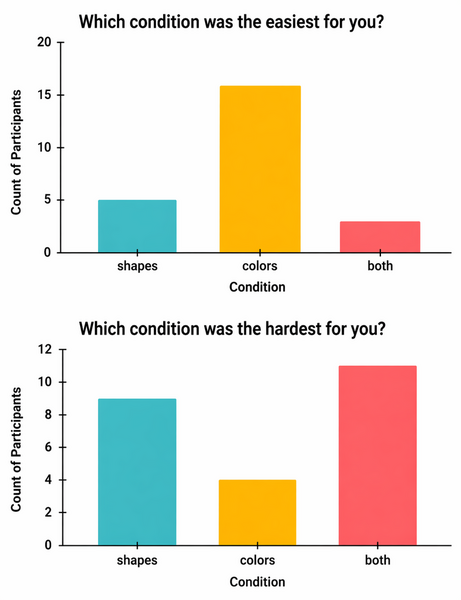
The authors looked at how the focus of someone's attention impacted what information was retained in their working memory.
Read More...Culturally Adapted Assessment Tool for Autism Spectrum Disorder and its Clinical Significance

Diagnosing of Autism Spectrum Disorder (ASD) using tools developed in the West is challenging in the Indian setting due to a huge diversity in sociocultural and economic backgrounds. Here, the authors developed a home-based, audiovisual game app (Autest) suitable for ASD risk assessment in Indian children under 10 years of age. Ratings suggested that the tool is effective and can reduce social inhibition and facilitate assessment. Further usage and development of Autest can improve risk assessment and early intervention measures for children with ASD in India.
Read More...Alloferon improves the growth performance and developmental time of mealworms (Tenebrio molitor)
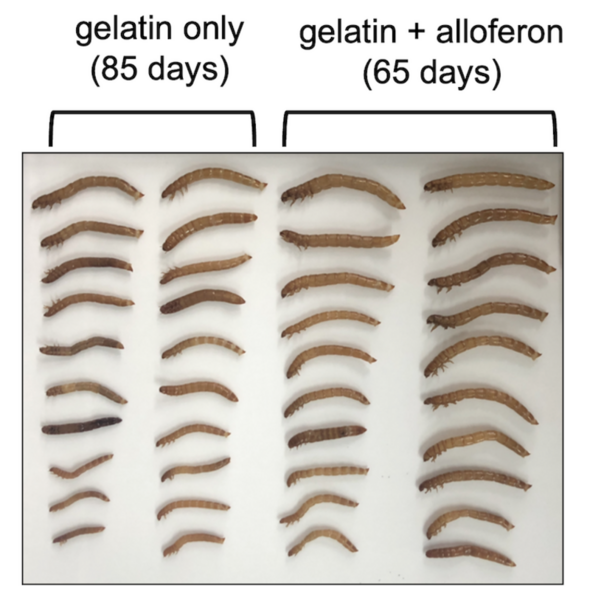
Mealworms (Tenebrio molitor) are important food sources for reptiles, birds, and other organisms, as well as for humans. However, the slow growth and low survival rate of mealworms cause problems for mass production. Since alloferon, a synthetic peptide, showed long-term immunological effects on mealworms, we hypothesized that alloferon would function as a growth promoter to maximize mealworm production. We discovered that the overall weight of the alloferon-containing gelatin diet group was 39.5-90% heavier, and the development time of the experimental group was shortened up to 20.6-39.6% than the control group.
Read More...The Effect of Ethanol Concentration on Beta-Cell Development in Zebrafish
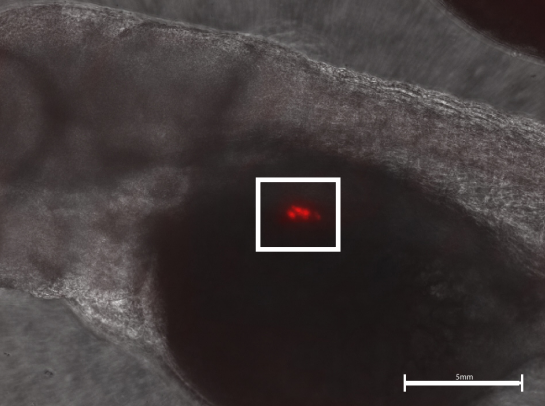
Alcohol is known to cause various developmental diseases including Fetal Alcohol Syndrome. Here the authors investigate the effect of ethanol on the development of zebrafish beta cells, the part of the pancreas associated with Type 1 Diabetes. They find that exposure to ethanol does adversely affect beta-cell development, suggesting that alcohol ingestion during pregnancy may be linked to diabetes in newborns.
Read More...Combinatorial treatment by siNOTCH and retinoic acid decreases A172 brain cancer cell growth

Treatments inhibiting Notch signaling pathways have been explored by researchers as a new approach for the treatment of glioblastoma tumors, which is a fast-growing and aggressive brain tumor. Recently, retinoic acid (RA) therapy, which inhibits Notch signaling, has shown a promising effect on inhibiting glioblastoma progression. RA, which is a metabolite of vitamin A, is very important in embryonic cellular development, which includes the regulation of multiple developmental processes, such as brain neurogenesis. However, high doses of RA treatment caused many side effects such as headaches, nausea, redness around the injection site, or allergic reactions. Therefore, we hypothesized that a combination treatment of RA and siRNA targeting NOTCH1 (siNOTCH1), the essential gene that activates Notch signaling, would effectively inhibit brain cancer cell proliferation. The aim of the study was to determine whether inhibiting NOTCH1 would inhibit the growth of brain cancer cells by cell viability assay. We found that the combination treatment of siNOTCH1 and RA in low concentration effectively decreased the NOTCH1 expression level compared to the individual treatments. However, the combination treatment condition significantly decreased the number of live brain cancer cells only at a low concentration of RA. We anticipate that this novel combination treatment can provide a solution to the side effects of chemotherapy.
Read More...Exogenous foliar thiamine application as an alternative strategy to mitigate lead stress in Lepidium sativum
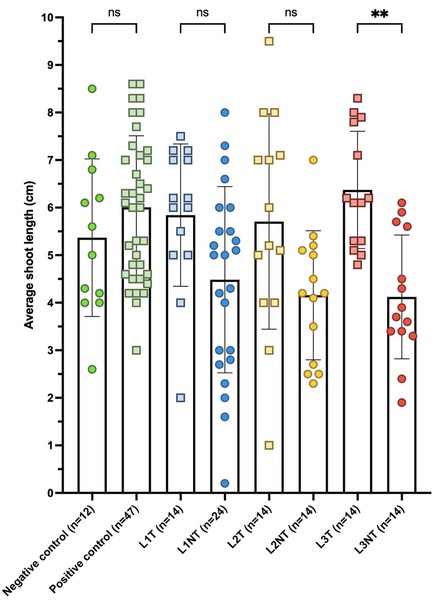
This study investigated whether thiamine (vitamin B1) could mitigate the harmful effects of lead contamination on plant growth. Using garden cress (Lepidium sativum), we found that lead exposure reduced plant growth and biomass, while thiamine treatment partially alleviated these effects, improving shoot length and overall plant length. These findings highlight the potential of thiamine as a simple strategy to improve plant resilience to heavy metal stress, with implications for agricultural productivity and food security.
Read More...Investigating intertidal sediment sorting and median particle diameter variation on an eroding beach face

The authors looked at beach nourishment (a way to combat erosion on coasts) and resulting grain size distribution. Their work is important to understand the dynamics of erosion and it's relation to wave action and the implications this has for efforts to mitigate coastal erosion.
Read More...