Browse Articles

Study of PINN sensor layout in evaluating WSS with application to patient-specific carotid flow

Nie et al. | Sep 04, 2026

Study of PINN sensor layout in evaluating WSS with application to patient-specific carotid flow

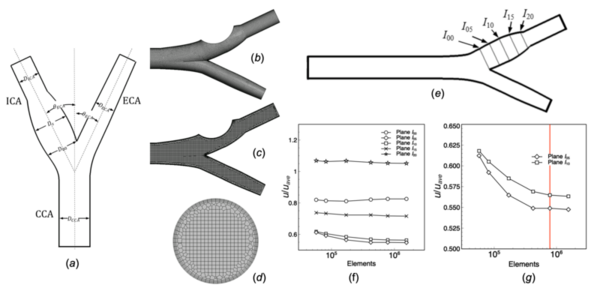
Physics‑Informed Neural Networks (PINNs) offer a promising way to estimate blood‑flow behavior in arteries, especially near the vessel wall where traditional methods struggle. In this study, students tested how sensor density and placement affect PINN accuracy in modeling carotid artery flow and found that accuracy improves up to a moderate sensor density and depends strongly on how close sensors are placed to the arterial wall. Applying the optimized configuration to a patient‑specific carotid model produced velocity predictions closely matching computational fluid dynamics results, highlighting PINNs’ potential for future personalized cardiovascular assessment.

Read More...
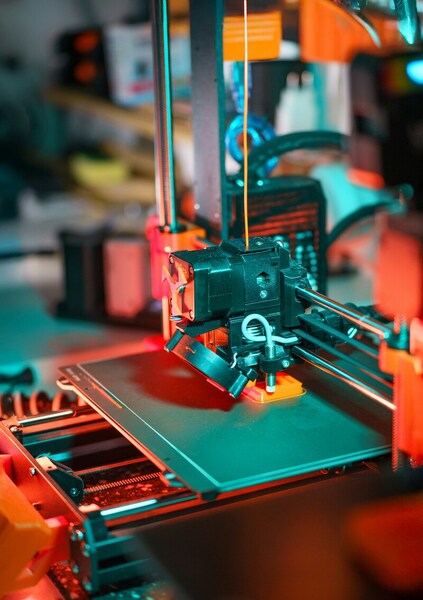
A 3D printed triboelectric nanogenerator for bridge vibration energy harvesting and sensing

Walavalkar et al. | Jul 19, 2026

A 3D printed triboelectric nanogenerator for bridge vibration energy harvesting and sensing
Image credit: Jakub Żerdzicki

This study strongly illustrates that optimizing 3D printing parameters would enhance a triboelectric nanogenerator's performance. The design improvements substantiate the potential of optimized, 3D-printed TENGs for developing scalable, cost-effective solutions for powering low-energy electronics, particularly in applications such as structural health monitoring.

Read More...

Mitigating skin color bias in dermatology AI using CycleGAN-based data augmentation

Kannan et al. | Jun 24, 2026

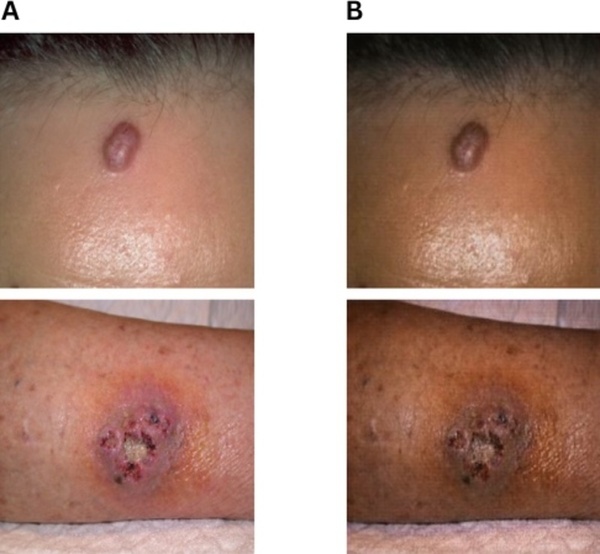
Mitigating skin color bias in dermatology AI using CycleGAN-based data augmentation
Image credit: Kannan and Ramasamy

This study investigates skin tone bias in artificial intelligence models used for dermatological disease classification and evaluates a CycleGAN-based data augmentation approach to improve diagnostic performance on darker skin types. We generated synthetic dark-skinned images to enhance dataset diversity and compared model performance before and after augmentation. The results demonstrate that augmentation with synthetic dermatological images can help reduce disparities in diagnostic performance across skin tones, highlighting a practical strategy for improving fairness in dermatology AI systems.

Read More...

Deep learning for pulsar detection: Investigating hyperparameter effects on TensorFlow classification accuracy

Upadhyay et al. | Jan 31, 2026

Deep learning for pulsar detection: Investigating hyperparameter effects on TensorFlow classification accuracy

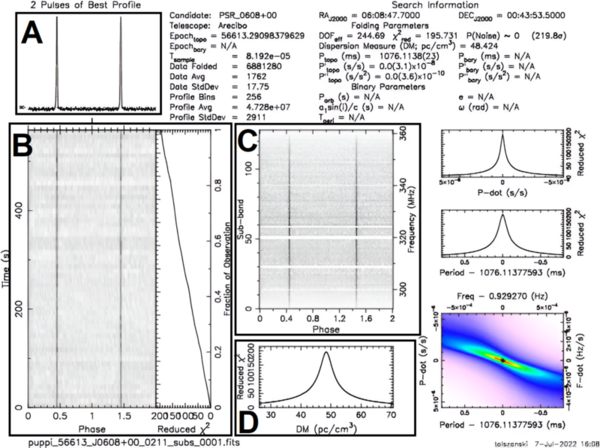
This study investigates how the hyperparameters epochs and batch size affect the classification accuracy of a convolutional neural network (CNN) trained on pulsar candidate data. Our results reveal that accuracy improves with increasing number of epochs and smaller batch sizes, suggesting that with optimized hyperparameters, high accuracy may be achievable with minimal training. These findings offer insights that could help create more efficient machine learning classification models for pulsar signal detection, with the potential of accelerating pulsar discovery and advancing astrophysical research.

Read More...

The effect of the pandemic on the behavior of junior high school students

Kong Grisius et al. | May 01, 2023

The effect of the pandemic on the behavior of junior high school students
Image credit: Chris Montgomery

Here, seeking to understand how the COVID-19 pandemic affected the social interactions of junior high school students, the authors surveyed students, teachers, and parents. Contrary to their initial hypotheses, the authors found positive correlation between increased virtual contact during social isolation and in-person conflict and disregard for social norms after the pandemic. While the authors identified the limitations of their study, they suggest that further research into the effect of online interactions is becoming increasingly important.

Read More...

Reddit v. Wall Street: Why Redditors beat Wall Street at its own game

Bhakar et al. | Sep 13, 2022

Reddit v. Wall Street: Why Redditors beat Wall Street at its own game

Here the authors investigated the motivation of a short squeeze of GameStop stock where users of the internet forum Reddit drove a sudden increase in GameStop stock price during the start of 2021. They relied on both qualitative and quantitative analyses where they tracked activity on the r/WallStreetBets subreddit in relation to mentions of GameStop. With these methods they found that while initially the short squeeze was driven by financial motivations, later on emotional motivations became more important. They suggest that social phenomena can be dynamic and evolve necessitating mixed method approaches to study them.

Read More...

Assessing grass water use efficiency through smartphone imaging and ImageJ analysis

Shen et al. | Jul 27, 2022

Assessing grass water use efficiency through smartphone imaging and ImageJ analysis

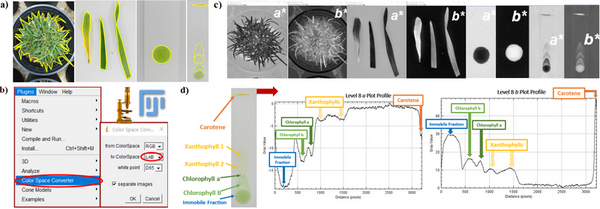
Overwatering and underwatering grass are widespread issues with environmental and financial consequences. This study developed an accessible method to assess grass water use efficiency (WUE) combining smartphone imaging with open access color unmixing analysis. The method can be applied in automated irrigation systems or apps, providing grass WUE assessment for regular consumer use.

Read More...

Changing public opinions on genetically modified organisms through access to educational resources

Klein et al. | Jul 26, 2022

Changing public opinions on genetically modified organisms through access to educational resources

Genetically modified organisms (GMOs) are crops or animals that have been genetically engineered to express a certain physical or biological characteristic and have various benefits that have made them become increasingly popular. However, the public has had mixed reactions to the use of GMOs, with some skeptical of their safety. The purpose of this study was to evaluate how opinions on genetically modified foods can change from exposure to small amounts of information

Read More...