Browse Articles

Exploring Interactions between PFAS (Per- and Polyfluoroalkyl Substances) and proteins

Lu-Yang et al. | May 16, 2026

Exploring Interactions between PFAS (Per- and Polyfluoroalkyl Substances) and proteins
Image credit: Authors

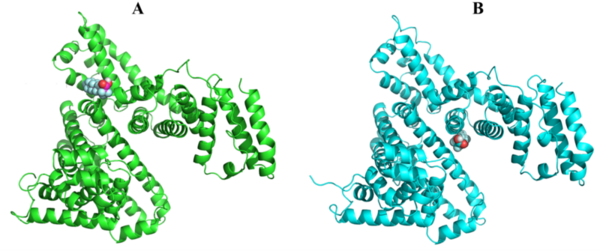
Here the authors investigated how the "forever chemical" perfluorooctanoic acid binds to bovine serum albumin (BSA) using computational software to simulate its potential impact on essential human plasma proteins. They identify a possible, high-energy binding configuration that could persistently impair protein functions, underscoring the critical need for further research into the long-term health risks of per- and poly-fluoroalkyl substances exposure.

Read More...

Analysis of the catalytic efficiency of spent coffee grounds and titanium dioxide using UV-Vis spectroscopy

Jahng et al. | Dec 09, 2025

Analysis of the catalytic efficiency of spent coffee grounds and titanium dioxide using UV-Vis spectroscopy
Image credit: Jahng and Kim

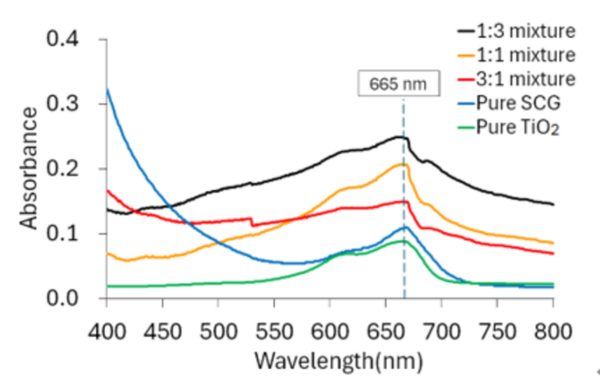
This paper looks at using spent coffee grounds as a partial substitute for titanium dioxide (TiO2) as a catalyst for chemical reactions. Using UV-Vis spectrophotometry, they found that adding the coffee grounds to TiO2 in a 3:1 ratio, there is still meaningful catalytic activity. This offers a cheaper solution than just using pure TiO2.

Read More...

Linearity of piezoelectric response of electrospun polymer-based (PVDF) fibers with barium titanate nanoparticles

Nichitiu et al. | Feb 13, 2023

Linearity of piezoelectric response of electrospun polymer-based (PVDF) fibers with barium titanate nanoparticles

Here, seeking to develop an understanding of the properties that determine the viability of piezoelectric flexible materials for applications in electro-mechanical sensors, the authors investigated the effects of the inclusion BaTiO3 nanoparticles in electrospun Polyvinyledene Fluoride. They found the voltage generated had a piecewise linear dependence on the applied force at a few temperatures.

Read More...

Testing Different Polymers and Boron Nitride Nanotube Properties in Fabrication of Ion-selective Membranes

Yi et al. | Sep 28, 2020

Testing Different Polymers and Boron Nitride Nanotube Properties in Fabrication of Ion-selective Membranes

One largely untapped source of clean energy is the use of osmotic gradients where freshwater and saltwater are mixed, for example at estuaries. To harness such energy, charge-selective membranes are needed to separate the anions and cations in saltwater, establishing an electric potential like a battery. The objective of this study was twofold: to investigate the creation of the polymer matrix and test the properties of boron nitride nanotubes, as both are essential in the creation of an ion-selective membrane. Out of three polymer samples tested in this study, the mixture known as Soltech 704 showed the best resistance to etching, as well as the highest UV cure rate.

Read More...