Browse Articles

Varying Growth Hormone Levels in Chondrocytes Increases Proliferation Rate and Collagen Production by a Direct Pathway

Bennett et al. | Sep 03, 2019

Varying Growth Hormone Levels in Chondrocytes Increases Proliferation Rate and Collagen Production by a Direct Pathway

Bennett and Joykutty test whether growth hormone directly or indirectly affected the rate at which cartilage renewed itself. Growth hormone could exert a direct effect on cartilage or chondrocytes by modifying the expression of different genes, whereas an indirect effect would come from growth hormone stimulating insulin-like growth factor. The results from this research support the hypothesis that growth hormone increases proliferation rate using the direct pathway. This research can be used in the medical sciences for people who suffer from joint damage and other cartilage-related diseases, since the results demonstrated conditions that lead to increased proliferation of chondrocytes. These combined results could be applied in a clinical setting with the goal of allowing patient cartilage to renew itself at a faster pace, therefore keeping those patients out of pain from these chondrocyte-related diseases.

Read More...

The Effect of Ultraviolet Radiation and the Antioxidant Curcumin on the Longevity, Fertility, and Physical Structure of Drosophila melanogaster: Can We Defend Our DNA?

Lateef et al. | May 18, 2019

The Effect of Ultraviolet Radiation and the Antioxidant Curcumin on the Longevity, Fertility, and Physical Structure of <em>Drosophila melanogaster</em>: Can We Defend Our DNA?

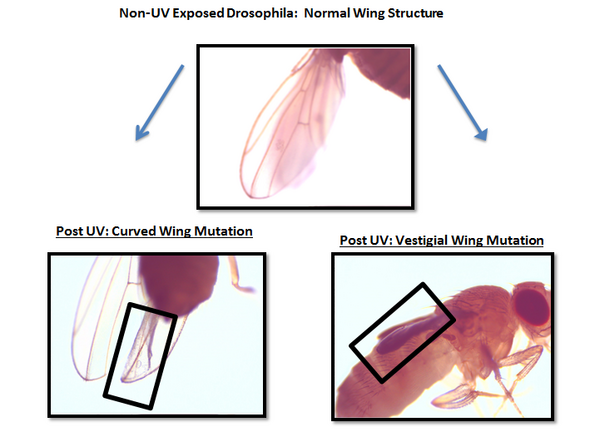
Ultraviolet (UV) radiation is known to alter DNA structure and impair cellular function in all living organisms. In this study, Lateef et al examine the effects of UV radiation to determine whether antioxidant-enriched nutrition can combat the potential deleterious effects of UV radiation on Drosophila melanogaster. They found that UVB (320nm) radiation caused a 59% decrease in the Drosophila lifespan and mutagenic effects on flies' physical appearance, but did not significantly affect fertility. Curcumin significantly prolonged lifespan and enhanced fertility for both UV- and non-UV-exposed flies. The research demonstrates the positive potential of natural antioxidants as weapons against radiation-induced diseases including cancer.

Read More...

Evaluation of Tea Extract as an Inhibitor of Oxidative Stress in Prostate Cells

Zhang et al. | Jan 22, 2019

Evaluation of Tea Extract as an Inhibitor of Oxidative Stress in Prostate Cells

One important factor that contributes to human cancers is accumulated damage to cells' DNA due to the oxidative stress caused by free radicals. In this study, the authors investigate the effects of several different tea leaf extracts on oxidative stress in cultured human prostate cells to see if antioxidants in the tea leaves could help protect cells from this type of DNA damage. They found that all four types of tea extract (as well as direct application of the antioxidant EGCG) improved the outcomes for the cultured cells, with white tea extract having the strongest effect. This research suggests that tea extracts and the antioxidants that they contain may have applications in the treatment of the many diseases associated with cellular DNA damage, including cancer.

Read More...

The role of xpa-1 and him-1 in UV protection of Caenorhabditis elegans

Tung et al. | Feb 25, 2022

The role of <em>xpa-1</em> and <em>him-1</em> in UV protection of <em>Caenorhabditis elegans</em>

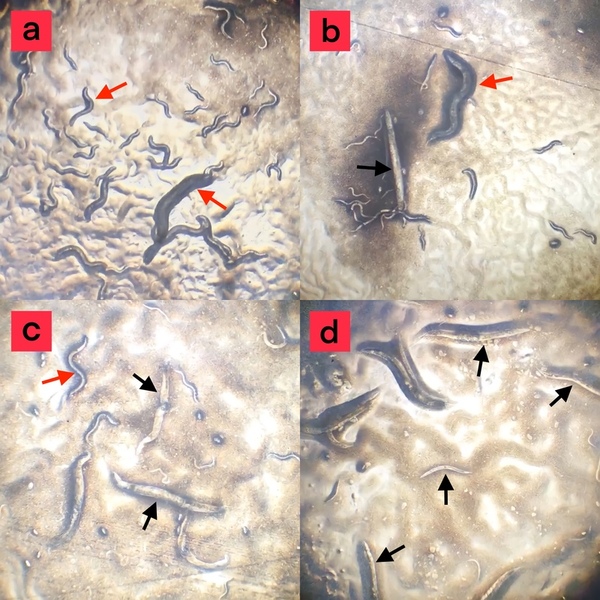
Caenorhabditis elegans xpa-1 and him-1 are orthologs of human XPA and human SMC1A, respectively. Mutations in the XPA are correlated with Xeroderma pigmentosum, a condition that induces hypersensitivity to ultraviolet (UV) radiation. Alternatively, SMC1A mutations may lead to Cornelia de Lange Syndrome, a multi-organ disorder that makes patients more sensitive to UVinduced DNA damage. Both C. elegans genes have been found to be involved in protection against UV radiation, but their combined effects have not been tested when they are both knocked down. The authors hypothesized that because these genes are involved in separate pathways, the simultaneous knockdown of both of these genes using RNA interference (RNAi) in C. elegans will cause them to become more sensitive to UV radiation than either of them knocked down individually. UV protection was measured via the percent survival of C. elegans post 365 nm and 5.4x10⁻¹⁹ joules of UV radiation. The double xpa-1/him-1 RNAi knockdown showed a significantly reduced percent survival after 15 and 30 minutes of UV radiation relative to wild-type and xpa-1 and him-1 single knockdowns. These measurements were consistent with their hypothesis and demonstrated that xpa-1 and him-1 genes play distinct roles in resistance against UV stress in C. elegans. This result raises the possibility that the xpa-1/him-1 double knockdown could be useful as an animal model for studying the human disease Xeroderma pigmentosum and Cornelia de Lange Syndrome.

Read More...

Estimation of Reproduction Number of Influenza in Greece using SIR Model

Skarpeti et al. | Nov 18, 2020

Estimation of Reproduction Number of Influenza in Greece using SIR Model

In this study, we developed an algorithm to estimate the contact rate and the average infectious period of influenza using a Susceptible, Infected, and Recovered (SIR) epidemic model. The parameters in this model were estimated using data on infected Greek individuals collected from the National Public Health Organization. Our model labeled influenza as an epidemic with a basic reproduction value greater than one.

Read More...