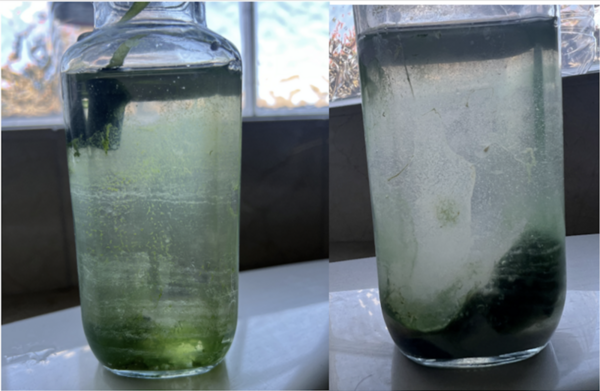
Algal blooms pose a threat to ecosystems, but the methods used to combat these blooms might harm more than just the algae. Halepete, Graham, and Lowe-Schmahl demonstrate negative effects of anti-algae treatments on a cyanobacterium (Spirulina major), and the water fleas (Daphnia magna) that live alongside these cyanobacteria.
For public health, drinking water should be free of bacterial contamination. The objective of this research is to identify the fate of bacteria if drinking water becomes contaminated and inform consumers on which water type enables the least bacteria to survive. We hypothesized that bottled mineral water would provide the most sufficient conditions for E. coli to survive. We found that if water becomes contaminated, the conditions offered by the three water types at room temperature allow E. coli to survive up to three days. At 72 hours, the bottled spring water had the highest average colony forming units (CFUs), with tap and mineral water CFU values statistically lower than spring water but not significantly different from each other. The findings of this research highlight the need of implementing accessible quality drinking water for the underserved population and for the regulation of water sources.
In this study, the authors address the concerns of heavy metal contamination in industrial and feedlot water waste. They test whether added probiotics are capable of taking up heavy metals in water to attenuate pollution.
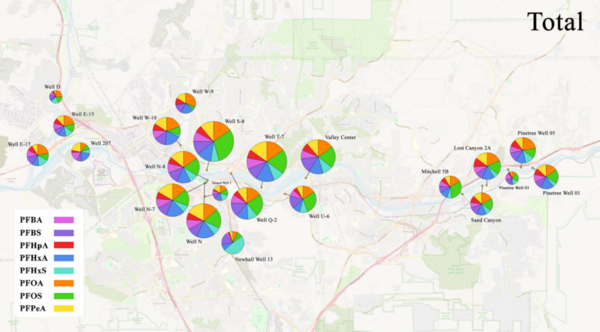
This study investigates PFAS contamination in Santa Clarita groundwater, focusing on potential sources. The study employs statistical analysis to assess data quality and trends which allowed them to identified domestic waste, fire extinguisher materials, and food packaging as the most likely sources of contamination.
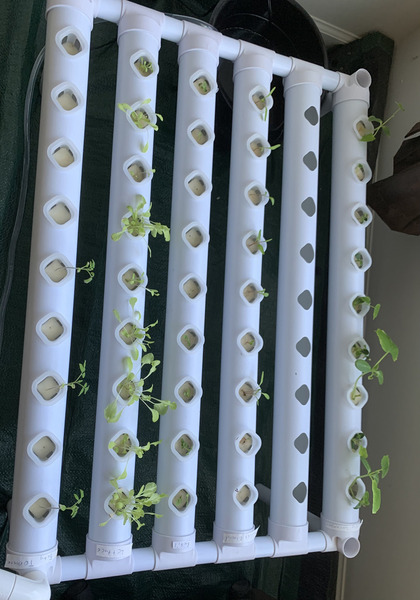
Hydroponics is often promoted as a highly efficient alternative to traditional soil farming, but its effectiveness in small indoor polyculture systems is not well understood. In this study, students compared plant growth and maturity across hydroponic and soil-based indoor polycultures and found that soil grown plants were generally taller and more mature than those grown hydroponically. These results suggest that soil-based methods may outperform hydroponics in certain household polyculture settings.
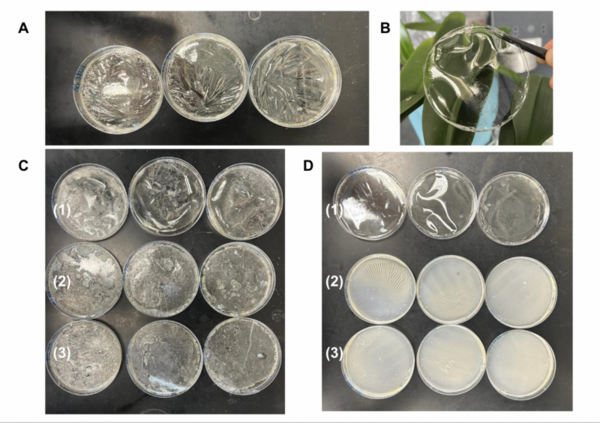
Here, in an effort to identify alternatives to oil-based plastic, the authors sought to investigate the effects of plasticizers on the mechanical properties and chemical composition of gelatin bioplastic matrices. Through measurements of their tensile strength and elongation at break, along with FTIR spectroscopy, they identified 3% w/v polyethylene glycol film as having the best performance in their study..
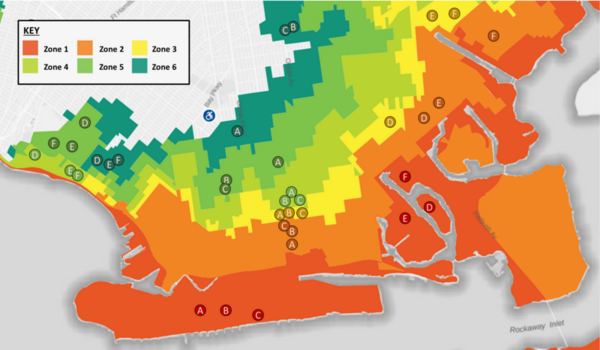
With climate change and rising sea levels, south Brooklyn is exposed to massive flooding and intense precipitation. Previous research discovered that flooding shifts plant species distribution, decreases soil pH, and increases salt concentration, nitrogen, phosphorus, and potassium levels. The authors predicted a decreasing trend from Zone 1 to 6: high-pH, high-salt, and high-nutrients in more flood-prone areas to low-pH, low-salt, and low-nutrient in less flood-prone regions. They performed DNA barcoding to identify plant species inhabiting flood zones with expectations of decreasing salt tolerance and moisture uptake by plants' soil from Zones 1-6. Furthermore, they predicted an increase in invasive species, ultimately resulting in a decrease in biodiversity. After barcoding, they researched existing information regarding invasiveness, ideal soil, pH tolerance, and salt tolerance. They performed soil analyses to identify pH, nitrogen (N), phosphorus (P), and potassium (K) levels. For N and P levels, we discovered a general decreasing trend from Zone 1 to 6 with low and moderate statistical significance respectively. Previous studies found that soil moisture can increase N and P uptake, helping plants adopt efficient resource-use strategies and reduce water stress from flooding. Although characteristics of plants were distributed throughout all zones, demonstrating overall diversity, the soil analyses hinted at the possibility of a rising trend of plants adapting to the increase in flooding. Future expansive research is needed to comprehensively map these trends. Ultimately, investigating trends between flood zones and the prevalence of different species will assist in guiding solutions to weathering climate change and protecting biodiversity in Brooklyn.
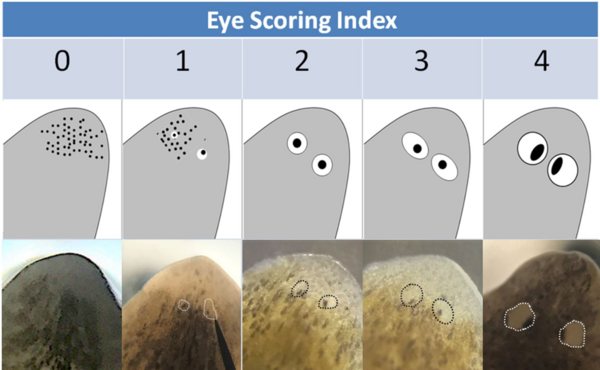
Omega-3 fatty acid derived lipid mediators have been implicated in resolving inflammation, and wound healing. Authors measured the impact of supplementation with lipid mediator Resolvin D1 and its precursor 17-HDHA on planaria regeneration. Planaria not only synthesize RvD1 from 17-DHA, but both RvD1 and 17-DHA enhanced regeneration.