Browse Articles

Development of a Novel Treatment Strategy to Treat Parkinsonian Neurodegeneration by Targeting Both Lewy Body Aggregation and Dopaminergic Neuronal Degradation in a Drosophila melanogaster Model

Sama et al. | Sep 25, 2019

Development of a Novel Treatment Strategy to Treat Parkinsonian Neurodegeneration by Targeting Both Lewy Body Aggregation and Dopaminergic Neuronal Degradation in a <em>Drosophila melanogaster</em> Model

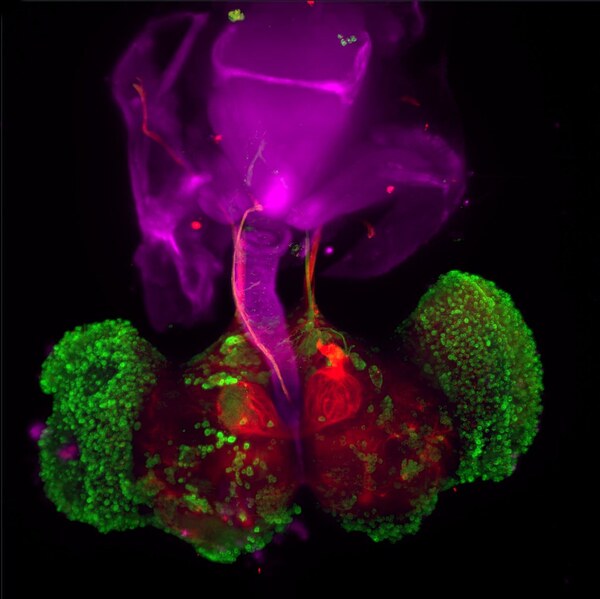
In this article the authors address the complex and life quality-diminishing neurodegenerative disease known as Parkinson's. Although genetic and/or environmental factors contribute to the etiology of the disease, the diagnostic symptoms are the same. By genetically modifying fruit flies to exhibit symptoms of Parkinson's disease, they investigate whether drugs that inhibit mitochondrial calcium uptake or activate the lysosomal degradation of proteins could improve the symptoms of Parkinson's these flies exhibit. The authors report the most promising outcome to be that when both types of drugs were used together. Their data provides encouraging evidence to support further investigation of the utility of such drugs in the treatment of human Parkinson's patients.

Read More...

Development of selective RAC1/KLRN inhibitors

Kubrat Neczaj-Hruzewicz et al. | Nov 04, 2024

Development of selective RAC1/KLRN inhibitors

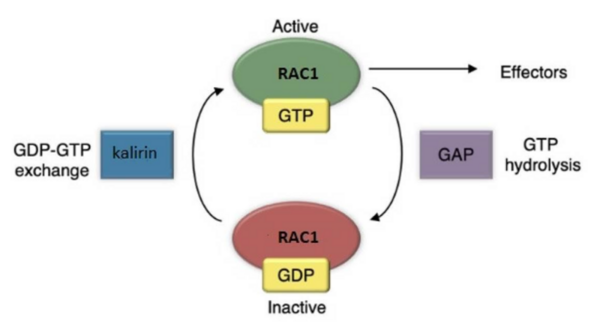
Kalirin is a guanine nucleotide exchange factor (GEF) for the GTPase RAC1, linked to schizophrenia and Alzheimer’s Disease. It plays a crucial role in synaptic plasticity by regulating dendritic spine formation and actin cytoskeleton remodeling, which are essential for creating new synapses. Authors developed two novel compounds targeting kalirin, confirming that predictive modeling can indicate biological activity.

Read More...

Conversion of Mesenchymal Stem Cells to Cancer-Associated Fibroblasts in a Tumor Microenvironment: An in vitro Study

Ramesh et al. | Feb 18, 2020

Conversion of Mesenchymal Stem Cells to Cancer-Associated Fibroblasts in a Tumor Microenvironment: An <em>in vitro</em> Study

Mesenchymal stem cells(MSCs) play a role in tumor formation by differentiating into cancer associated fibroblasts (CAFs) which enable metastasis of tumors. The process of conversion of MSCs into CAFs is not clear. In this study, authors tested the hypothesis that cancers cells secrete soluble factors that induce differentiation by culturing bone marrow mesenchymal stem cells in media conditioned by a breast cancer cell line.

Read More...

Extracellular vesicles derived from oxidatively stressed stromal cells promote cancer progression

Chen et al. | Jan 15, 2024

Extracellular vesicles derived from oxidatively stressed stromal cells promote cancer progression

This paper hypothesized that the tumor microenvironment mediates cancer’s response to oxidative stress by delivering extracellular vesicles to cancer cells. Breast and lung cancer cells were treated with EVs, reavealing that EVs extracted from oxidatively stressed adipocytes increased the cell proliferation of breast cancer cells. These findings present a novel way that the TME influences cancer progression.

Read More...

Investigation of unknown causes of uveal melanoma uncovers seven recurrent genetic mutations

Nanda et al. | Aug 25, 2022

Investigation of unknown causes of uveal melanoma uncovers seven recurrent genetic mutations

Uveal melanoma (UM) is a rare subtype of melanoma but the most frequent primary cancer of the eye in adults. The goal of this study was to research the genetic causes of UM through a comprehensive frequency analysis of base-pair mismatches in patient genomes. Results showed a total of 130 genetic mutations, including seven recurrent mutations, with most mutations occurring in chromosomes 3 and X. Recurrent mutations varied from 8.7% to 17.39% occurrence in the UM patient sample, with all mutations identified as missense. These findings suggest that UM is a recessive heterogeneous disease with selective homozygous mutations. Notably, this study has potential wider significance because the seven genes targeted by recurrent mutations are also involved in other cancers.

Read More...

Strain-selective in vitro and in silico structure activity relationship (SAR) of N-acyl β-lactam broad spectrum antibiotics

Poosarla et al. | Oct 19, 2021

Strain-selective <i>in vitro</i> and <i>in silico</i> structure activity relationship (SAR) of N-acyl β-lactam broad spectrum antibiotics

In this study, the authors investigate the antibacterial efficacy of penicillin G and its analogs amoxicillin, carbenicillin, piperacillin, cloxacillin, and ampicillin, against four species of bacteria. Results showed that all six penicillin-type antibiotics inhibit Staphylococcus epidermidis, Escherichia coli, and Neisseria sicca with varying degrees of efficacy but exhibited no inhibition against Bacillus cereus. Penicillin G had the greatest broad-spectrum antibacterial activity with a high radius of inhibition against S. epidermidis, E. coli, and N. sicca.

Read More...