The authors investigate various methods to decrease heart rate after drinking caffeine.
Read More...Decreasing heart rate after consuming caffeine
The authors investigate various methods to decrease heart rate after drinking caffeine.
Read More...Examining the Growth of Methanotrophic Bacteria Immersed in Extremely Low-Frequency Electromagnetic Fields
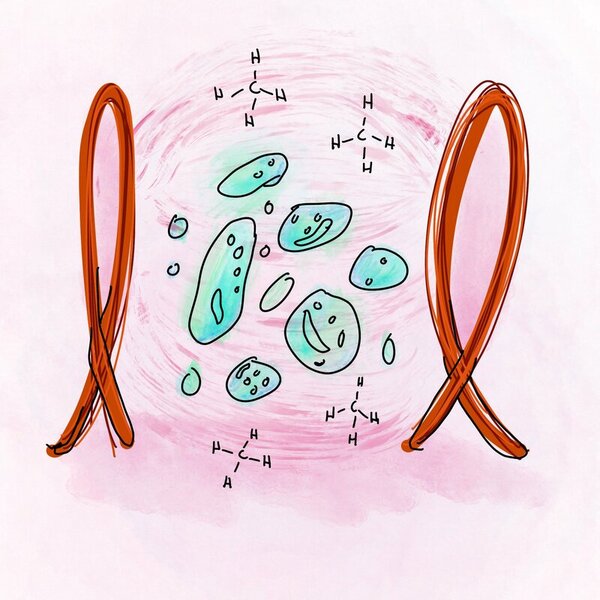
Scientist are investigating the use of methane-consuming bacteria to aid the growing problem of rising greenhouse gas emissions. While previous studies claim that low-frequency electromagnetic fields can accelerate the growth rate of these bacteria, Chu et al. demonstrate that this fundamental ideology is not on the same wavelength with their data.
Read More...A potentially underestimated source of CO2 and other greenhouse gases in agriculture
Here the authors investigated the role of agricultural fertilizers as potential contributors to greenhouse gas emissions. In contrast to the typical investigations that consider microbiological processes, the authors considered purely chemical processes. Based on their results they found that as much as 20.41% of all CO2 emission from land-based activities could be a result of mineral nitrogen fertilizers.
Read More...Correlation of Prominent Intelligence Type & Coworker Relations
Ashley Moulton & Joseph Rasmus investigate 9 controversial categories of intelligence as predicted by Multiple Intelligence Theory, originally proposed in the mid-1980s. By collecting data from 56 participants, they record that there may not actually be a correlation between these categorical types when it comes to workplace atmosphere and project efficiency.
Read More...Eggshell consumption in different reproductive stages and broods of the Western Bluebird, Sialia mexicana
The authors investigate whether Western Bluebirds and other perching birds consume eggshells, as a source of calcium, at a greater rate before reproduction and during nest building when they are unable to store calcium.
Read More...Can essential oils be allelopathic to Lolium multiforum without harming Solanum lycopersicum?
Seeking to investigate eco-friendly biological methods to control weeds and enhance food crop yields, here the authors considered the effects of three essential oils on seed germination and radicle length of both a weed and a common crop. They found that treatment with turmeric oil had phytotoxic potential, leading to a reduction in both seed germination and radicle length of the weed. In contrast, ginger oil possessed allelopathic properties towards both. The authors suggest that essential oils could be used as eco-friendly bio-herbicides.
Read More...Predicting asthma-related emergency department visits and hospitalizations with machine learning techniques
Seeking to investigate the effects of ambient pollutants on human respiratory health, here the authors used machine learning to examine asthma in Lost Angeles County, an area with substantial pollution. By using machine learning models and classification techniques, the authors identified that nitrogen dioxide and ozone levels were significantly correlated with asthma hospitalizations. Based on an identified seasonal surge in asthma hospitalizations, the authors suggest future directions to improve machine learning modeling to investigate these relationships.
Read More...Long Range Radio Communication for Urban Sensor Networks
This study investigates the feasibility of using long-range radio communication in a busy city environment in order to begin better understanding how the Internet of Things might be implemented into smart cities.
Read More...Alkaloids Detection in Commonly Found Medicinal Plants with Marquis Reagent
This study investigates the presence of alkaloids in a variety of medicinal plants using the Marquis reagent. They reveal some surprising results and how useful the Marquis reagent is.
Read More...Variations in Heat Absorption and Release of Earth Surfaces During Fall in Laramie, Wyoming
Here the authors investigate the contributions of man-made surfaces in Laramie, Wyoming to the Urban Heat Island (UHI) effect. Heat absorption and release by five surfaces were measured in the autumn of 2018. By recording temperatures of man-made and natural surfaces at early morning, mid-afternoon, and evening using an infrared thermometer, the authors determined that man-made surfaces retained more heat in fall than natural surfaces.
Read More...